
A project priced before 1 July 2026 may now be performed under a different construction-law regime from the one the budget assumed, and the contract may say nothing about who pays for the difference. A change in law construction contract Vietnam clause decides whether the cost of new rules lands on the employer, the contractor or both, and in Vietnam the answer is shaped by a statute that treats a change of State policy or law as a recognised ground for amending the contract, but does not decide the price for you.
The exposure is greatest on long-duration projects (an expressway, a high-speed rail section, a wind farm or a large urban development) where the legal landscape can shift several times between signing and completion.
This article is written for foreign investors, lenders, employers and contractors. It explains how the Law on Construction No. 135/2025/QH15 and Decree 210/2026/NĐ-CP treat changes in law, how the FIDIC 1999 edition allocates the risk, how the 2026 transition affects running contracts, and what a robust clause should contain.
Change in law construction contract Vietnam: what the statute says
Vietnamese law deals with legal change in three places. First, Article 13(2)(a) of the Law on Construction (Luật Xây dựng) lists a change of State policy or law as a “fundamental change of circumstances” (hoàn cảnh thay đổi cơ bản). Second, Article 84(2)(a) lets the parties agree to amend the contract when a change of State policy or law directly affects it. Third, Article 85(1)(d) permits suspension of work where a change of law directly affects performance.
Notice what the statute does not do. It does not say that the contract price automatically rises or falls, that time automatically extends, or that either party carries the cost. It supplies a recognised ground and a process, and leaves the allocation to the parties. That is why the contract clause matters more than the statute.
The Civil Code conditions behind Article 13
Article 13(3) of the Law says that qualifying events must satisfy the conditions of civil law.
For a fundamental change of circumstances, the relevant provision is Article 420 of the Civil Code 2015, which requires five conditions: the change arose from an objective cause after signing; it was not foreseeable at signing; it is so large that the parties would not have contracted, or would have contracted on entirely different terms, had they known; continuing without amendment would cause serious loss to one party; and the affected party took all necessary measures within its capacity but could not prevent or reduce the effect.
The same article provides the remedy ladder. The affected party may request renegotiation within a reasonable time, and must keep performing during talks unless otherwise agreed. If renegotiation fails within a reasonable time, either party may ask a court to terminate or amend the contract, and the court may do so only where leaving the contract unchanged would cause major loss to the other side. This is the default fundamental change of circumstances Vietnam route, which operates alongside, not instead of, the contract clause.
Not every new rule counts: foreseeability and the Base Date
The Civil Code test is demanding. A change that was announced, drafted or widely debated before signing is a weak candidate for hardship relief, because it was arguably foreseeable. The 2025 reform is an example: the Law on Construction was promulgated on 10 December 2025 with effect from 1 July 2026, and the decree followed on 15 June 2026. A contract signed after those dates cannot easily treat the new regime as unforeseeable.
This is why a contractual cut-off date is valuable. The FIDIC 1999 edition fixes a “Base Date” as 28 days before the latest date for submission of the tender (Sub-Clause 1.1.3.1), and Sub-Clause 13.7 applies only to changes made after that date. A Vietnamese contract can adopt the same idea, or choose the signing date, but it should say so. A clear base date change in law Vietnam provision turns an argument about foreseeability into a question of dates.
FIDIC 1999 edition: Sub-Clause 13.7 in detail
Most foreign-form contracts in Vietnam use the FIDIC 1999 edition. In the Silver Book (EPC/Turnkey), whose text we checked, Sub-Clause 13.7 provides that the Contract Price shall be adjusted for any increase or decrease in Cost resulting from a change in the Laws of the Country, including the introduction of new Laws, the repeal or modification of existing Laws, and a change in the judicial or official governmental interpretation of Laws, made after the Base Date, which affects the contractor in performing the contract.
If the contractor suffers delay or additional cost, it must give notice and is entitled, subject to Sub-Clause 20.1, to an extension of time under Sub-Clause 8.4 and to payment of the cost, which is added to the Contract Price. The employer then agrees or determines the matter under Sub-Clause 3.5. Sub-Clause 14.6 shows that adjustments for legislative change are carried into interim payment calculations. The Red Book (employer-designed works) and Yellow Book (plant and design-build) use the same concept but route the determination through the Engineer, so confirm the numbering in your form.
Three features deserve attention in Vietnam. The definition of “Laws” in Sub-Clause 1.1.6.5 includes regulations and by-laws of any legally constituted public authority, which is wide. The adjustment works in both directions, so a reduction in cost benefits the employer. And the clause covers “official governmental interpretation”, which in Vietnamese practice may include guiding letters from ministries; whether such letters have legal force is a point to settle in the Particular Conditions.
Change in law construction contract Vietnam: statute and FIDIC compared
| Issue | Vietnamese statute | FIDIC 1999 Silver Book, Sub-Clause 13.7 |
|---|---|---|
| Trigger | Change of State policy or law that directly affects the contract (Law, Art. 84(2)(a)); fundamental change (Art. 13(2)(a)) | Change in Laws, or in official or judicial interpretation, after the Base Date |
| Test | Civil Code conditions: unforeseeable, serious loss, mitigation (Art. 420) | Affects the contractor in performing; cost and delay actually incurred |
| Price effect | By agreement; no automatic adjustment | Contract Price adjusted up or down |
| Time effect | By agreement or amendment | Extension of time via cl. 8.4, subject to cl. 20.1 |
| Procedure | Written notice, impact assessment and proposal (Decree, Art. 18(2)); amendment in writing | Notice, then employer agrees or determines (cl. 3.5) |
| Ultimate remedy | Renegotiation, then court amendment or termination (Civil Code, Art. 420) | Dispute resolution under Clause 20 |
The two systems fit together, but not automatically. A FIDIC clause gives the contractor a self-executing entitlement; the statutory route depends on agreement, and a court or tribunal will still apply the Civil Code if the clause is missing or defective.
If your contract was signed before 1 July 2026, or contains a change-in-law clause that predates the 2026 reforms, IVLF Advisors can arrange a confidential preliminary review under NDA of your exposure and options.
Procedure under Decree 210/2026
Article 18(2) of the decree requires the parties to agree a procedure for events under Article 13 of the Law: written notice, an assessment of the impact, and a proposal for amendment, suspension, termination, payment or liquidation. Article 22 then describes how contract amendments work, covering quantity, schedule, time, unit price, contract price, design, scope, security, insurance and price-adjustment method.
For public-investment and PPP contracts, Article 22(4) adds time limits: the proposing party must send a written request with grounds and an impact assessment, and the recipient must reply within 7 working days, giving reasons if it disagrees. Article 84(3)(d) of the Law permits the investor to amend for a fundamental change, provided the investment objective and scale do not change, the total investment is not exceeded, and efficiency is protected. These numbers and limits apply to public-investment and PPP contracts only. In a private project, the parties agree their own procedure and cost-sharing rule.
Price adjustment for change in law Vietnam: practical mechanics
The financial effect runs through the price-adjustment provisions. Article 24(1) of the decree links price adjustment to the cases in Article 84(2) and (3) of the Law and to a method suited to the work, the price form and the currency. Our guide to price adjustment in construction contracts in Vietnam covers the methods in detail. For a clause on price adjustment for change in law Vietnam parties should agree the following points:
- the base date and the type of change that counts, including interpretation and guidance;
- whether tax, customs and fee changes are inside or outside the clause (a matter of market practice; many employers exclude them or deal with them separately);
- how cost is measured and evidenced, and whether profit is included;
- a threshold or cap, if the employer needs budget certainty; and
- whether adjustments also reduce the price when costs fall.
Decree 210/2026 transitional provisions: when the reform is the change
The most immediate change in law construction contract Vietnam question in 2026 is the reform itself. The Law on Construction and Decree 210/2026 took effect on 1 July 2026; Decree 210/2026 replaced Decree 50/2021/NĐ-CP. The Investment Law No. 143/2025/QH15 took effect earlier, on 1 March 2026, and secondary reports indicate further amendments from 1 March 2027. Article 33 of the decree sets the transitional rules.
| Situation | Rule under Decree 210/2026, Art. 33 |
|---|---|
| Public-investment or PPP: tender documents approved but not issued, or draft contract not sent | Consider amending to comply with the decree |
| Public-investment or PPP: tender documents issued or draft contract sent | If changed, notify all bidders so they can adjust bids |
| Public-investment or PPP: bidding closed | No need to amend tender documents; parties may agree to apply the decree when finalising the contract, failing which the tender documents govern |
| Public-investment or PPP: contract signed and in performance before 1 July 2026 | Rules in force before the effective date continue, except as provided in Article 95(7) of the Law |
| Other projects: contract signed and in performance | Parties consider agreeing to apply the decree; failing agreement, rules at the time of signing apply |
The practical conclusion is that a contract signed before 1 July 2026 is not automatically governed by the new decree. On a private project, applying it requires agreement. Yet the new Law may still be relevant to statutory concepts, such as the Law’s grounds for suspension and termination, so check each contract rather than assume. The decree and the Law remain available on the Law on Construction 2025 text and the official summary of Decree 210/2026.
Decree 212/2026/NĐ-CP on construction capacity, the national database and foreign contractors also took effect on 1 July 2026. Decrees 207/2026 (quality and warranty) and 220/2026 (insurance) are named here for completeness; contracts that cross-refer to quality, warranty or insurance subjects should be read together with them.
Regulatory change risk Vietnam: how lenders and sponsors should treat it
Regulatory change risk Vietnam transactions face is not only a contractor issue. A lender financing a project on a fixed budget should know whether the EPC contract passes legal-change cost to the employer, because that cost may exceed contingency. Equally, a sponsor that has agreed a lump-sum price should see whether the clause shifts any of that risk back.
A hypothetical example: an employer signs a lump-sum EPC contract in March 2026 with no change-in-law clause. In 2027 a new technical rule requires additional safety equipment. The contractor claims the cost. Without a clause, the contractor must rely on the general Civil Code route, and the employer will argue that the rule was foreseeable. With a base-date clause that adopts a 13.7-style entitlement, the outcome turns on dates and evidence. Lenders will usually prefer the second structure, which at least makes the exposure measurable.
Drafting checklist for a change-in-law clause
- Definition of “Law”. Say whether regulations, local rules, official guidance and court interpretations count.
- Base date. Choose one, and state how it works for contracts amended later.
- Allocation. State who bears increases and who benefits from decreases, and whether any item is excluded.
- Notice and evidence. Set a deadline, as the FIDIC claim period of 28 days under Sub-Clause 20.1 shows is common, and state the form of proof.
- Time relief. Provide for extension of time and for suspension where new law prevents performance (Law, Article 85(1)(d)).
- Permits. FIDIC Sub-Clause 1.13 places the burden of permits on the contractor unless the Particular Conditions say otherwise; decide how a change in permit rules is handled.
- Interface with force majeure and hardship. Say which clause applies first. See our guide to force majeure in construction contracts in Vietnam.
Change in law construction contract Vietnam across infrastructure, industry, energy and real estate
A change-in-law clause allocates regulatory risk, and the risk looks different in each sector. The longer the project, the more the Base Date and the definition of “law” matter.
Infrastructure and transport
Expressways, rail and airport terminals are often public-investment or PPP projects, although classification depends on the funding source of each project. A change in State policy can be a recognised ground for amendment, and the Decree 210/2026 procedure for dealing with it applies to public-investment and PPP projects, but private contracts follow their own wording. For the North–South high-speed railway (about 1,541 km, designed for 350 km/h) and similar long programmes, packages signed at different dates will have different Base Dates, so the same new rule may be a change in law for one contractor and not for another.
Factories, energy and power
Heavy-industry and FDI factory projects are exposed to investment, environmental and incentive rules. The Law on Investment No. 143/2025/QH15, effective 1 March 2026, is an example of a recent change that sponsors should map against project approvals.
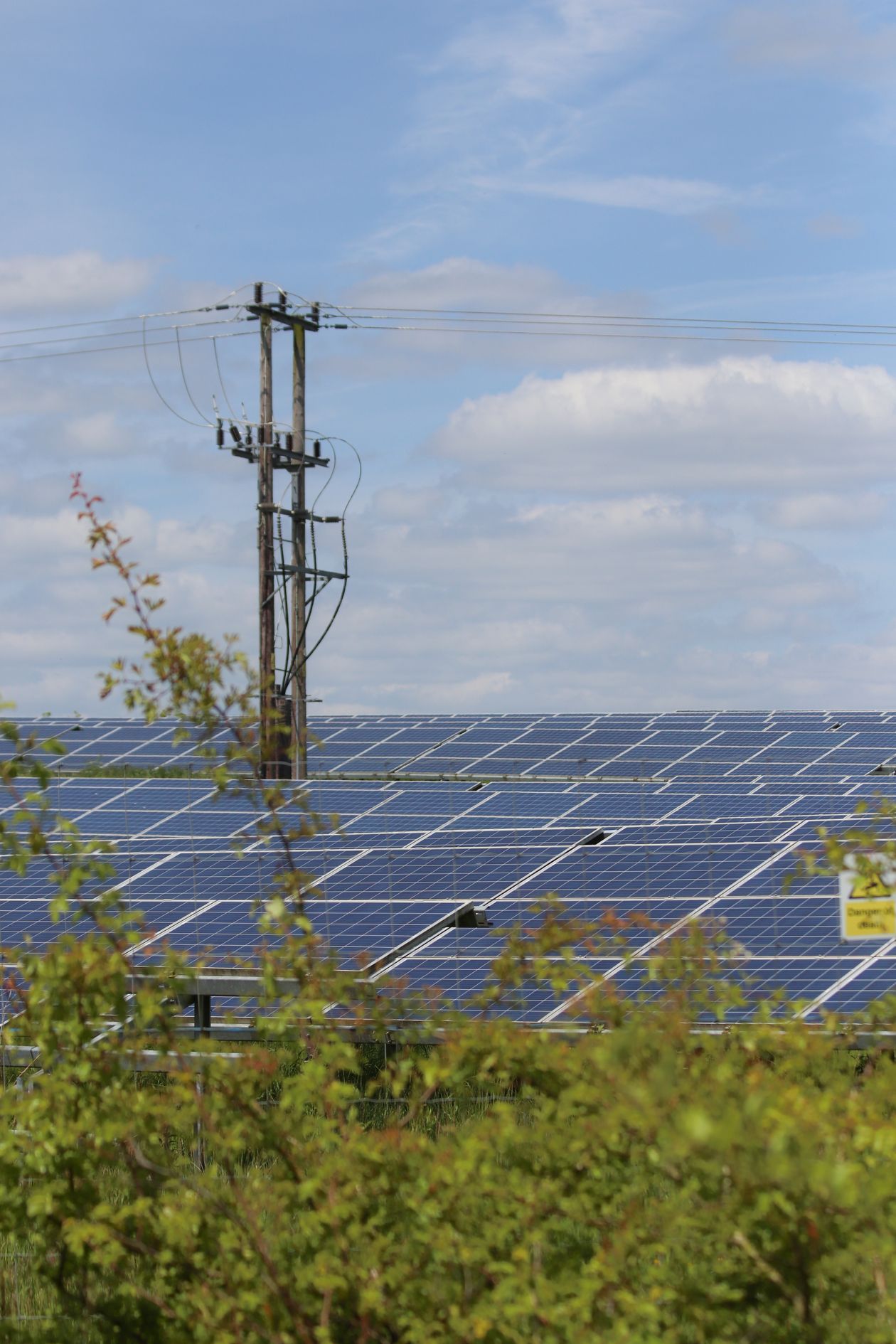
Energy projects, such as solar farms, onshore and offshore wind, grid works and LNG-to-power plants, are especially exposed because tariff, grid and licensing rules sit in the electricity-sector legal regime and may change. The key drafting point is the mismatch: a construction contract may give the contractor relief for a change in law while the PPA gives the project company none. Back-to-back the two documents, or the project company bears the gap.
Hotels, resorts, urban areas and mixed-use complexes
Real estate projects depend on land, planning and real estate business rules, which can change permit conditions, land-use obligations or sale-and-lease requirements. Define whether such changes count as a change in law, who bears permit delays, and whether price adjustment follows.
| Sector | Typical contract or risk feature | What to check on this topic |
|---|---|---|
| Expressway, rail, airport terminal | Often public or PPP; different Base Dates by package | Base Date per package; classification; Decree 210/2026 procedure if public |
| Steel, petrochemical, cement, FDI factory | Investment, environmental and incentive rules | Definition of law; permits; who bears approval changes |
| Solar, wind, grid, LNG-to-power | Tariff, grid and licensing regime changes; PPA mismatch | Back-to-back change-in-law relief between PPA and contract |
| Hotel, resort, urban area, mixed-use | Land, planning and real estate business rules | Permit delay allocation; price adjustment mechanics |
Conclusion
A well-drafted change in law construction contract Vietnam clause answers four questions: what counts as a change, from which date, who pays or benefits, and how the claim is notified and proved. The practical next step is to compare your contract’s legal-change, price-adjustment and notice clauses with Articles 13, 84 and 85 of the Law and Articles 18, 22 and 33 of the decree, and to document any agreement to adopt the new regime for contracts signed before 1 July 2026.
Frequently Asked Questions
Does a change in law automatically adjust the contract price in Vietnam?
No. The Law on Construction recognises a change of State policy or law as a ground to amend the contract, but the adjustment must be agreed in the contract or by amendment.
Does Decree 210/2026 apply to contracts signed before 1 July 2026?
Not automatically. Public-investment and PPP contracts in performance follow the earlier rules, subject to Article 95(7) of the Law; for other projects the parties may agree to apply it.
What is a Base Date in a change-in-law clause?
It is the cut-off after which changes in law count. In the FIDIC 1999 edition it is 28 days before the latest date for tender submission.
Can a court amend a construction contract after a change in law?
Under Article 420 of the Civil Code, if renegotiation fails within a reasonable time, a court may amend or terminate where continuing unchanged would cause major loss. The five statutory conditions must be met.
Are changes in tax law covered by FIDIC Sub-Clause 13.7?
The clause refers to changes in Laws affecting Cost, which is wide. Many contracts address taxes separately, so check the Particular Conditions.
Disclaimer: This article is general information, not legal advice for a specific matter. The law is stated as at 22 October 2026. Transitional questions should be answered only after review of the contract and the primary legal texts.
Or contact us directly:
Contact IVLF LawyerCompany Formation Services – IVLF Advisors
This article is provided for general information only and does not constitute legal advice for any specific case. Regulations may change – please consult a qualified professional before acting. Should further analysis be required, please contact one of our lawyers below.