
A lump-sum price on a steel plant, an expressway or a resort that cannot move is a promise that the contractor, not the employer, will carry the cost of steel, fuel and labour for the whole programme. When the market turns, that promise becomes a dispute, and the outcome depends on wording written years earlier.
A clear price adjustment construction contract Vietnam regime decides who pays for cost movements, how the adjustment is calculated and what evidence unlocks it. Since 1 July 2026, Decree 210/2026/NĐ-CP (Decree 210) and the Law on Construction No. 135/2025/QH15 (the Construction Law) have changed the default rules.

The legal framework for price adjustment from 1 July 2026
Decree 210 (see the official summary) replaced Decree 50/2021 on 1 July 2026 and implements the construction contract chapter of the Construction Law. Article 84 of the Construction Law (2025 text) defines a contract amendment as an adjustment of quantities, schedule, time, unit rates, contract price or other terms. It applies while the contract is in force and must be in writing.
Article 84(2) lists the grounds on which parties may agree an amendment:
- a change in State policy or law that directly affects performance;
- a change in the content, scope, technical requirements, quality, schedule, or advance and payment conditions;
- force majeure under Article 13(1) of the Construction Law;
- a fundamental change of circumstances under Article 13(2); and
- any other case the parties agree.
Price is therefore not frozen by law. It is frozen by the pricing model the parties chose, and the statute then opens specific doors. Decree 210 Article 22 adds that the parties agree the amendment procedure and may agree an adjustment formula under Vietnamese law, or borrow a formula widely used in international practice.
One scope point matters for every figure below. The numeric thresholds in Decree 210 Articles 12, 22 and 24 are mandatory only for public-investment and PPP projects. For contracts funded by private capital, the parties agree the mechanism, and those thresholds are a useful benchmark rather than a rule.
Contract price type decides whether price adjustment is possible
Article 6 of Decree 210 classifies contracts by pricing form, and Article 11 explains where each form fits. The pricing form is the first filter for any price adjustment construction contract Vietnam analysis. An employer that signs a lump-sum contract for a fully designed building has bought a different risk position from one that signs an adjustable unit-rate contract before the design is finished.
| Price form (Decree 210 Arts 6, 11) | Default position on adjustment | Where it fits |
|---|---|---|
| Lump sum (trọn gói) | Does not change, except for force majeure, fundamental change of circumstances, change of scope, or agreement | Quantities and unit rates can be determined; few changes expected; also EC, EP, EPC and turnkey where the parties can manage the risk |
| Fixed unit rate (đơn giá cố định) | Rates do not change, except under Article 24(2)(b), force majeure, or fundamental change | Scope is clear but quantities are uncertain; price includes a quantity contingency |
| Adjustable unit rate (đơn giá điều chỉnh) | Rates adjust under agreed methods and data sources | Price volatility risk cannot yet be assessed; price includes an escalation reserve |
| Cost plus fee | Cost is reimbursed; fee agreed as a fixed sum or percentage | Scope not yet defined |
| Mixed | Each component follows its own form | Large projects with different work packages |
The practical lesson for lenders is that the label on the cover page is not the whole story. A lump-sum EPC contract with a generous list of employer-risk events and an index-based clause for imported equipment behaves very differently from one without them, even though both are lump sum.
Price escalation clause: statutory exceptions to a fixed price
Even where the price is fixed, Decree 210 recognises three routes to adjustment. They matter because a well-drafted price escalation clause should sit alongside them, not contradict them.
Change of scope and agreed adjustment
For public-investment and PPP contracts, Article 23 allows a lump-sum price to change for reasonable additional work that arises from an employer-requested scope change, or from a contractor proposal that the employer accepts. The same article requires the parties to agree rates or pricing principles for such additional work before it is executed. Private projects follow the contract.
Force majeure and fundamental change of circumstances
Article 18(2) of Decree 210 refers both concepts back to Article 13 of the Construction Law. Article 13(3) then requires that the civil-law conditions be met, which means Articles 156 and 420 of the Civil Code 2015. For a hardship case, Article 420(1) requires an objective change after signing, that was not foreseeable, large enough that the parties would not have contracted on the same terms, causing serious loss if the contract continues unchanged, and despite all reasonable mitigation by the affected party.
Renegotiation is the first step. Performance continues during negotiation unless otherwise agreed, and a party can ask a court to amend or terminate only if the negotiation fails within a reasonable time. We analyse that mechanism separately in our article on fundamental change of circumstances in construction contracts.
Exceptional price volatility
Article 18(3) of Decree 210 addresses abnormal price movements that exceed any reasonable forecast and cause serious loss. The parties should compare the price movement with the position at signing, assess each side’s loss if performance continues or the contract ends, and test the facts against Article 13 of the Construction Law. The conclusion becomes the basis for an amendment under Article 84(2) and (3). The factors listed are the signing date, the quantities already performed and still outstanding, the scope affected, and the measures already taken.
Facing a cost spike or reviewing an escalation clause before signing? IVLF Advisors invites you to request a confidential preliminary review of your contract (subject to NDA), so that the pricing model and the adjustment route are checked against the current rules before a dispute arises.
Price adjustment construction contract Vietnam: methods under Article 24
Article 24 of Decree 210 is the most detailed provision on unit rates and price. Its general rule is that the parties agree when adjustment applies, in line with Article 84(2) and (3) of the Construction Law, using a method suited to the work, the price form and the currency. For public-investment and PPP contracts only, it adds the following rules.
- Quantity trigger. If actual quantity rises or falls by more than 20% from the contract quantity, and the change moves the contract price by more than 0.25% and the unit rate for that item by more than 1%, the parties agree a new rate under the contract principles.
- Increase above 120%. The new rate applies only to the excess over 120% of contract quantity.
- Decrease below 80%. The new rate applies to the whole certified quantity.
- Movement of 20% or less. The contract rate applies, including rates already adjusted by agreement.
- Cost movement. Adjustment may be made by direct offset, or by the Pn price-adjustment coefficient set out in an appendix to the Decree, or by a combination. Pn may apply to the whole contract, a work item, a work group or a cost element.
- Data source. The index or price source must be specified. If the Ministry of Construction or provincial source is unsuitable or unavailable, the employer determines the price or consults the Ministry of Finance or another competent authority. Overseas costs may use overseas sources.
- Administration. Once the adjustment is agreed in specific terms, managing and paying it does not need a separate amendment document.
For private projects, none of these thresholds binds the parties. They are nevertheless a sensible reference point, because courts and arbitral tribunals applying Vietnamese law will look at what the legislator regards as proportionate.
Drafting an index-based price formula that survives a dispute
Price adjustment construction contract Vietnam: the elements a formula needs
A price index formula gives the contractor a predictable recovery and gives the employer a ceiling on argument. Our recommended minimum content, as market practice, is as follows.
- A base date and base indices, fixed in the contract.
- A fixed, non-adjustable coefficient (typically a fraction of the price) with weighted coefficients for labour, steel, cement, fuel or equipment.
- A named, published source for each index, with a fallback if the source stops.
- A rule on delay: whether adjustment continues, freezes or favours the employer if the contractor completes late.
- A treatment of foreign-currency components, and a time lag between index date and payment period.
The model formula in the Red Book-based MDB Harmonised Edition (June 2010) illustrates the point. It uses a fixed coefficient and weighted cost elements, applies indices dated 49 days before the end of the payment period, and provides that if the contractor fails to complete on time, adjustment is calculated on whichever index is more favourable to the employer. Each of those choices is a negotiated allocation of risk, not a technical detail.
Currency and Vietnamese payment rules
Article 87(2)(c) of the Construction Law provides that the payment currency is the Vietnamese dong, and that foreign currency may be used only in compliance with foreign-exchange law. Decree 210 Article 28(2) adds that, where several currencies are used, the contract must state which part of the price is payable in each. A formula that tracks a USD-denominated steel index but pays in VND needs an express conversion rule. Please check the current foreign-exchange rules before choosing a foreign-currency component.
FIDIC Sub-Clause 13.8 and Vietnamese law compared
Foreign-funded projects often start from the FIDIC 1999 edition. The Silver Book (EPC/Turnkey) is a lump-sum form. Sub-Clause 14.1 pays on a lump-sum price, adjusted in accordance with the contract, and Sub-Clause 13.8 does not supply a formula: if the price is to be adjusted for rises or falls in labour, goods and other inputs, the adjustment follows the Particular Conditions. FIDIC Sub-Clause 13.8 is therefore only as strong as the Particular Conditions that fill it.
| Topic | FIDIC 1999 Silver Book | Vietnamese law (Decree 210 and Construction Law) |
|---|---|---|
| Cost rises and falls | Sub-Clause 13.8: only as stated in the Particular Conditions | Agreed methods; Article 24 rules for public-investment and PPP contracts |
| Change in law | Sub-Clause 13.7: cost and time, for changes after the Base Date (28 days before tender submission) | Article 84(2)(a) of the Construction Law permits amendment for policy or law change |
| Notice and claim | Sub-Clause 20.1: notice within 28 days, detailed claim within 42 days | Written request with grounds and impact assessment; 7-working-day reply for public-investment and PPP contracts (Article 22(4)) |
| Valuation of changes | Sub-Clause 13.3: includes reasonable profit | Rates or pricing principles agreed beforehand for additional work (Article 23) |
The important drafting point in any price adjustment construction contract Vietnam deal is alignment. A FIDIC contract governed by Vietnamese law should state which price-adjustment mechanism prevails and should check that dong payment, change-in-law and notice provisions do not collide. For variations that drive price change, see our companion article on variations in construction contracts in Vietnam.
Procedure, approvals and evidence for a price adjustment claim
Under Article 22(4) of Decree 210, for public-investment and PPP contracts the requesting party sends a written proposal stating the grounds and the effect on time, price and quality. The other party must reply within seven working days and give written reasons if it refuses. If negotiation fails, the employer organises the next step under procurement law. If the amendment requires changes to the investment policy, feasibility study, design or total investment, the employer must make those changes before signing the amendment.
Article 84(3) of the Construction Law gives the investor some authority to amend within limits: for example, where the change keeps the project within its approved duration, or exceeds the package price but not the total investment. In force majeure and hardship cases, the investor must keep the investment objective and scale unchanged and stay within total investment.
Whatever the funding source, the evidence file should include:
- the pricing assumptions at tender and the contract price breakdown;
- index data, supplier quotations and invoices from the base date;
- programme records showing what was ordered, delivered and installed, and when; and
- notices, mitigation steps and correspondence.
Transitional rules also matter. For public-investment and PPP contracts signed and in performance before 1 July 2026, Article 33 of Decree 210 applies the rules in force before that date. For other projects, the parties may agree to adopt Decree 210, and failing agreement the rules at signing continue.
Practical checklist for investors, lenders and contractors
- Investors: choose the price form deliberately, and match the approved budget to the risk you are asking the contractor to carry.
- Lenders: test the base case against an index-movement scenario and check that the contingency covers the employer’s exposure under adjustable elements.
- Contractors: price imported and volatile items separately, and give early written notice of any trigger.
- All parties: record the legal basis (Article 84(2)), the mechanism and the document that amends the contract.
Price Adjustment Construction Contract Vietnam: Infrastructure, Industry, Energy and Real Estate
Price risk is not uniform. Steel, cement, fuel, imported equipment and labour weigh differently on each project type, so an escalation clause should be shaped to the cost base of the asset.
Infrastructure and transport
Expressways, ports, metro, high-speed rail and airport terminals run for years and consume large volumes of steel, cement, asphalt and fuel. The North–South high-speed railway (about 1,541 km, Hanoi to Ho Chi Minh City, per press reports of October 2026) illustrates the programme length at stake. If the project is public investment or PPP, the Decree 210 adjustment rules, including the thresholds, are likely to apply; otherwise the parties agree. Check the funding classification before relying on any threshold.
Heavy industry and factories
Steel, petrochemical and cement plants are driven by imported equipment and process packages priced in foreign currency. Price adjustment on equipment is often handled through fixed-price supply with an exchange-rate clause, while civil works use a domestic index. Remember the dong payment rule for Vietnamese payments.
Renewable energy and power
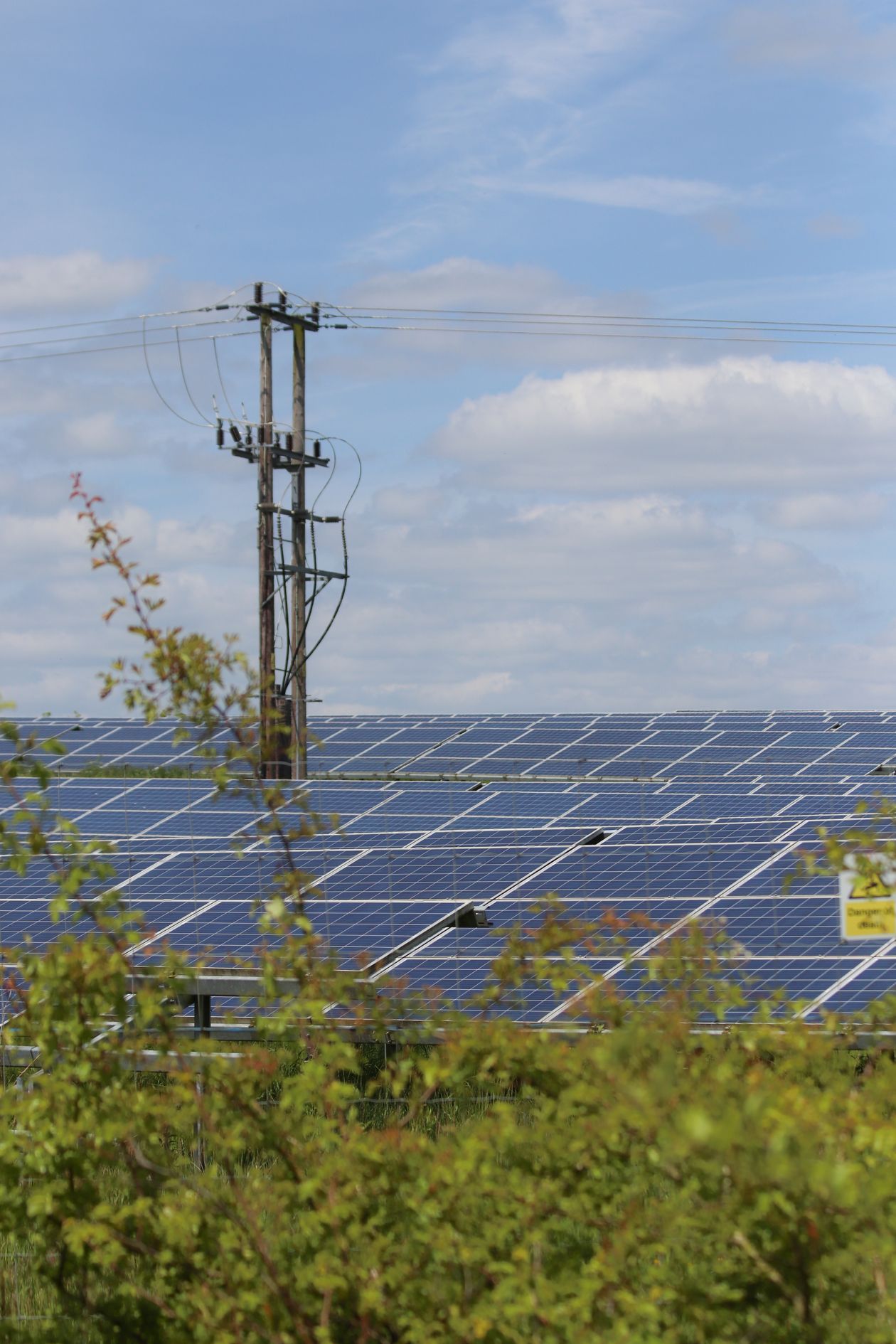
Solar modules, wind turbines and transformers have volatile global prices, while grid and LNG-to-power construction depends on steel and cable. A hypothetical solar EPC might fix module prices at contract signature and index only the civil works. The relationship with power-offtake pricing is fact-specific.
Real estate
For hotels, resorts, urban areas and mixed-use complexes, labour and finishing materials dominate, and a lump sum is common for housing blocks. Pre-sale or financing milestones can make the developer reluctant to accept open-ended adjustment; the land and real estate framework may limit flexibility.
| Project type | Typical contract or risk feature | What to check |
|---|---|---|
| Expressway, rail, airport terminal | Long duration; steel, asphalt, fuel | Decree 210 applicability and thresholds; index choice |
| Factory or heavy-industry plant | Imported equipment; foreign currency | Exchange-rate clause; dong payment rule |
| Solar, wind, LNG-to-power | Volatile equipment prices | Fix vs index split; offtake link |
| Hotel, resort, urban area | Labour and finishes; financing milestones | Lump-sum vs adjustable rates; lender consent |
Conclusion
Price adjustment is won or lost at the drafting stage. Before your next signing or variation on a price adjustment construction contract Vietnam project, map your contract price type, adjustment triggers, data sources and approvals against Decree 210 and the Construction Law, and decide whether public-investment and PPP thresholds apply to you.
Frequently Asked Questions
Can a lump-sum price be adjusted in Vietnam?
Yes, but only in limited cases: force majeure, fundamental change of circumstances, a change of scope, or an agreement between the parties. A lump sum does not otherwise move with market prices.
Do the 20% quantity thresholds apply to private projects?
No. The 20%, 0.25% and 1% thresholds in Decree 210 Article 24 apply to public-investment and PPP contracts. Private contracts follow what the parties agreed.
Must a price adjustment be in writing?
Yes. Article 84 of the Construction Law requires amendments to be in writing. Once an adjustment mechanism is agreed in specific terms, paying under it needs no separate amendment document for public-investment and PPP contracts.
Can the contract be paid in US dollars?
The default currency is the Vietnamese dong. Foreign currency may be used only in compliance with foreign-exchange law, so check the current rules for your project before drafting.
Does FIDIC Sub-Clause 13.8 give a formula?
Not in the Silver Book. Sub-Clause 13.8 refers to the Particular Conditions, so the parties must write the formula, indices and base date themselves.
Disclaimer: This article provides general information only and is not legal advice for any specific matter. It reflects Vietnamese law as of 22 October 2026. Please obtain advice on your own facts before acting.
Or contact us directly:
Contact IVLF LawyerCompany Formation Services – IVLF Advisors
This article is provided for general information only and does not constitute legal advice for any specific case. Regulations may change – please consult a qualified professional before acting. Should further analysis be required, please contact one of our lawyers below.