When a typhoon floods a site or an authority orders works to stop, the first question is who bears the loss, and the answer usually depends on one thing: whether the event legally qualifies as force majeure and whether the notice was sent on time.
In a force majeure construction contract Vietnam setting, qualification is a two-step test, a statutory list in the Law on Construction and the conditions of the Civil Code, and a missed notice can cost a contractor both time and money. Exposure differs by asset: an offshore wind installation depends on sea conditions, an airport terminal on authority approvals, a resort on seasonal access.

This article is written for foreign investors, lenders, employers and contractors. It explains how the Law on Construction No. 135/2025/QH15 and Decree 210/2026/NĐ-CP define force majeure, how the FIDIC 1999 edition differs, and what to put in a clause before the next event occurs.
Force majeure construction contract Vietnam: the statutory definition
Article 13(1) of the Law on Construction (Luật Xây dựng), effective 1 July 2026, lists the events that count as force majeure (bất khả kháng) in construction activity:
- natural disaster and environmental catastrophe;
- fire and epidemic disease;
- an emergency affecting national security, public order and safety, or national defence;
- strikes, lockouts, embargoes and sieges;
- the discovery of antiquities or archaeological finds; and
- other cases under related laws.
Two features stand out for a foreign reader. The list is statutory, so it is not an invitation to argue that anything unusual qualifies. And it includes items, such as epidemic disease and archaeological discoveries, that many foreign-form contracts do not list expressly.
Why a listed event is still not enough
Article 13(3) of the Law requires that the identification of an event meet the conditions of civil law. The relevant civil-law test is Article 156 of the Civil Code 2015: the event must be objective, impossible to foresee, and impossible to overcome even though all necessary measures were applied within the party’s capacity. This is the core of any Civil Code force majeure Vietnam analysis.
The practical consequence is that a flood in the monsoon season may fail the foreseeability limb even though “natural disaster” is on the list. A flood of unprecedented scale, on documented meteorological evidence, is a better candidate. Tribunals look at what the party knew, what the contract allocated, and what mitigation was actually attempted.
What force majeure is not: a related but separate doctrine
Vietnamese law separates force majeure from “fundamental change of circumstances” (hoàn cảnh thay đổi cơ bản). Article 13(2) of the Law lists the latter as a change of State policy or law, and abnormal geological conditions that could not have been foreseen, among other cases. The remedy differs: force majeure excuses performance, while a fundamental change supports renegotiation and, failing agreement, amendment or termination through the courts under the Civil Code. We cover that route in our article on fundamental change of circumstances in construction contracts.
A rise in steel prices, a currency devaluation or a supplier insolvency will rarely be force majeure. They fall into foreseeable risk allocation, which the parties agree under Article 18(1) of the decree, and, in exceptional cases, into the price-volatility analysis in Article 18(3). That is why the first task in any claim is to place the event in the correct category.
Notice and procedure under Decree 210/2026
Decree 210/2026/NĐ-CP (Article 18) tells the parties to agree in the contract on the procedure that follows a force majeure event: written notice, an assessment of the impact on the contract, and a proposal for amendment, suspension, termination, payment or liquidation. A party that cannot perform because of force majeure must notify in writing and propose a solution.
Three further rules in the Law and the decree give force majeure its practical weight:
- Amendment. The parties may agree to amend the contract for force majeure (Law, Article 84(2)(c)). Amendments must be in writing (Article 84(1)).
- Suspension. Work may be suspended for force majeure, and the usual prior-notice requirement does not apply to a force majeure suspension (Law, Article 85(1)(b) and (3)).
- Continuing performance. During a dispute, the parts of the contract not affected by the event must continue, except in force majeure (Decree, Article 17(2)).
The statute does not fix a deadline for force majeure notice, so the contract has to. A well-drafted force majeure notice Vietnam clause states who gives notice, the content, the deadline, the supporting evidence and the consequences of lateness.
Force majeure construction contract Vietnam: public-investment and PPP projects
For public-investment and PPP projects, Article 84(3)(d) of the Law lets the investor consider amendment for force majeure or a fundamental change under conditions: the investment objective and scale must not change, the total investment must not be exceeded, efficiency must be protected, and waste avoided. Decree 210/2026 also says a lump-sum price in such a project is adjusted for force majeure (Article 23). These rules apply to public-investment and PPP contracts; in a private project the parties agree the adjustment mechanism themselves.
If your contract’s force majeure clause, notice deadlines or insurance have not been tested against the 2026 Vietnamese rules, IVLF Advisors can arrange a confidential preliminary review under NDA before the next event occurs.
FIDIC 1999 edition: Clause 19 compared
Most foreign-form contracts in Vietnam adopt the FIDIC 1999 edition, so a force majeure construction contract Vietnam clause is often a Clause 19 variant. We checked the Silver Book (EPC/Turnkey) text.
Clause 19 defines Force Majeure as an exceptional event or circumstance that is beyond a party’s control, which the party could not reasonably have provided against before entering into the contract, which it could not reasonably have avoided or overcome, and which is not substantially attributable to the other party (Sub-Clause 19.1). The Red Book (employer-designed works) and Yellow Book (plant and design-build) route the determinations through the Engineer, so check the exact clause numbering in your own form.
The FIDIC definition has the same architecture as Article 156 of the Civil Code, which is helpful. The differences are in the listed events, the notice period and the money.
| Issue | Vietnamese law | FIDIC 1999 Silver Book |
|---|---|---|
| Defined list | Law, Art. 13(1): disaster, fire and epidemic, emergency, strike and embargo, archaeological finds, other | Cl. 19.1: war, terrorism, riot and strike (not by contractor’s personnel), munitions and radiation, natural catastrophe; list not exhaustive |
| General test | Civil Code, Art. 156: objective, unforeseeable, unavoidable despite all necessary measures | Cl. 19.1(a) to (d): beyond control, not reasonably provided against, not avoidable, not attributable to the other party |
| Notice | Written notice with a proposal (Decree, Art. 18); period set by contract | Cl. 19.2: within 14 days after the party became aware or should have |
| Extension of time | By agreement or amendment (Law, Art. 84(2)(c)) | Cl. 19.4(a), via cl. 8.4, subject to cl. 20.1 |
| Cost | Not fixed by statute; contract allocates; lump-sum adjustment for public-investment and PPP | Cl. 19.4(b): only for events (i) to (iv), and for (ii) to (iv) only if in the Country |
| Payment obligations | No statutory carve-out identified; draft expressly | Cl. 19.2: force majeure does not excuse payment obligations |
| Prolonged event | Termination if amendment impossible (Law, Art. 85(2)(a)) | Cl. 19.6: 84 continuous days or 140 in total; 7 days’ notice |
Two points matter most commercially. FIDIC grants cost recovery only for the more political and security-related events, not for natural catastrophe, so a contractor under a FIDIC form carries the cost of an earthquake or typhoon unless the Particular Conditions say otherwise. And the 14-day notice period under Sub-Clause 19.2 is separate from the 28-day claim notice under Sub-Clause 20.1; missing the second can bar the claim.
Extension of time force majeure Vietnam: the claims overlay
Under the FIDIC 1999 edition, a contractor entitled to an extension of time for force majeure still has to claim in the proper form. Sub-Clause 20.1 requires a notice as soon as practicable and not later than 28 days after the contractor became aware or should have become aware of the event, failing which time is not extended, no additional payment is due and the employer is discharged from liability for the claim.
A force majeure notice under 19.2 should therefore always be accompanied or followed by a claim notice. Vietnamese law has no equivalent default bar, but a tribunal will still weigh late notice and missing records against the claimant.
Force majeure termination Vietnam: when the event does not go away
Article 85(2)(a) of the Law allows termination where force majeure occurs, the parties cannot agree an amendment because one or both can no longer meet the conditions or capacity to perform, and the consequences are settled under civil-law rules on force majeure. Suspension for force majeure under Article 85(1)(b) is the usual precursor. The termination mechanics are discussed in our guide to termination of construction contracts in Vietnam.
FIDIC Sub-Clause 19.6 gives a bright-line alternative: if substantially all works in progress are prevented for 84 continuous days, or for more than 140 days in total because of the same notified event, either party may give notice of termination, effective after 7 days. The employer then pays for work done, plant and materials delivered or committed, reasonable costs incurred in expectation of completion, and removal and repatriation costs. Sub-Clause 19.7 separately discharges the parties where an event makes performance impossible or unlawful, or where the governing law releases them.
These FIDIC thresholds are contractual. Under Vietnamese law, the parties may agree them, but the statute does not supply them, so a contract that omits Sub-Clause 19.6 equivalents leaves the question of how long is too long to be answered case by case.
Force majeure clause drafting Vietnam: a checklist
A force majeure clause drafting Vietnam exercise should begin with the statutory list and the Civil Code test, then add what the parties want on top. The following points are the ones we see most often missing.
- Definition and list. Any force majeure construction contract Vietnam clause should align with Article 13(1) and state whether epidemic, strike and change in law events are included, excluded or dealt with separately.
- Notice. State a deadline, the form, the contact person, the supporting evidence and whether lateness forfeits relief.
- Mitigation. Require reasonable endeavours to minimise delay, and a notice when the event ceases, as FIDIC Sub-Clause 19.3 does.
- Money. Decide who carries standing costs, who carries repair costs and whether payment obligations are excluded.
- Time. Provide for extension of time, a long-stop period and a termination right.
- Subcontractors. Say whether broader relief in a subcontract passes upstream; FIDIC Sub-Clause 19.5 says it does not.
- Insurance. Coordinate with the insurance programme, since cover for natural catastrophe often matters more than contractual relief. Insurance obligations follow Article 10 of the Law and its implementing decree.
A hypothetical example: a contractor on a privately funded warehouse project finds that a regional flood has closed access roads for three weeks. Its contract has no notice period for force majeure and no mitigation duty. Records of the flood are good, but its first written notice is sent six weeks later. The employer rejects the claim for time, arguing late notice and a failure to mitigate. A 14-day notice rule, a duty to mitigate and an agreed evidence list would have protected both sides.
Evidence and conduct during the event
Whether the dispute is resolved by negotiation, a dispute board, arbitration or court, force majeure claims are won on documents. Keep contemporaneous records: dated photographs, official announcements and weather data, site diaries, correspondence with authorities, and a log of mitigation steps and their cost. Where the event is a government order, keep the order itself and the authority’s reasons.
The parties should also keep performing where they can. Decree 210/2026 (Article 17(2)) continues the unaffected parts of the contract during a dispute, and a party that stops everything may be accused of overreaching. The standard forms published by FIDIC are a common starting point, but the governing law and the contract text decide the outcome.
Where force majeure meets change in law and payment
The categories are close but not identical. A change of State policy or law is a “fundamental change of circumstances” under Article 13(2)(a) of the Law, not force majeure under Article 13(1), unless a related law says otherwise. A government order to stop works may be framed as an emergency measure, as a request from a competent authority (a suspension ground under Article 85(1)(c)), or as a change in law. Which label applies determines the relief.
The money side is equally important. FIDIC treats payment obligations as outside force majeure; Vietnamese law does not appear to provide a general rule, so a payment-delay claim based on a banking or payment-system disruption should be dealt with in the contract. The government’s official summary of Decree 210/2026 is a useful starting point for the wider contract framework.
Force majeure construction contract Vietnam across infrastructure, industry, energy and real estate
A force majeure construction contract Vietnam clause is tested on facts, and the facts differ by sector. The statutory two-step test applies to all of them, but the typical events and the evidence you need are different.
Infrastructure and transport: weather, land and authority orders
Expressways, rail lines and airport terminals are often public-investment or PPP projects, although classification depends on the funding source of each project. For those, the Decree 210/2026 notice rules discussed above apply; on private projects the contract governs. On a very long project, such as the North–South high-speed railway (about 1,541 km through 15 provinces and cities), flooding or storms may hit one section and not another, so notices and records should be section-specific. Delay in site handover is normally treated as an employer-side delay, not force majeure, unless the contract says otherwise.
For an airport terminal such as Long Thành International Airport phase 1 (expected, per press reports, to begin commercial operation from 24 December 2026), an authority order that stops works needs separate analysis: was it caused by the contractor’s conduct, or by an unforeseeable decision? That is a question of fact and evidence.
Factories, energy and offshore works
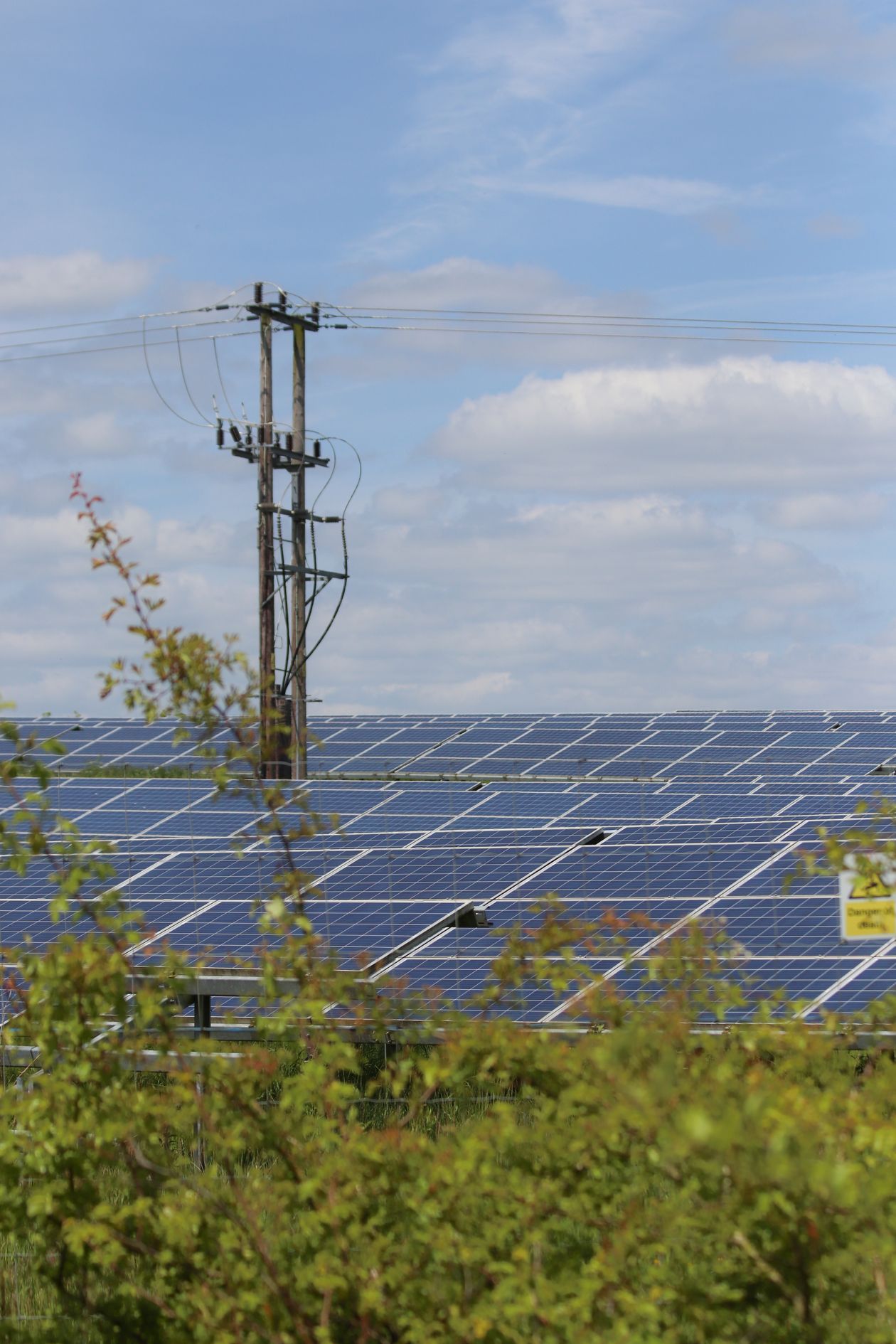
For a steel, petrochemical or cement plant, supply-chain disruption and import delay are the common claims; they succeed only if they meet the statutory conditions, and a price rise is not force majeure by itself. For a solar farm, onshore or offshore wind project, grid connection or LNG-to-power plant, typhoons, sea state, vessel availability and grid-operator delay are central. Offshore work depends on narrow weather windows, so contemporaneous weather logs and vessel records are the evidence that will decide the claim. Check whether the power purchase arrangement has a different force majeure definition from the construction contract.
Hotels, resorts, urban areas and mixed-use complexes
On a private resort or mixed-use project, flood, storm and access restrictions can be force majeure, but a downturn in tourism or sales is a commercial risk and not force majeure. If the contract becomes much harder to perform for economic reasons, the separate doctrine of fundamental change of circumstances may be relevant instead.
| Sector | Typical contract or risk feature | What to check on this topic |
|---|---|---|
| Expressway, rail, airport terminal | Weather by section; authority orders; often public or PPP | Section-level notices, cause of the order, classification of project |
| Steel, petrochemical, cement, FDI factory | Supply-chain and import disruption | Whether the cause was unforeseeable; mitigation evidence |
| Solar, wind, grid, LNG-to-power | Typhoon, sea state, grid delay; PPA definitions | Weather logs, vessel records, PPA alignment |
| Hotel, resort, urban area, mixed-use | Storm and flood; market downturn is not force majeure | Event versus commercial risk; fallback doctrines |
Conclusion
A reliable force majeure construction contract Vietnam position needs three things: an event that fits Article 13(1) and the Civil Code test, a notice that meets the contract’s deadline, and records that show mitigation. The practical next step is to review your clause against Article 13 of the Law and Article 18 of the decree, and to add the notice, cost and long-stop provisions that the statute leaves to the parties.
Frequently Asked Questions
Is a typhoon automatically force majeure in Vietnam?
Not automatically. Natural disaster is listed in Article 13(1) of the Law, but the event must also meet the Civil Code conditions: objective, unforeseeable and unavoidable despite necessary measures.
Is there a statutory deadline for force majeure notice?
Decree 210/2026 requires written notice and a proposal, but the period is set in the contract. FIDIC Sub-Clause 19.2 uses 14 days; draft your own deadline expressly.
Does force majeure excuse payment obligations?
FIDIC Sub-Clause 19.2 says no. Vietnamese law has no clear general rule identified here, so the contract should address payment obligations expressly.
Can a party terminate for prolonged force majeure?
Yes, under Article 85(2)(a) of the Law where amendment is impossible. FIDIC Sub-Clause 19.6 adds 84-day and 140-day thresholds if the contract adopts them.
Is a change in law force majeure?
Usually not. The Law treats a change of policy or law as a fundamental change of circumstances under Article 13(2), with its own remedy.
Disclaimer: This article is general information, not legal advice for a specific matter. The law is stated as at 22 October 2026. Any claim or notice should be prepared only after review of the full contract and the primary legal texts.
Or contact us directly:
Contact IVLF LawyerCompany Formation Services – IVLF Advisors
This article is provided for general information only and does not constitute legal advice for any specific case. Regulations may change – please consult a qualified professional before acting. Should further analysis be required, please contact one of our lawyers below.