Updated 30 July 2026
Vietnam’s FTSE emerging market upgrade takes effect from the market open on 21 September 2026. For foreign investors, the change is more than an index event. It alters benchmark eligibility, trading access and operational priorities, while leaving foreign ownership limits, account controls and disclosure duties firmly in place. Institutions should complete their Vietnam access review before the first inclusion tranche.
FTSE Russell confirmed in April 2026 that Vietnam meets all criteria for Secondary Emerging status. Vietnamese securities will enter the FTSE Global Equity Index Series in four tranches from September 2026 to September 2027. The phased approach supports orderly index replication and liquidity.
Vietnam FTSE emerging market upgrade: timeline and four tranches
| Milestone | Practical effect |
|---|---|
| October 2025 | FTSE Russell announced the proposed reclassification, subject to a March 2026 interim review. |
| 7 April 2026 | The interim review confirmed that Vietnam meets the Secondary Emerging criteria. |
| 21 August 2026 | Scheduled publication date for the September 2026 FTSE GEIS review. |
| 21 September 2026 | Reclassification becomes effective at market open; the first inclusion tranche begins. |
| September 2027 | Planned completion of the four-tranche inclusion process. |
The upgrade makes eligible Vietnamese securities reviewable for the FTSE All-World, FTSE Global All Cap and FTSE Emerging indices. Eligibility is not automatic for every listed company: liquidity, size, free float and other index screens continue to apply. Foreign investors should therefore separate the country-classification decision from the security-level inclusion decision.
What changed: non-prefunding and the global broker model
Two reforms were central to the upgrade. First, Vietnam removed the general requirement that foreign institutional investors fully pre-fund equity purchases before order placement. The non-prefunding model allows eligible institutions to place orders without having all cash available upfront, subject to the settlement and risk controls of domestic securities companies.
Second, Circular 08/2026/TT-BTC, effective 3 February 2026, established a framework under which foreign investors may route orders to Vietnamese securities companies through global brokers without opening an additional domestic trading account solely for that relationship. The structure is designed to fit the operating model already used by large international funds.
Neither reform removes settlement responsibility. A failed settlement can trigger same-day reporting by the securities company to the State Securities Commission, the Vietnam Securities Depository and Clearing Corporation and the Vietnam Exchange. Contractual allocation of settlement risk between the investor, global broker, local broker and custodian therefore matters.
What the upgrade does not solve: foreign ownership limits
Vietnam’s FTSE emerging market upgrade does not override statutory or sector-specific foreign ownership limits. Capacity may be constrained by Vietnam’s WTO commitments, investment conditions, specialised legislation, a public company’s charter or a company-specific foreign ownership ratio disclosed to the market.
Before trading a target security, an investor should check: the issuer’s registered business lines; any conditional sector cap; the issuer’s charter and disclosed maximum ratio; existing foreign ownership recorded through the depository system; and whether the contemplated position triggers major-shareholder or related reporting.
A security may qualify for an index but remain difficult to replicate because available foreign room is limited. Index eligibility is therefore not equivalent to guaranteed investability at the desired weight.
Market entry architecture for an overseas institution
- Choose the execution route. Decide whether orders will be placed directly with a local securities company or through a participating global broker.
- Appoint the custody and settlement chain. Confirm who maintains records, receives notices, manages corporate actions and handles settlement failures.
- Complete investor identification. Obtain the securities trading code and satisfy know-your-customer and beneficial ownership requirements.
- Establish compliant cash accounts. Map the relevant indirect investment capital account and settlement accounts, including permitted inflows and outflows.
- Document non-prefunding terms. Agree limits, collateral or credit support, settlement cut-offs, failed-trade procedures, reporting and indemnities.
The exact account structure depends on investor type and execution model. The global broker route can reduce operational duplication, but it does not eliminate Vietnamese law requirements that attach to ownership, settlement, disclosure or money movement.
Three actions to complete before 21 September 2026
1. Run a legal and operational gap analysis. Compare the fund’s global dealing manual with Vietnamese rules. Identify who owns each action across investment management, trading, compliance, the global broker, local broker and custodian.
2. Build a security-level investability matrix. For each expected constituent, record sector restrictions, foreign room, charter limits, liquidity, disclosure thresholds and any internal ESG or sanctions constraint. Refresh the matrix after FTSE Russell publishes the September review.
3. Test settlement and escalation. Conduct a dry run from order placement to cash confirmation, depository settlement and exception reporting. A non-prefunding model is useful only if the institution can meet local cut-offs and respond immediately when a trade fails.
Disclosure and governance risks after the upgrade
Increased trading activity can push investors through Vietnamese disclosure thresholds. Compliance controls should monitor beneficial ownership and coordinated holdings across funds, managed accounts and affiliates. The analysis should not rely only on the position shown in one portfolio.
Particular attention is required for major-shareholder reporting, changes in reportable holdings, tender-offer rules, related-party transactions, insider or connected-person status and disclosure of dealings by persons with access to inside information. The legal owner, investment manager and ultimate beneficial owner may not be treated identically for every purpose.
Cross-ownership and group aggregation also require a documented approach. Where several vehicles are managed under a common strategy, counsel should determine whether Vietnamese rules require aggregation and who is responsible for filing.
Practical allocation of responsibility
| Workstream | Primary owner | Legal checkpoint |
|---|---|---|
| Trading access | Global and local broker | Execution agreement and permitted model |
| Cash and settlement | Custodian and operations | Account purpose, funding cut-offs and failed trades |
| Foreign room | Portfolio manager and compliance | Sector cap, charter and live depository data |
| Ownership reporting | Compliance and legal counsel | Aggregation, filing threshold and deadline |
| Corporate actions | Custodian | Voting, dividends, rights and tax documentation |
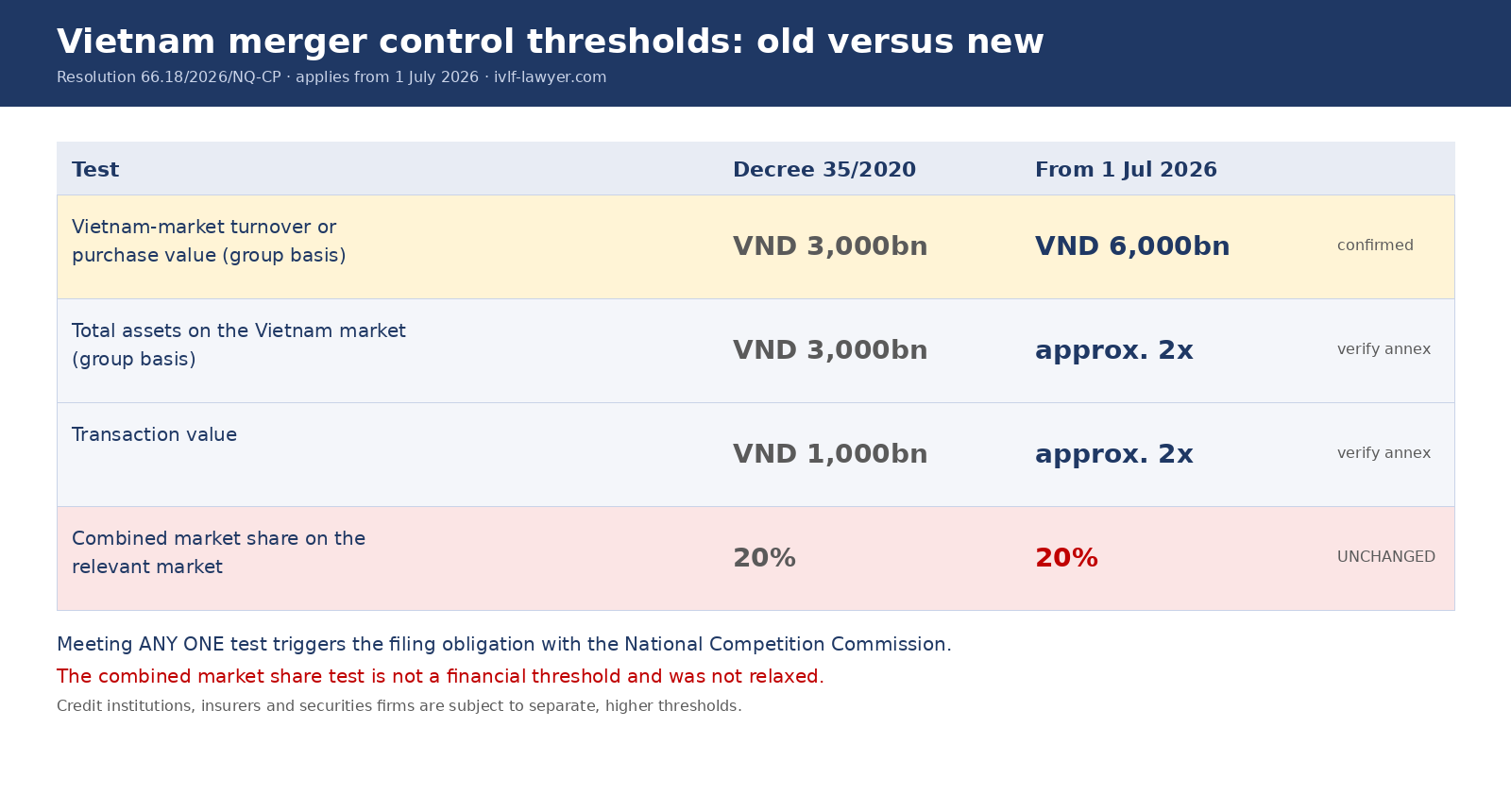
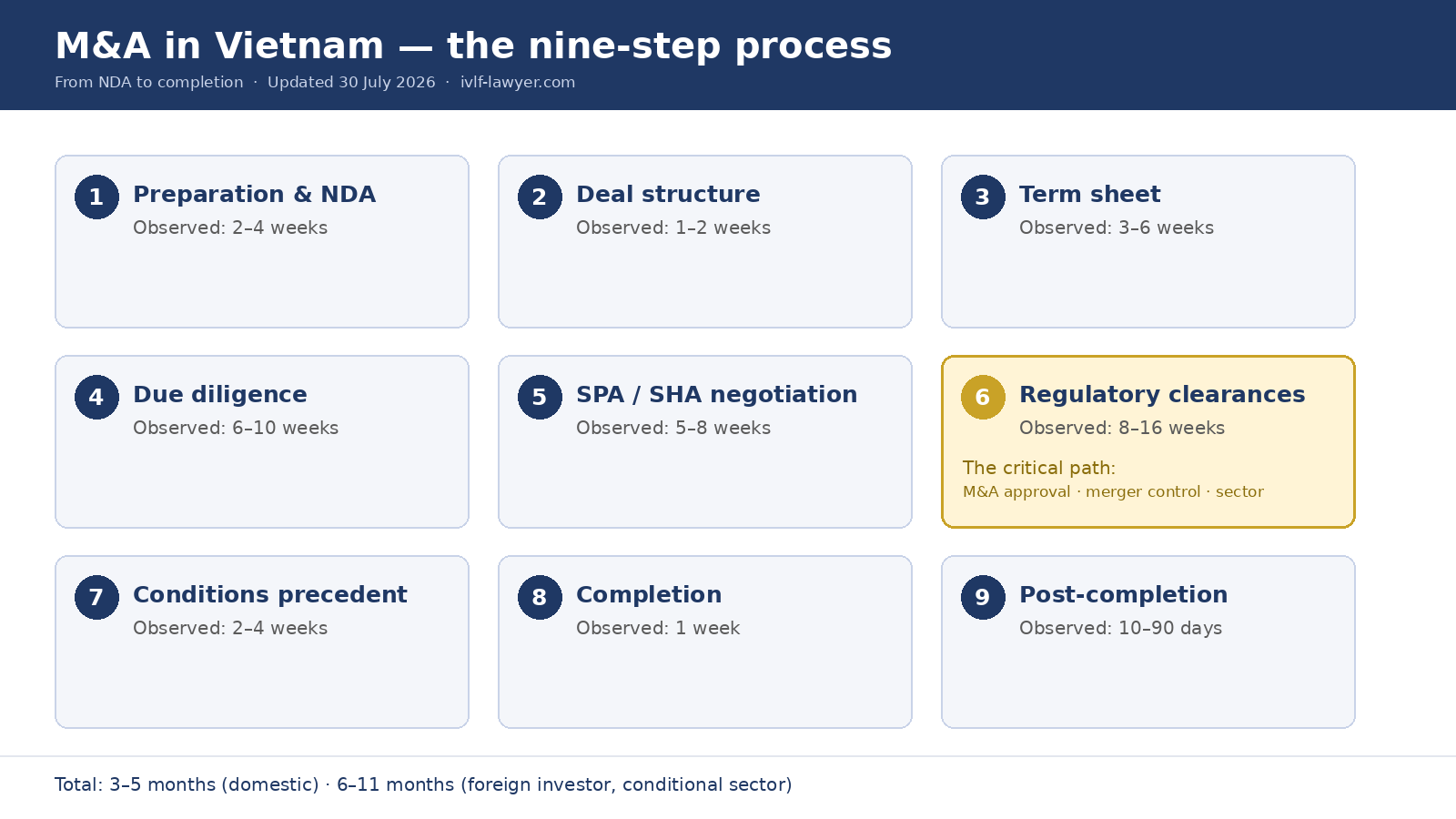
Investors considering acquisitions beyond ordinary portfolio positions should also review our 2026 guide to M&A in Vietnam and Vietnam merger control thresholds. For market-entry and transactional support, see our Vietnam legal advisory services.
Frequently asked questions
When does Vietnam’s FTSE emerging market upgrade take effect?
It becomes effective from the market open on Monday 21 September 2026.
Will all Vietnamese listed shares enter FTSE emerging-market indices?
No. Country reclassification makes securities eligible for review, but each security must still pass the applicable size, liquidity, free-float and investability screens.
Does non-prefunding mean investors can settle late?
No. It changes the funding mechanics before order placement, not the settlement obligation. Failed trades remain subject to contractual remedies and regulatory reporting.
Can a foreign fund trade only through its global broker?
Circular 08/2026/TT-BTC creates a route for orders through global brokers working with domestic securities companies. The operating chain and account setup must still comply with Vietnamese rules.
Does the upgrade remove foreign ownership limits?
No. Statutory, sectoral, charter-based and company-specific limits continue to apply.
Sources
- FTSE Russell, March 2026 interim review announcement
- FTSE Russell, why Vietnam is joining the FTSE GEIS
- State Securities Commission, confirmation of the September 2026 roadmap
- State Securities Commission, Circular 08/2026/TT-BTC overview
- Decree 245/2025/ND-CP on securities regulation
About the author
Capital Markets Advisory Team — IVLF Advisors
IVLF Advisors supports institutional investors, issuers and financial intermediaries on Vietnam market entry, securities regulation, capital transactions and cross-border investment.
Preparing for the September 2026 inclusion?
Arrange a 30-minute Vietnam market-access review with IVLF Advisors
This article provides general information current as at 30 July 2026 and does not constitute legal, investment or tax advice. Rules, market infrastructure and index eligibility may change. Obtain professional advice for your specific circumstances.
This article is provided for general information only and does not constitute legal advice for any specific case. Regulations may change – please consult a qualified professional before acting. Should further analysis be required, please contact one of our lawyers below.