
Vietnam’s offshore wind pipeline under Power Development Plan VIII is large on paper and largely unbanked in practice. Lenders evaluating offshore wind project finance in Vietnam today face a structural problem that has nothing to do with wind resource, which is excellent along the south-central and Mekong Delta coasts, and everything to do with the absence of a settled legal and commercial framework for allocating seabed rights, grid capacity, and offtake risk. Many sponsors are filling that financing gap with green loan structures rather than waiting for a mature auction framework; see IVLF’s guide to green loan financing for Vietnamese infrastructure.
Four issues determine whether an offshore wind financing actually closes, and each one behaves differently from the onshore solar and wind risk lenders in Vietnam are already comfortable underwriting.
1. Seabed Lease and Marine Spatial Planning as the First Bankability Gate
Offshore wind project finance in Vietnam begins, before any turbine procurement or PPA negotiation, with the question of who controls the seabed. Marine spatial planning sits across the authority of the environment ministry, the Ministry of National Defence, and provincial People’s Committees, and offshore wind survey and seabed-use rights have historically been granted through licensing processes designed for oil and gas or general marine activity rather than for a forty-year wind concession.
A lender underwriting offshore wind project finance needs a seabed use right that is exclusive, long enough to match debt tenor, and free of overlapping claims from fisheries, shipping lanes, or national defence exclusion zones.
Where the survey permit and the eventual seabed lease are issued by different processes with no guaranteed continuity between them, project sponsors carry meaningful development risk that a lender cannot underwrite until it is resolved. This is the single most common reason offshore wind project finance transactions in Vietnam remain stuck at the feasibility stage rather than reaching financial close, and it is a risk category with no close analogue in the onshore renewables financings that Vietnamese banks are used to underwriting.
Sponsors that treat the seabed survey permit as a formality, rather than as the load-bearing legal foundation of the entire offshore wind project finance structure, routinely underestimate both timeline and diligence cost at the feasibility stage.
A related complication for offshore wind project finance is the overlap between proposed lease areas and existing fishing grounds and shipping lanes. Vietnam’s coastal waters support dense small-scale fisheries, and provincial authorities are increasingly requiring documented community consultation and compensation frameworks before endorsing a seabed use application.
Lenders should expect resettlement-style social due diligence, modeled on frameworks used for onshore land acquisition, to become a standard workstream in offshore wind project finance even though no land is being acquired in the conventional sense.
2. Grid Connection Risk and the Absence of Firm Transmission Commitments

The second bankability constraint on offshore wind project finance is transmission. Power Development Plan VIII allocates gigawatt-scale offshore wind targets to specific coastal regions, but the national transmission grid operator has not committed firm connection dates or capacity reservations tied to those targets in a form a lender can rely on as a contractual obligation.
For a 500 MW to 1 GW offshore project, the onshore substation, export cable corridor, and grid reinforcement works are themselves major infrastructure items with their own permitting timeline, and a delay in any one of them stops revenue regardless of how quickly the wind farm itself is built.
Lenders financing offshore wind project finance transactions elsewhere in Asia, including Taiwan and South Korea, have addressed this through a combination of government-backed connection guarantees and liquidated damages regimes running against the transmission operator.
Vietnam does not yet have an equivalent mechanism, which means the grid connection risk in a Vietnamese offshore wind project finance structure is currently absorbed almost entirely by the sponsor and, indirectly, by lenders through more conservative gearing, longer debt service reserve requirements, and larger construction-phase contingency reserves. Until a firm-connection regime is codified, offshore wind project finance term sheets in Vietnam are likely to price this uncertainty explicitly rather than assume it away.
3. Foreign EPC Contractor Licensing and Marine Works Capacity
Offshore wind project finance also turns on execution risk, and execution risk in Vietnam’s context is inseparable from the question of who is legally permitted to build the project. Foreign engineering, procurement and construction contractors and marine installation specialists must obtain construction licenses and, for certain scopes, establish a licensed presence or joint venture with a Vietnamese contractor under the Law on Construction and related foreign contractor regulations.
Vietnam currently has limited domestic capacity for offshore heavy-lift installation, jack-up vessel operations, and subsea cable-laying at the scale offshore wind requires, so most projects will rely on foreign specialist subcontractors mobilized under short-term licenses.
A lender underwriting offshore wind project finance needs comfort that the EPC contractor’s licensing status will not become a construction-phase obstacle, and needs the EPC and installation subcontracts structured so that licensing delay risk sits with the contractor, not the borrower, through appropriately drafted delay liquidated damages and long-stop date provisions.
Vessel availability itself is a further constraint: the regional pool of suitable installation vessels is thin, and offshore wind project finance term sheets increasingly require evidence of vessel booking, insurance cover for marine works, and a credible decommissioning cost estimate as a condition precedent to financial close, not merely to drawdown.
Local content expectations add a further layer to offshore wind project finance execution risk. While Vietnam has not yet legislated a binding local content quota for offshore wind comparable to those seen in more mature markets, provincial authorities and state-owned enterprises are signaling a strong preference for domestic fabrication of foundations, cabling and balance-of-plant components where feasible.
Sponsors negotiating EPC packages for offshore wind project finance transactions should build flexibility into procurement contracts to accommodate an evolving local content expectation without triggering delay or cost overrun that shifts risk back onto the financing structure.
4. Financing Without a Mature FIT or Auction Framework
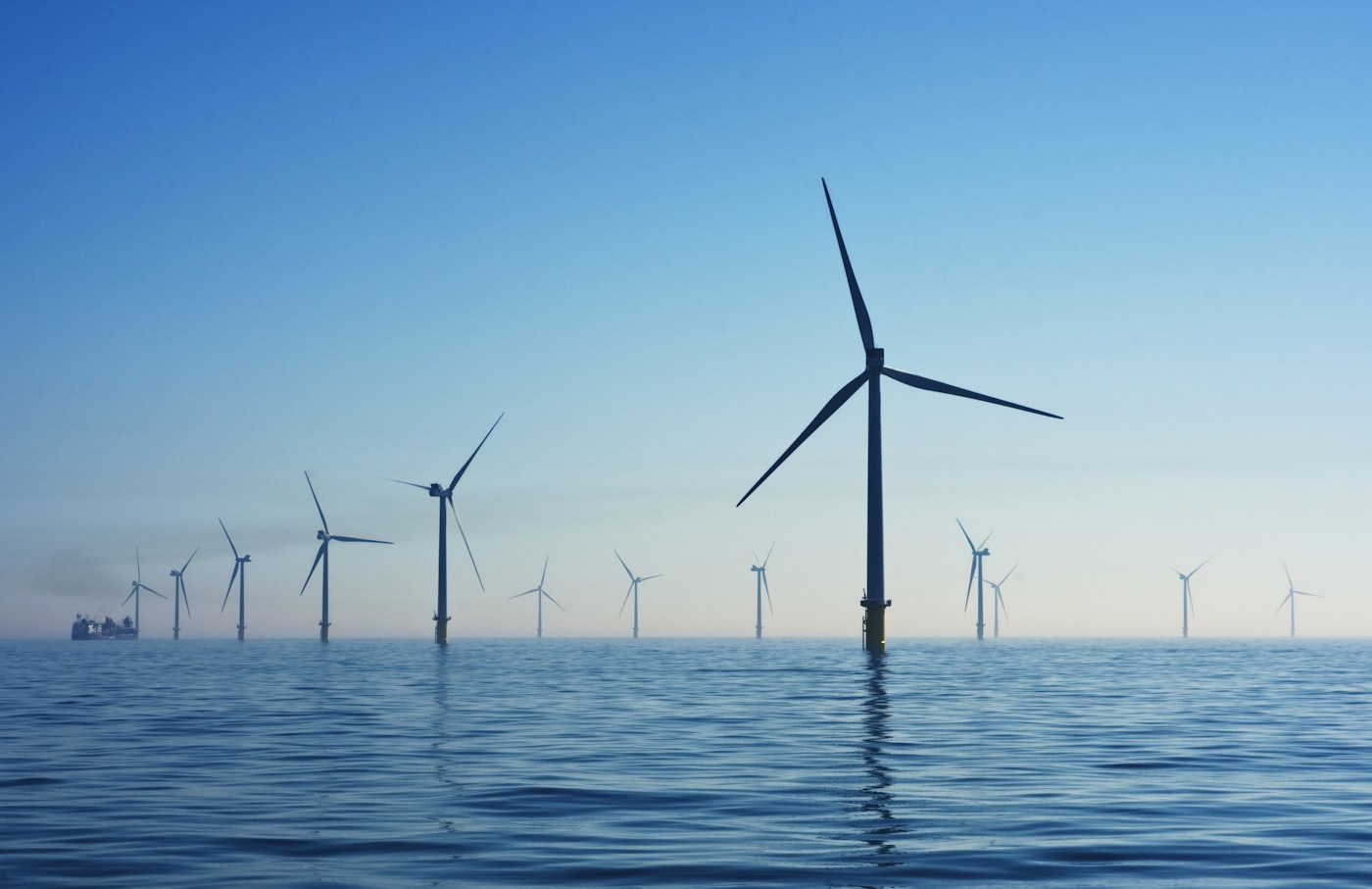
Unlike Vietnam’s earlier solar and onshore wind boom, which was financed against a fixed feed-in tariff under now-expired decisions, offshore wind project finance has no equivalent settled pricing mechanism. Power Development Plan VIII envisions a transition toward competitive auctions or negotiated PPAs with EVN, but the detailed legal framework, including a bankable standard-form PPA with adequate change-in-law, curtailment compensation and termination payment provisions, is still developing.
For offshore wind project finance to reach the debt markets at the gearing levels international lenders expect, the offtake instrument must survive scrutiny on tariff certainty, currency and convertibility, and EVN counterparty credit exposure, matters that the State Bank of Vietnam’s offshore borrowing and foreign exchange regulations also touch on for cross-border project loans.
Step-in rights and security packages present their own novelty in this sector. Because the seabed use right itself may not be freely assignable or mortgageable under current Vietnamese law, lenders cannot rely on a conventional project finance security package built around a mortgage over land use rights, as is standard for onshore solar and wind.
Instead, security tends to concentrate on shares in the project company, offshore accounts where permitted, equipment, and assignment of project contracts, with the seabed right itself treated as a licence that lenders can only protect indirectly through step-in and change-of-control covenants at the corporate level.
Sponsors structuring early-mover offshore wind project finance transactions in Vietnam are, in effect, negotiating both the commercial terms of their own project and elements of the regulatory architecture the next wave of projects will rely on, which raises transaction cost and timeline but is unavoidable in a market this early in its development curve.
Sponsors who have separately financed onshore renewable energy projects in Vietnam should not assume that lessons from those FIT-era financings transfer cleanly to offshore wind project finance, where currency hedging, offtake tenor and construction risk allocation all sit on a different footing.
None of these four constraints is fatal to offshore wind project finance in Vietnam, but each requires early, deliberate structuring rather than adaptation of a solar or onshore wind financing template. Sponsors and lenders evaluating Vietnam’s offshore wind pipeline should treat legal and regulatory due diligence, particularly on seabed rights and grid connection commitments, as a condition to feasibility spend, not a formality after commercial terms are agreed.
5. Local Content, Port Infrastructure, and Marine Contractor Capacity
Offshore wind project finance in Vietnam faces a bottleneck that is often underweighted in early bankability assessments: the domestic port and marine logistics infrastructure needed to stage, load out, and install offshore turbines at scale does not yet exist at the capacity required for a full commercial-scale project, and lenders increasingly ask sponsors to demonstrate a concrete plan for port upgrades or dedicated marshalling yard capacity as a condition precedent rather than treating it as a construction-phase detail to be resolved later.
Vietnam’s existing ports were built primarily for container and bulk cargo, not for the heavy-lift, large-deck-space requirements of offshore wind turbine components, and retrofitting or building dedicated marshalling capacity is itself a multi-year, capital-intensive undertaking that can sit on the critical path for the whole project.
Local content requirements, whether imposed as a matter of government policy or negotiated as part of a project’s social license to operate, add a further layer of complexity, since domestic fabrication and marine construction capacity for offshore wind remains nascent relative to established markets in Europe and Northeast Asia.
Sponsors should model a realistic ramp-up curve for local content compliance rather than assuming Vietnamese suppliers can immediately match the cost and quality benchmarks of an established international supply chain, and financing documents should build flexibility into local content covenants to avoid a technical default if domestic capacity develops more slowly than anticipated at financial close.
Marine contractor licensing adds a related constraint: foreign marine construction and installation vessels typically require specific permits to operate in Vietnamese waters, and the lead time for these permits, together with the limited number of vessels globally capable of offshore wind installation work, means the installation contractor and vessel schedule should be locked in well ahead of financial close rather than left as a post-closing procurement item.
Frequently Asked Questions
Why is Vietnam’s offshore wind pipeline hard to finance despite strong wind resource?
Bankability depends on more than resource quality. Lenders need certainty on seabed lease terms, firm grid connection commitments, licensed EPC and marine contractor capacity, and a stable revenue framework, and several of these remain unsettled under the current regulatory regime.
Is there a fixed feed-in tariff for offshore wind in Vietnam?
No mature FIT or auction framework is currently in place for offshore wind, which means financing structures need to build in flexibility for how the eventual tariff or PPA mechanism is set, rather than assuming a fixed, bankable price from day one.
Can foreign EPC and marine construction contractors work on Vietnamese offshore wind projects?
Foreign marine construction and installation vessels typically need specific permits to operate in Vietnamese waters, and given the limited global fleet capable of offshore wind installation, sponsors should plan for permit lead times well ahead of the construction schedule.
How do local content requirements affect offshore wind project financing?
Domestic fabrication and marine construction capacity is still developing, so financing documents should build a realistic local content ramp-up curve and covenant flexibility into the facility rather than assuming immediate parity with established international supply chains.
For current regulatory guidance relevant to offshore project loans and foreign exchange (see the State Bank of Vietnam’s regulatory portal), IVLF’s project finance team advises sponsors, lenders and EPC contractors on early-stage bankability assessment and financing documentation for offshore wind project finance transactions. As a project finance legal advisor Vietnam sponsors engage before financial close, we focus on closing the specific gaps that stall these deals: unresolved seabed lease terms, uncommitted grid connection capacity, and financing documents that assume a tariff framework which does not yet exist. Contact IVLF to discuss the financing structure for your offshore wind project.
This article is provided for general information only and does not constitute legal advice for any specific case. Regulations may change – please consult a qualified professional before acting. Should further analysis be required, please contact one of our lawyers below.