
M&A regulations in Vietnam moved on several fronts in 2026, and the changes land in the least glamorous parts of a deal: which documents go into the file, which authority receives them, and how the money moves. None of it alters the commercial logic of buying a Vietnamese company. All of it alters the closing timetable, which is where deals are usually lost.

Three M&A regulations shifts affecting deals now
1. Share purchase filings get lighter
The draft decree amending Decree 168/2025/ND-CP would let provincial registrars pull the investment authority’s approval of a foreign investor’s capital contribution or share purchase straight from national databases rather than requiring a copy in the enterprise registration file. It also adds an explicit dossier route for changing foreign-investor shareholders in a joint stock company that is neither listed nor registered for trading – a gap that has cost buyers weeks at the counter.
2. Entity-first structuring is now available
Because the 2025 Investment Law allows a foreign investor to establish an economic organisation before the Investment Registration Certificate is issued, some acquisition structures can be reordered – incorporating the acquisition vehicle earlier, then aligning the certificate around the transaction. Whether that helps depends on the target’s sector; where foreign ownership limits bite, the old sequence still governs.
3. Capital movement is under sharper supervision
Purchase price still flows through the correct capital account in the correct currency and sequence. Where the Vietnamese buyer is investing abroad instead, Circular 34/2026/TT-NHNN now governs the transfer – our note on outbound investment rules covers the pre-investment account regime that takes effect on 31 July 2026.
What M&A regulations still require, unchanged

The M&A approval for foreign buyers in restricted or conditional sectors. Competition filings where combined market share or transaction value crosses the statutory thresholds. Land-use verification for asset-heavy targets, because a share deal inherits every land defect. And the corporate approvals – board, shareholders, spousal consents where individual sellers hold shares – that no digital reform has removed.
Transparency is the direction of travel in Vietnamese M&A regulations. The draft decree requires shareholder information at dissolution and obliges registrars to retain it, part of Vietnam’s response to the Global Forum on Transparency and Exchange of Information for Tax Purposes. Buyers should expect beneficial ownership questions to become a standard diligence line rather than an occasional one.
M&A regulations FAQs
Do these changes shorten deal timelines?
Modestly, at the filing end. The approval phase – which dominates the calendar for foreign buyers in conditional sectors – is unchanged, so plan six to nine months from term sheet to closing for a mid-market transaction, as our deal advisory guide sets out.
Should signed deals be repapered?
No, but conditions precedent drafted around the old document list are worth reviewing before closing, so a condition does not survive the requirement that created it. Legal texts and drafts are published via the Ministry of Finance.

How the new M&A regulations affect deal documents
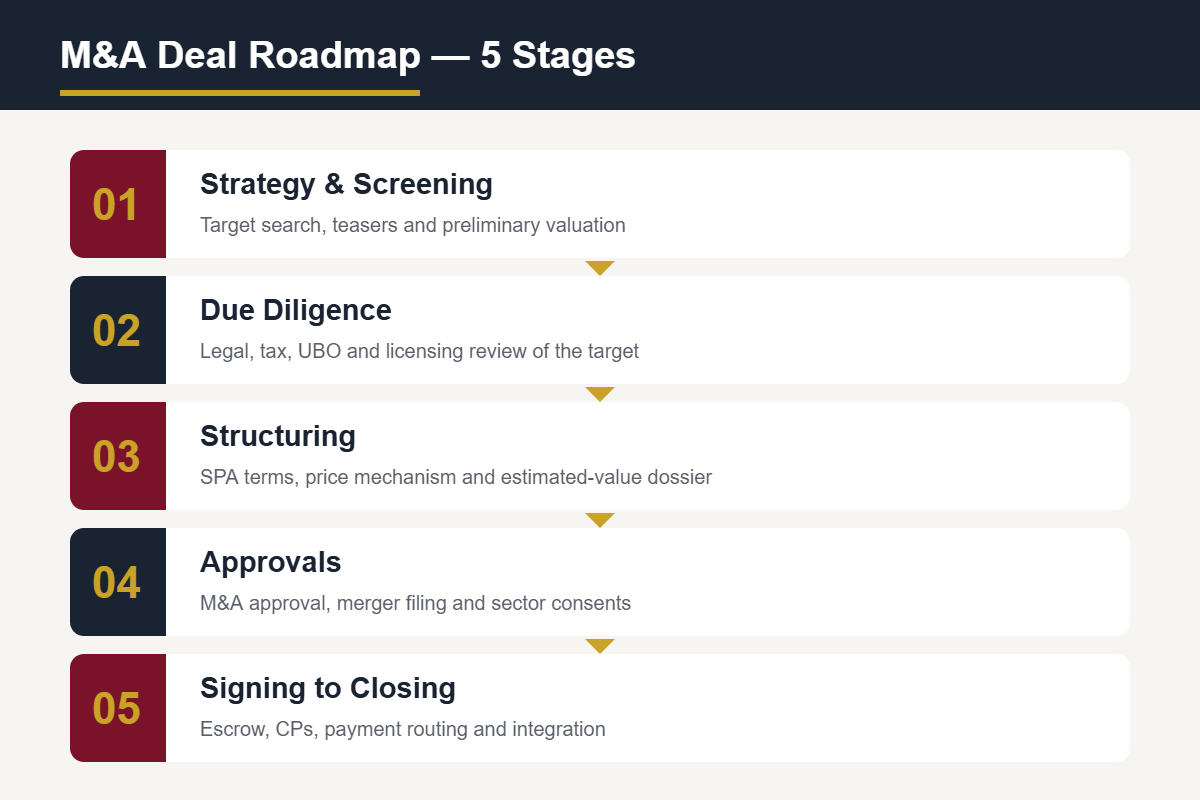
Three drafting points deserve a second look under the 2026 M&A regulations. Conditions precedent that list specific documents – “delivery of a certified copy of the Investment Registration Certificate” – should be reframed around the outcome, namely registration of the transfer, so the condition survives a change in the required file. Long-stop dates set on the assumption of the older filing sequence can often be shortened, which matters because every extra month is a month of price risk for both sides. And representations about corporate standing should reference the national database record rather than paper certificates, since that record is what registrars and courts now consult.
Sellers face their own adjustment under these M&A regulations. Where M&A regulations increase the transparency of shareholder information – including the proposed duty to supply shareholder details at dissolution and to retain them – warranties about historic ownership become easier for a buyer to verify after closing. Disclosure that was previously incomplete by accident is now discoverable, which raises the value of doing the corporate clean-up before the data room opens rather than defending it afterwards.
M&A regulations: practical steps for buyers this quarter
Confirm with local counsel which document list the target province is applying today, because practice moves ahead of gazette dates. Re-baseline the transaction timetable against the current approval reality rather than a precedent from last year. Build the beneficial ownership question into diligence as standard, not as an add-on for sensitive sectors. And, where the buyer is a Vietnamese group acquiring abroad, sequence the foreign exchange registration before any deposit leaves the country – a point our legal due diligence checklist now flags at kick-off.
None of this changes what a good deal looks like. M&A regulations govern the path, not the destination, and buyers who track the path closely simply arrive sooner and with fewer surprises than those who assume last year’s map still applies.
This article is provided for general information only and does not constitute legal advice for any specific case. Regulations may change – please consult a qualified professional before acting. Should further analysis be required, please contact one of our lawyers below.