
A hull policy is the asset that stands behind a ship loan, a charter and a company’s balance sheet, yet it is often renewed on the broker’s slip without a lawyer reading the wording. The consequence appears on the worst day: a grounding or a fire, an insurer questioning class status or navigation limits, and a bank asking why proceeds will not be paid. For owners and lenders, hull and machinery insurance is a contract of precise conditions, not a formality.

This guide is written for shipowners, ship financiers, managers and in-house counsel. It explains what hull and machinery cover actually responds to, how the insured value is set and why it matters, how total loss and constructive total loss are tested, and how claims are presented. Where the discussion rests on English-law doctrine or London market wording, it says so, and Vietnamese-law points are flagged for verification.
Table of Contents
- What hull and machinery insurance covers and excludes
- ITC Hulls and the conditions that void cover
- Insured value and deductible: setting the numbers
- Total loss and constructive total loss
- Lender protections and loss payee mechanics
- Presenting marine insurance claims
- FAQ
- Conclusion: one action before renewal
What hull and machinery insurance covers and excludes
Hull and machinery cover insures the vessel itself: the hull, machinery, equipment, and usually spares on board, against physical loss or damage from specified perils. It also commonly includes a collision liability extension, which responds to the owner’s liability to the other ship, though only up to a share of the insured value. Liabilities for cargo, crew, pollution and wreck removal belong to the protection and indemnity (P&I) cover, which is a different contract with a different insurer.
That division is a frequent source of unexpected gaps. An owner who assumes the hull policy will respond to a pollution claim or a cargo claim has misunderstood its structure.
Perils covered and the latent-defect extension
English-law and market practice divides hull perils into named perils, such as perils of the sea, fire, explosion, piracy and jettison, and an additional extension that picks up certain machinery and crew-related causes. The latter, widely known as the Inchmaree clause, responds to loss caused by latent defect, negligence of master, officers, crew or repairers, and bursting of boilers or breakage of shafts, provided the loss was not the result of want of due diligence by the assured or the managers.
The extension is where machinery claims are won or lost. A cracked crankshaft is not a peril of the seas. Whether the damage to other parts caused by a latent defect is covered, while the defective part itself is not, depends on the precise words.
Key takeaway: wear and tear, and the cost of repairing the defective part itself, are generally excluded. Resulting damage to other parts of the ship is where the cover works.
Hull and machinery insurance and war risks cover
For tonnage trading in or through Vietnamese waters, hull and machinery insurance is normally placed together with separate war and strikes cover. Basic hull wording excludes war, strikes, terrorism and similar risks, and these are covered by separate clauses which can be cancelled on short notice and reviewed for listed areas. Check that your cover and your financing agreements both treat war risks cover as a condition, and who bears additional premium for listed areas.
The licensing and cross-border placement requirements for insurers and brokers dealing with Vietnamese-flag or Vietnam-owned vessels are governed by the Law on Insurance Business No. 08/2022/QH15, effective 1 January 2023 and amended by Law No. 139/2025/QH15, with Decree 46/2023/NĐ-CP as guidance. Any rule on placement with foreign insurers and reinsurance must be confirmed.
ITC Hulls and the conditions that void cover
The Institute Time Clauses Hulls, known as ITC Hulls, are the standard English-market wording for time policies on ships. Many insurers use their own bespoke forms or international hull clauses, but ITC Hulls remain the reference point, and their structure illustrates the usual conditions.
The conditions that matter most to owners and lenders are not the perils. They are the clauses that terminate or suspend cover automatically:
- Change of class: loss of class, or a change in classification society, without insurers’ prior agreement.
- Change of ownership, flag or management: a transfer or change of manager can terminate cover automatically, unless insurers agree in writing.
- Mortgage or charter on bareboat terms: new mortgages or demise charters can trigger termination or require consent.
- Navigation limits: trading outside agreed geographical limits requires prior notice and additional premium.
- Breach of statutory safety regimes: the owner’s obligation to maintain compliance with class rules, the ISM Code and flag requirements is a recurring theme in coverage defences.
The disclosure duty
Under English law, marine insurance contracts historically rested on utmost good faith, and the assured was required to disclose every material circumstance before the contract was concluded. For English-law policies, the Insurance Act 2015 reformed this into a duty of fair presentation. These rules do not govern a Vietnamese-law policy, and the Vietnamese position on disclosure and misrepresentation in the insurance contract must be verified.
The practical point is common to both: gather and present facts about the vessel’s condition, surveys outstanding, class recommendations, prior losses and management changes in a structured submission before renewal. A well-documented submission also helps later if the insurer alleges non-disclosure.
Renewal or financing coming up? IVLF can carry out a confidential preliminary review of your hull policy, mortgagee provisions and loan insurance covenants, under NDA, and flag the clauses most likely to cause disputes in a claim.
Warranties and conditions: a risk table
| Issue | Market position | Commercial impact | Risk | Mitigation |
|---|---|---|---|---|
| Loss of class | Cover may terminate automatically or be suspended | Uninsured vessel and loan default trigger | Fatal | Class compliance monitoring; written insurer consent to any change |
| Change of ownership or manager | Automatic termination unless agreed | Gap in cover during sale, refinancing or management transfer | Fatal | Make insurer consent a condition precedent to closing |
| Trading outside limits | Notice and additional premium required | Claim reduced or refused after casualty in excluded area | High | Voyage planning check against policy limits; charterparty trading warranties aligned |
| Late premium payment | Cancellation provisions may apply | Cover lapse and lender default | High | Premium payment covenant and lender notice of cancellation |
| Latent defect machinery claim | Resulting damage may be covered, defective part is not | Large repair bills partly unrecoverable | Medium | Maintenance records, class reports and due diligence file |
Insured value and deductible: setting the numbers
Hull policies are usually valued policies. The insured value is agreed at inception and is, subject to fraud, treated as conclusive between insurer and assured as to the value of the ship for the purposes of a total loss claim. That is English-law and market practice. It makes the number a legal fact, so it should be set with care.
Under-insurance means that a total loss leaves a financing gap and that partial claims may be reduced proportionally. Over-insurance invites questions at claim time and may increase the premium without improving recovery. Lenders typically ask for an insured value no lower than the market value and a stated margin above the outstanding loan, commonly around 120 per cent, though the actual covenant must be checked in your facility agreement.
How to support the insured value
- Obtain independent broker valuations dated close to renewal, not stale ones.
- Reconcile the insured value with the loan covenant and the charterer’s requirements.
- Record why any increase in value, such as capital improvements, was agreed.
- Consider whether a separate increased-value or disbursements cover is allowed and for how much, because market wording often caps the combined total.
Deductible: more than a negotiating point
The deductible is the amount the owner carries on each claim. Under the standard market approach, it usually applies to each accident, usually does not apply to total loss claims, and may interact with sue and labour and general average claims in different ways.
A low deductible increases premium. A high deductible shifts small and frequent losses to the owner’s balance sheet. The sensible question for a fleet is the owner’s loss history and cash flow, and whether a lender covenant limits the deductible.
Total loss and constructive total loss
A total loss claim is the largest payment under a hull policy, and the test is often disputed. English law, and market wording that follows it, recognises two main categories.
An actual total loss occurs when the vessel is destroyed, or so damaged that it ceases to be a thing of the kind insured, or when the assured is irretrievably deprived of it. A constructive total loss arises where actual total loss appears unavoidable, or where the ship cannot be preserved from actual total loss without expenditure that would exceed her value once the expenditure was incurred.
The market test for constructive total loss
Under many hull forms, including ITC Hulls, the test compares the estimated cost of recovery and repair against the insured value, not against the repaired market value. The cost of salvage, repair and the cost of temporary repairs count, whereas the vessel’s damaged or break-up value is ignored. The practical effect is that CTL claims turn on estimates, quotes and the timing of decisions.
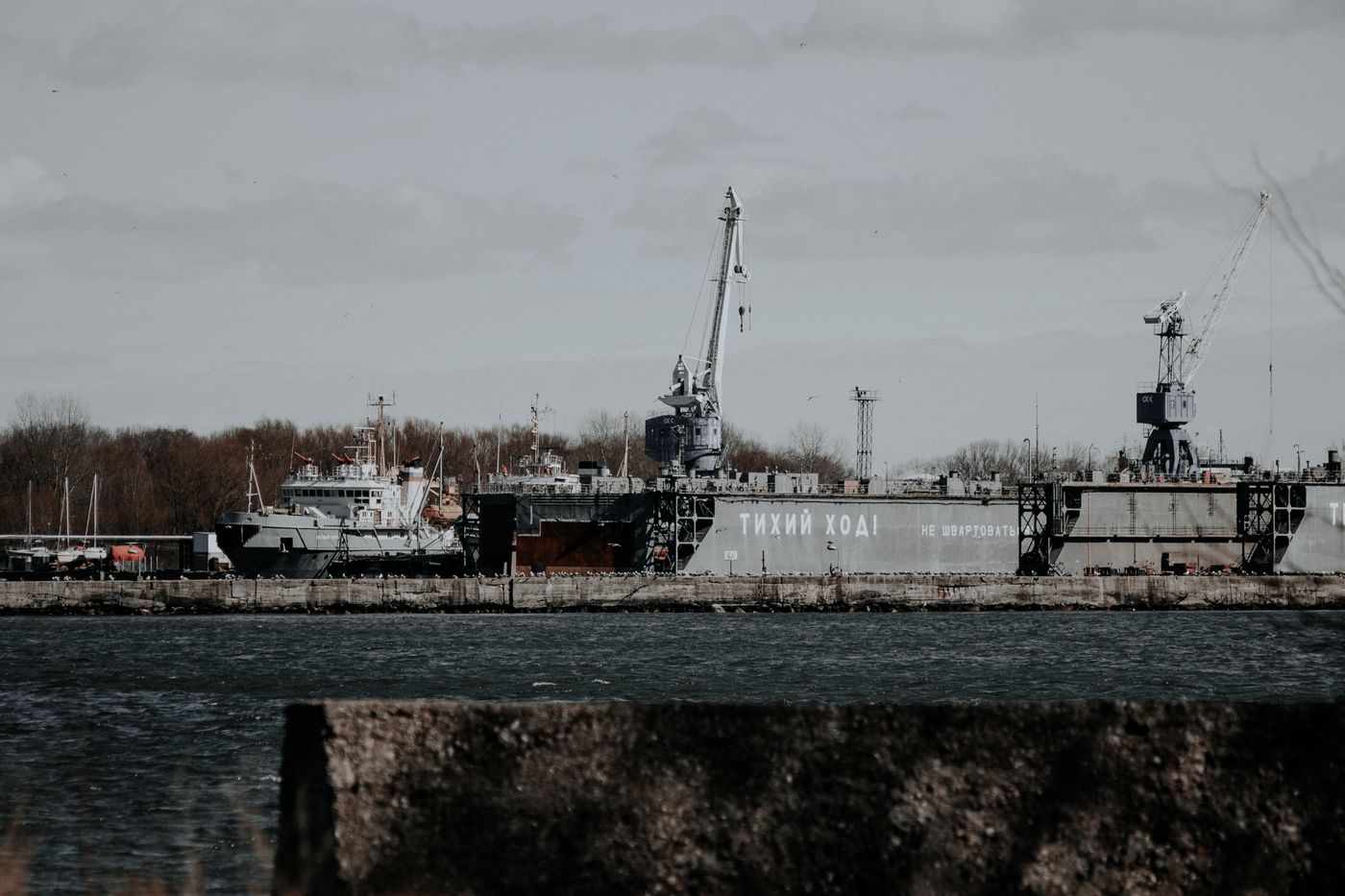
The distinction matters because a total loss can mean payment of the full insured value, and the insurer takes the vessel or what remains of it. Under English law, a constructive total loss traditionally required notice of abandonment, a point that market wording addresses in different ways. Check the wording, and where a casualty looks serious, serve a protective notice in writing without waiting for the repair estimate.
Total loss comparison
| Category | Test | Commercial impact | Risk | Action |
|---|---|---|---|---|
| Actual total loss | Vessel destroyed or lost beyond recovery | Full insured value payable, deductible usually not applied | Low (to claim) | Notify insurers, preserve voyage and loss evidence |
| Constructive total loss | Recovery and repair cost exceeds insured value, or actual loss unavoidable | Full value payable against transfer of the wreck | High (disputed estimates) | Independent surveyors and a reasoned timeline; protective notice |
| Partial loss | Repair cost below the CTL threshold | Repair cost less deductible; off-hire borne by the owner | Medium | Agree repairers and repair scope with insurers in advance |
Hypothetical scenario
Hypothetical scenario. Assume a financed Handysize bulk carrier, insured value agreed at a stated figure, runs aground in the approaches to a port. A salvage team refloats her. Repair quotations vary widely: one yard quotes slightly below the insured value, another above it once temporary repairs and towage are included. The mortgagee wants a total loss declaration, while the owner prefers repair.
Assume the owner delays notifying the insurers for several days while negotiating with yards and the policy requires prompt notice and insurer approval of repair arrangements. The insurer reserves its position. The consequence is not the casualty itself but the delay, the divergent estimates and the lack of an agreed process. The assumptions are for illustration only.
Lender protections and loss payee mechanics
A bank financing a vessel relies on hull and machinery insurance for repayment if the vessel is lost. Standard protections include assignment of the insurances, a loss payable clause directing proceeds to the bank above a stated threshold, and notice of cancellation to the mortgagee.
Mortgagee’s interest insurance, often called MII, is a separate policy protecting the lender where the owner’s cover is voided by the owner’s breach. Whether it is required depends on the lender’s risk appetite, and its terms depend on the exclusions and any sanctions provisions.
The enforcement of ship mortgages and the effect of registration on priority in Vietnam, including any Vietnamese registry requirements for noting insurance interests, are matters to confirm.
Covenants lenders should include
- Insurance in the form, for the amounts and with the underwriters approved by the bank.
- Evidence of premium payment and a broker’s letter of undertaking to hold documents to the bank’s order.
- Obligation to notify the bank of any casualty above a stated amount.
- Right to approve settlements of total loss and large partial claims.
Presenting marine insurance claims
Marine insurance claims under hull and machinery insurance are processed through a defined sequence, and the owner who understands it recovers faster. First, notify the insurers or the broker immediately and in writing. Second, protect the vessel and mitigate loss, acting as a prudent uninsured owner would. Third, arrange a survey, normally attended by the underwriters’ surveyor and class.
Fourth, obtain the insurers’ agreement on the repair yard and scope, and compare tenders where required. Fifth, prepare the claim with an average adjuster’s assistance for repair costs, general average, and sue and labour expenditure.
Claim documents to assemble
- Master’s protest, log books, voyage data recorder extracts and engine logs.
- Class survey reports, damage survey and repair specification.
- Yard quotations, invoices, and proof of payment.
- Records of maintenance, inspection and prior defects, essential for latent defect claims.
- Charterparty, off-hire records and notices to charterers and cargo interests.
Time limits and disputes
Policies set notice conditions, and the law sets limitation periods for suit. The English-law and market position on time bars is not a substitute for the period that applies to your policy and forum. For a policy or dispute connected to Vietnam, check the limitation period and any pre-action requirements. Arbitration clauses in hull policies are common, and the seat and rules should be known at placement, not after a loss.
Key takeaway: a hull claim is a project. Appoint a claims lead, keep a chronology, and agree each step with insurers in writing.
Frequently Asked Questions
Does hull insurance cover pollution or cargo claims?
No. Hull policies insure the ship. Liability for cargo, pollution, crew injury and wreck removal normally falls under P&I cover. Confirm the boundary in both policies and with your broker.
Is the deductible applied to a total loss?
Under the usual market approach, no, but check your wording. Deductibles usually apply to partial loss claims and may apply differently to sue and labour and general average.
What happens to hull cover if we sell the ship?
Many wordings terminate cover automatically on change of ownership unless insurers agree otherwise. Obtain written consent before closing, and arrange the buyer’s own cover from delivery.
Who decides if the vessel is a constructive total loss?
The contract test applies, and the insurer and assured usually negotiate on surveyors’ estimates. If they disagree, the dispute goes to the forum in the policy. Document estimates and timing carefully.
Can the bank claim directly from insurers?
Usually through assignment and the loss payable clause, not as a party to the policy. Check the assignment, notice to insurers and any acknowledgement before drawdown.
Conclusion: one action before renewal
Hull and machinery insurance is only as strong as its conditions. Class, ownership, navigation limits, valuation and notice duties are decided in the wording and the submission long before any casualty.
The next practical step is a pre-renewal review: compare the draft slip against the loan agreement’s insurance covenants, confirm the insured value and deductible, and list every condition that could terminate or reduce cover. To place this within the broader insurance programme, read our guidance on political risk insurance (MIGA and PRI) and on ship mortgage and maritime asset finance in Vietnam. For industry standards and contract wording, see IUMI and BIMCO.
This article provides general information as of 14 October 2026 and is not legal advice for any specific matter. Policy wording, facts and applicable law vary, so obtain advice on your own circumstances before acting.
Or contact us directly:
Contact IVLF LawyerCompany Formation Services – IVLF Advisors
This article is provided for general information only and does not constitute legal advice for any specific case. Regulations may change – please consult a qualified professional before acting. Should further analysis be required, please contact one of our lawyers below.