
Bond issuance gives Vietnamese companies debt capital without bank covenants – but after the market’s 2022-2023 turbulence, the rules around bond issuance are stricter and enforcement is real. Here is what corporate issuers must get right under the current framework.

Two routes: private and public bond issuance
Private bond issuance under Decree 153/2020 (as amended by Decree 65/2022 and Decree 08/2023) may only be sold to professional securities investors, with strict caps on transfers. Public bond issuance under the Securities Law requires SSC registration, a prospectus and, for most issuers, a credit rating – slower, but it reaches retail capital and builds a public curve.
Conditions issuers must satisfy
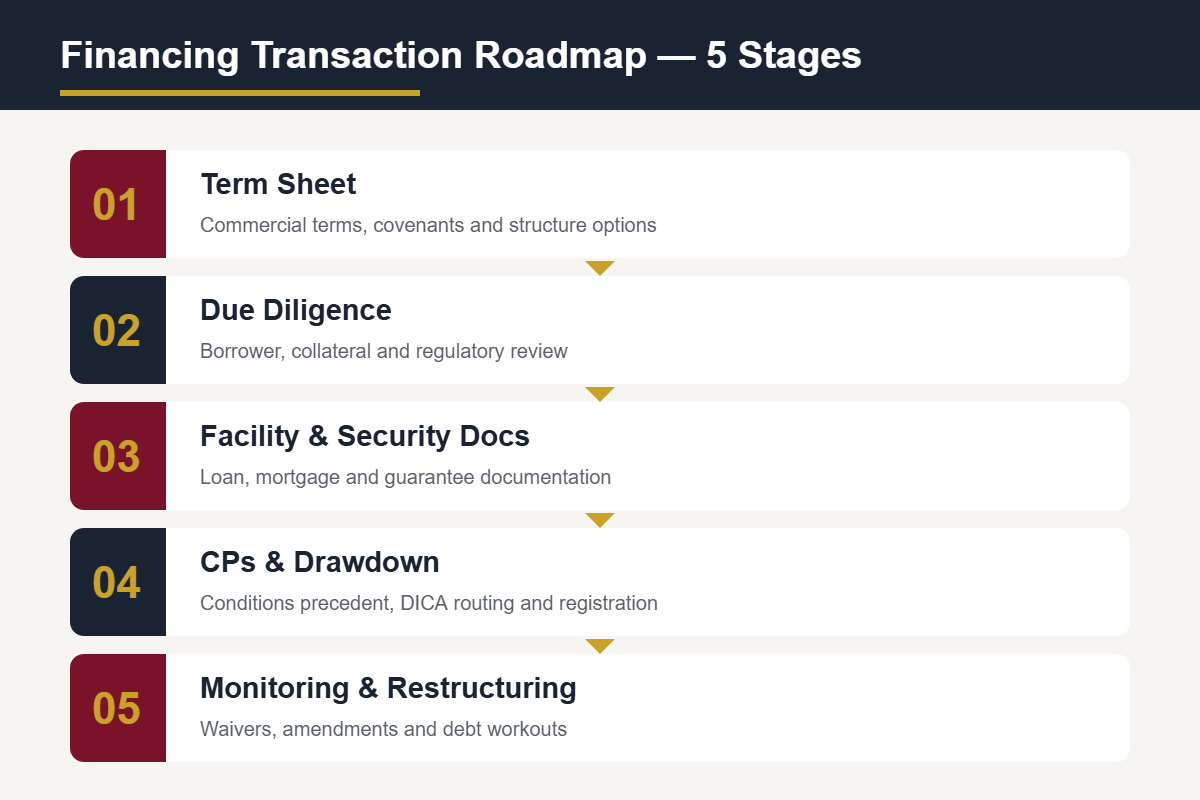
For private bond issuance: audited financials, full payment of principal and interest on prior bonds, a board or shareholder-approved issuance plan stating the specific use of proceeds, and disclosure through the HNX corporate bond portal. Use of proceeds is no longer a formality – issuers must report actual usage, and misuse triggers both administrative and, in serious cases, criminal exposure.
What the market now demands beyond the law
Collateral and guarantees that hold
Post-crisis investors price unsecured paper harshly. Security packages – real estate mortgages, share pledges, guarantee structures – must be perfected under registration rules, and how they rank matters: see our analysis of senior and subordinated creditors.
Honest maturity planning
Refinancing risk killed more issuers than business failure did. A bond issuance plan should map repayment against realistic cash flow, with restructuring options – extensions, exchanges, buybacks – negotiated in documents before they are needed.
Disclosure discipline
Quarterly usage reports and event disclosure are audited in practice. Issuers with clean disclosure histories reopen market access first when windows return.
Restructuring distressed bonds
When repayment stress appears, Decree 08/2023 opened negotiated paths that remain the playbook: maturity extensions of up to two years with bondholder approval, and settlement of principal and interest with other assets where holders agree. Both routes live or die on documentation – identifying the approving majority correctly, papering the exchange so it binds dissenters where the terms allow, and valuing swapped assets defensibly.
Issuers who approach holders early with audited numbers and a credible plan keep control of their bond issuance narrative; those who go silent invite enforcement and, increasingly, criminal complaints from retail investors. Our restructuring team has run both sides of these negotiations, and the difference in recovery between an organised process and an improvised one is rarely less than double.
For new issuers, the lesson is to draft restructuring mechanics into the terms at bond issuance, when goodwill is high and lawyers are cheap – not at default, when both have evaporated.
How bond issuance fits a capital structure
Bonds sit between bank debt and equity, and the right question is rarely bonds versus nothing – it is bonds versus the alternatives. Against bank loans, bond issuance trades covenant flexibility and larger size for disclosure duties and refinancing risk at maturity. Against equity, it preserves ownership but adds fixed obligations a downturn does not forgive. The healthiest issuers we advise use bond issuance for defined, cash-generating purposes – a project with its own revenue, an acquisition with modelled synergies – and match tenor to the asset’s payback period.
The unhealthiest borrow short to build long, which is the single pattern behind most of the market’s defaults. A one-page capital structure policy, approved by the board before any bond issuance, prevents more distress than any covenant package: it states what the company borrows for, at what leverage ceiling, and what gets cut first when cash tightens.
Investors reading issuer documents should apply the same lens in reverse: proceeds funding operating losses, tenors shorter than the funded asset’s life, and collateral valued by the issuer’s own affiliate are the three flags that predict trouble more reliably than any rating.
Bond issuance: frequently asked questions
Who counts as a professional investor?
Institutions, and individuals meeting portfolio or income thresholds verified under the tightened 2022 rules. The verification burden sits with the distributing securities company, but a failed offering lands on the issuer.
Can proceeds refinance old debt?
Yes if the issuance plan says so explicitly. Vague purposes are the single most common dossier defect our bond issuance reviews find.
How does IVLF support an issuance?
We draft the plan and documents, verify conditions, perfect the security package and manage disclosure – one workstream alongside our capital markets and banking teams. Regulations are published by the Ministry of Finance.

This article is provided for general information only and does not constitute legal advice for any specific case. Regulations may change – please consult a qualified professional before acting. Should further analysis be required, please contact one of our lawyers below.