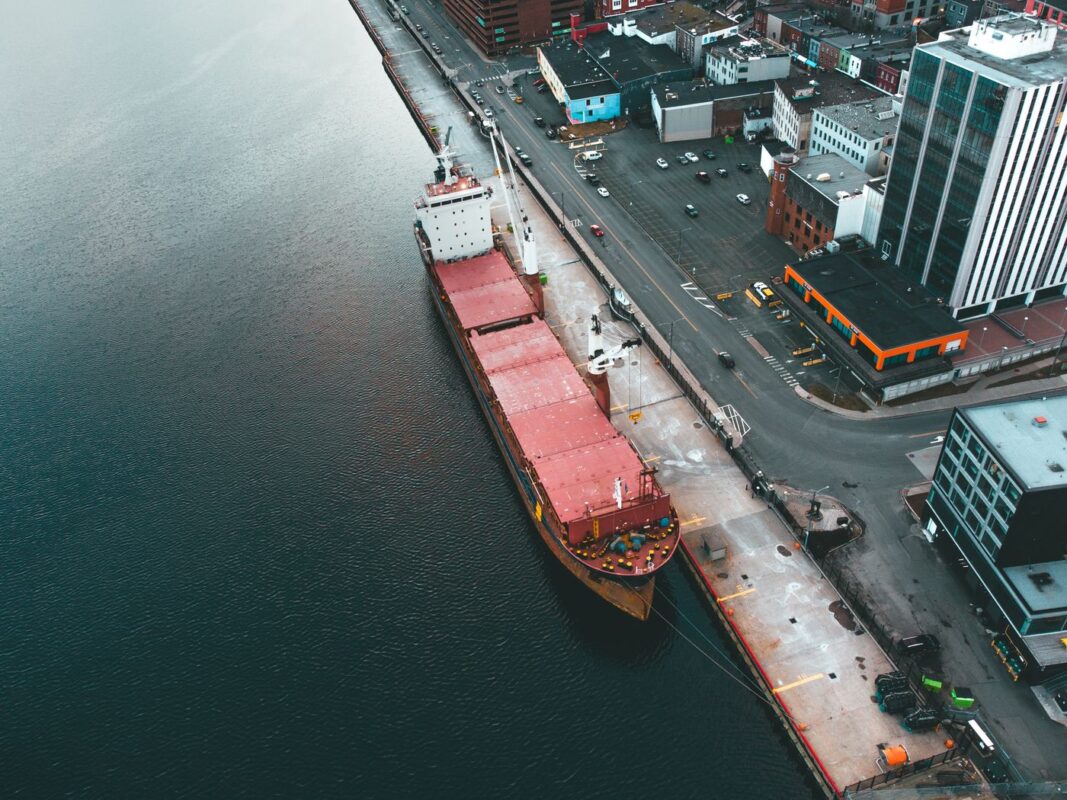
A single escape of persistent oil can convert a routine voyage into a multi-year dispute involving coastal states, fishermen, municipalities, insurers and international compensation funds. The oil pollution liability shipowner regime is built to make sure the injured are paid quickly, and it does that by placing strict, channelled liability on one party: the registered owner. Fault, however, rarely stays out of the picture. It returns through limitation, recourse against charterers and managers, and disputes with insurers over what the certificate really covers.
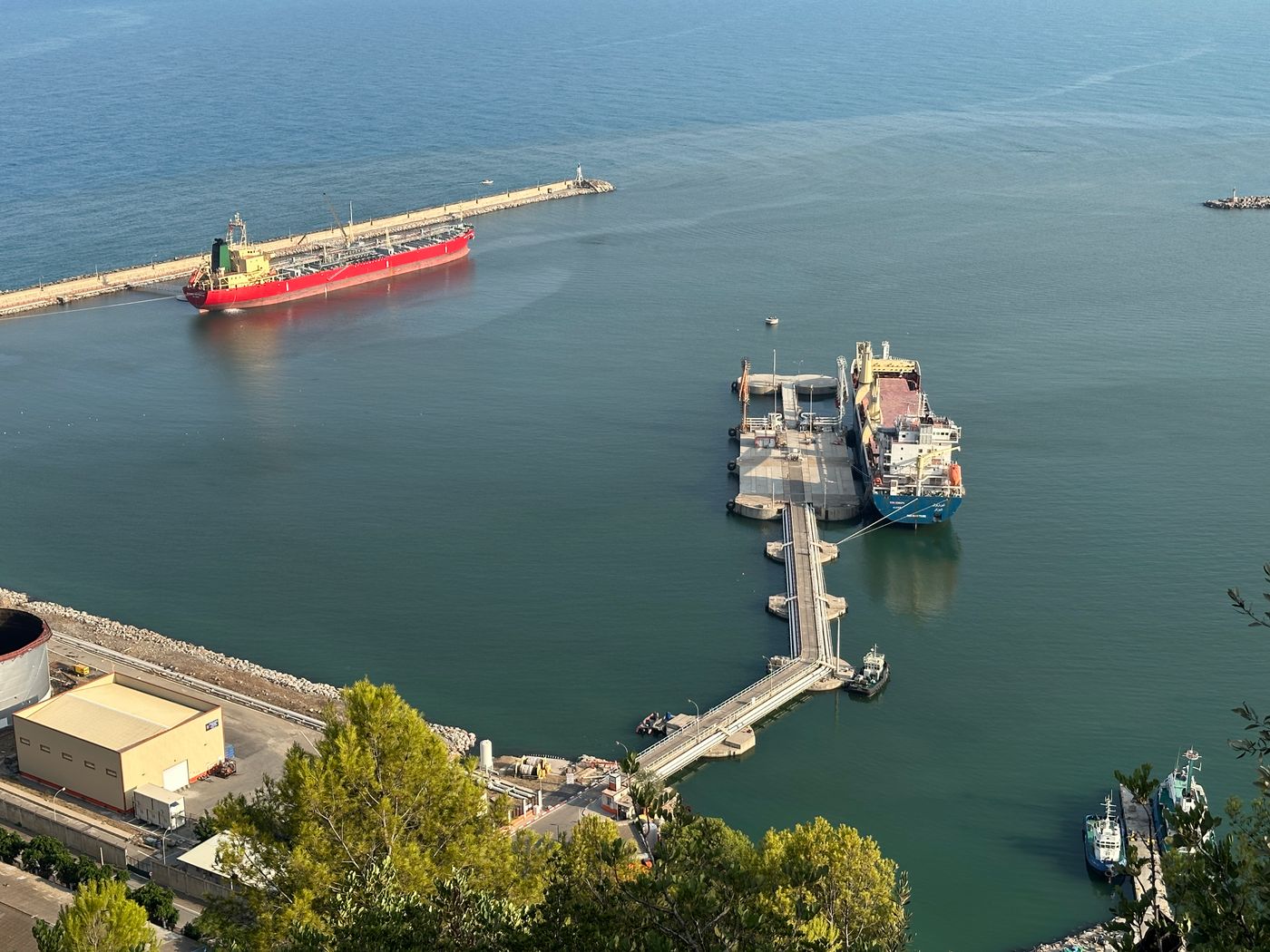
For every oil pollution liability shipowner, financier and charterer, the commercial question is not whether the conventions apply in theory. It is who holds the certificate, who is exposed above the limit, who funds the clean-up while the facts are argued, and what the documents say about each of those points. This article sets out the international framework at principle level, flags where Vietnamese practice must be verified, and ends with a practical checklist.
Table of Contents
- The oil pollution liability shipowner regime in outline
- Strict liability under CLC 1992
- Compulsory insurance certificate and direct action
- Bunkers Convention: the non-tanker exposure
- IOPC Funds and marine environmental compensation
- Cost, insurance structure and a worked scenario
- FAQs
- Conclusion and next step
The oil pollution liability shipowner regime in outline
International oil pollution law is not a single instrument. It is a layered system, and each layer answers a different question. Understanding the layers prevents the common mistake of assuming that one insurance policy or one convention covers every barrel and every claimant.
Three questions, three layers of oil pollution liability shipowner law
- Who is liable first? The registered owner, on a strict basis, under the tanker convention (CLC 1992) for persistent oil, and under the Bunkers Convention for bunker oil spilled from other ships.
- Who proves financial capacity? The ship, through a state-issued certificate backed by approved insurance or other security.
- Who pays when the first layer is exhausted? For tanker spills in member states, an international fund system funded by oil receivers.
These layers apply to different ships, different oils and different claimants. A bulk carrier bunkering heavy fuel oil is outside the tanker regime but inside the bunker regime. A tanker carrying persistent crude is inside the tanker regime and may also face the fund system.
Why the oil pollution liability shipowner question is a financing issue
Lenders and charterers often treat pollution as an operational risk that the insurer will absorb. That is only partly right. Limits, exclusions, certificate defects, sanctions clauses and unpaid premiums can all leave the owner, and therefore the mortgagee, holding the exposure. Loan and charter documents should treat the pollution regime as a credit and counterparty issue, not a purely technical one.
Takeaway: the conventions allocate first-line liability to the owner by design. Your contracts decide who ultimately bears the cost.
Strict liability under CLC 1992
The International Convention on Civil Liability for Oil Pollution Damage 1992 (CLC 1992) applies to pollution damage caused by persistent oil carried in bulk as cargo, and to bunker oil from a laden tanker or one in ballast following such a cargo. It makes the registered owner liable without proof of fault. The claimant needs to show the incident, the pollution damage and the causal link.
Limited defences
The owner is relieved only in narrow cases, typically where the damage resulted from an act of war or hostilities, from a natural phenomenon of an exceptional, inevitable and irresistible character, wholly from an intentional act of a third party, or wholly from the negligence of an authority responsible for navigational aids. Poor maintenance, crew error and weather that was merely severe do not qualify.
Channelling: who is protected
Claims for pollution damage can be brought only against the owner. Servants, agents, pilots, charterers of any description, managers, operators, salvors and those taking preventive measures are protected from direct claims under the convention, unless the damage resulted from their personal act or omission committed with intent to cause such damage or recklessly with knowledge that it would probably result. The owner keeps rights of recourse against third parties under the general law.
Channelling is attractive for charterers and managers, but it is not a reason for them to relax. Recourse claims by the owner or its insurer, and claims outside the convention’s definition of pollution damage, remain available under the contract and the applicable national law.
What is compensable
In principle, compensation covers loss or damage outside the ship caused by contamination, including the cost of reasonable preventive measures and clean-up, and economic loss linked to the contamination. Impairment of the environment is recoverable only for reasonable reinstatement measures actually undertaken or to be undertaken, which is why abstract ecological valuations are generally contested.
Limitation under CLC 1992
The owner may limit liability by reference to the ship’s tonnage on a sliding scale, up to an overall ceiling set by the convention as amended in 2000. Check the current SDR figures with the IMO before relying on any number. The owner loses the right to limit only if the damage resulted from its personal act or omission committed with intent or recklessly with knowledge that such damage would probably result. A limitation fund must be constituted with the court or competent authority to benefit from the limit.
Facing a pollution exposure or an incident-response clause you are unsure about? IVLF can carry out a confidential preliminary review, protected by a non-disclosure agreement, of your charter, financing and insurance documents to identify where pollution liability would actually fall.
Compulsory insurance certificate and direct action
CLC 1992 requires the registered owner of a ship carrying more than a stated quantity of oil in bulk as cargo to maintain insurance or other financial security in the amount of the owner’s limit. The flag state, or another contracting state acting on its behalf, then issues a compulsory insurance certificate. The certificate must be carried on board, and port states refuse entry to or departure from their ports for ships without one.
Why the certificate matters commercially
- It is the document a port state will check, so a lapsed or misdescribed certificate can immobilise the ship.
- It evidences that an insurer or guarantor stands behind the owner, which is relevant to charter due diligence and mortgage covenants.
- It supports direct action: a claimant may bring a claim for pollution damage directly against the insurer or other person providing the security.
Direct action and the insurer’s defences
Under the convention, the insurer may invoke the defences the owner could have raised, and may also rely on wilful misconduct of the owner. It generally may not rely on non-payment of premium or other contract defences that would otherwise be available against the owner. This is a point where policy wording and the real position diverge, so the exact scope should be checked in the club or insurer rules and the certificate itself.
Practical points
- Confirm the certificate is for the right ship, owner, period and convention.
- Check who is named as owner. The registered owner, and not a bareboat charterer or manager, is the liable party under the tanker convention.
- Verify how Vietnamese port and maritime authorities treat certificates for visiting and Vietnamese-flag ships.
Bunkers Convention: the non-tanker exposure
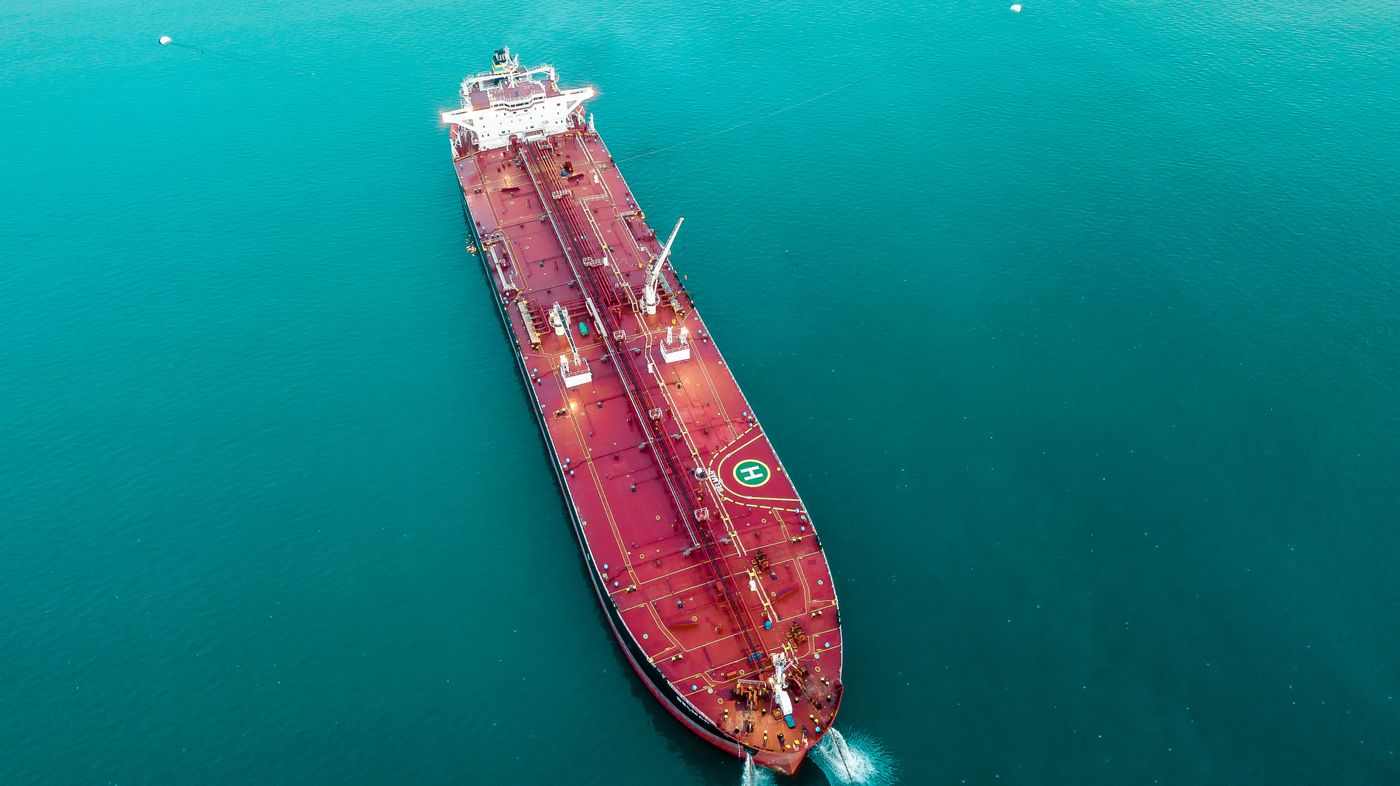
Most pollution events involving cargo ships other than tankers involve fuel. The Bunkers Convention 2001 addresses this by creating strict liability for bunker oil pollution damage, compulsory insurance for ships above a gross tonnage threshold, and direct action against the insurer. The check on tonnage and scope should be made against the convention text on the IMO website.
A wider group of liable persons
Unlike the tanker convention, the Bunkers Convention defines the shipowner broadly to include the registered owner, bareboat charterer, manager and operator. Liability of those persons is joint and several. A manager or demise charterer cannot assume that channelling protects it.
Limitation and no fund
The Bunkers Convention does not create its own limit or its own compensation fund. The owner may limit under the applicable national or international regime, which in many jurisdictions means the LLMC. There is no top-up from an international fund, so any shortfall beyond the limit or beyond insurance falls on the responsible parties.
Vietnam status and local law
Whether and how the Bunkers Convention, CLC 1992 and the Fund Convention apply in Vietnam, and how national environmental and maritime legislation operates alongside them, should be confirmed from current official sources. Check Vietnam’s accession status and implementing rules. Do not assume that an incident in Vietnamese waters is governed only by the instrument you know best.
| Feature | CLC 1992 (tankers) | Bunkers Convention 2001 (other ships) |
|---|---|---|
| Oil covered | Persistent oil cargo, and bunkers of the tanker | Bunker oil of ships outside CLC |
| Liable person | Registered owner, with channelling to others | Registered owner, bareboat charterer, manager, operator, jointly |
| Limitation | Own limit by tonnage | Applicable national or international regime |
| Fund top-up | Yes, in fund member states | No |
| Insurance certificate | Required above a stated bulk oil quantity | Required above a stated gross tonnage |
IOPC Funds and marine environmental compensation
The 1992 Fund Convention establishes the International Oil Pollution Compensation Funds (IOPC Funds). These pay compensation when the owner’s liability under CLC 1992 is exhausted or the owner is exempt or financially incapable, in states that are party to both instruments. The funds are financed by contributions from entities that receive large quantities of persistent oil by sea in member states. A supplementary fund protocol adds a further layer in states that have joined it.
How claims are usually run
- Claims are submitted to the owner or its insurer and to the fund, often through a joint claims office set up after a major incident.
- Claimants must document losses, with invoices, time sheets, photographs and expert reports.
- The fund applies published admissibility criteria and will not pay for speculative or purely theoretical damage.
- Time bars apply, and the convention sets both a period from the date damage occurred and an outer period from the incident. Check the exact periods in the convention text.
Marine environmental compensation in Vietnam
Separate from the conventions, Vietnamese environmental, maritime and civil law may allow the State and local claimants to recover marine environmental compensation, including for ecosystem damage. The measurement method, the competent authority, the procedure for valuation and the relationship with convention limits are not covered by the verified sources used for this article. Treat them as open questions in any incident plan.
The Maritime Code 2015, in force since 1 July 2017 and consolidated in 2025, remains the baseline maritime statute. Reform of that code is still only a draft and its content may change. On how liability caps interact with pollution claims, see our related article on political risk insurance (MIGA and PRI).
Takeaway: the funds are a backstop for claimants, not a subsidy for owners. Fund payments may be recovered from the owner where the owner’s own conduct is at fault.
Cost, insurance structure and a worked scenario
The cost of oil pollution liability shipowner claims is rarely only compensation. It includes response contractors, salvage-type services, crew and environmental consultants, authority costs, legal fees, detention and loss of hire. The insurance structure should be tested against each head.
Where the cover typically sits
- P&I club cover for pollution liability, usually subject to a very high overall limit under pool and reinsurance arrangements (market practice).
- Hull and machinery cover for the ship itself, which generally does not respond to third-party pollution liability.
- War and sanctions exclusions that can suspend or remove cover.
- Charterers’ liability cover, which may be needed because channelling does not shield against all recourse claims.
| Issue | Legal position | Commercial impact | Risk | Mitigation |
|---|---|---|---|---|
| Expired or wrong certificate | Ship may be refused port entry or departure | Detention, lost hire | High | Certificate tracker, covenant to renew before expiry |
| Owner name mismatch | Registered owner is the liable party | Unexpected liability on wrong entity | High | Check registry extracts against certificate |
| Charterer recourse claim | Channelling does not remove recourse | Indemnity dispute with owner | Medium | Negotiate indemnity and cover in charter |
| Cover suspended by sanctions or war | Insurer exclusion clauses apply | Uninsured exposure | Fatal | Sanctions clause, notice and replacement cover duty |
| Spill above limit | Excess falls on responsible parties | Balance-sheet impact | High | Check limitation fund steps and excess cover |
Hypothetical scenario
Assume a medium-sized product tanker owned by a single-ship company, time chartered to a trading house and managed by a third-party manager. It suffers a grounding in a coastal approach and releases a quantity of persistent fuel into a fishing area. Assume the P&I certificate is valid, the loan is secured by a mortgage, and the charter has a standard pollution clause. These assumptions are illustrative only.
- The registered owner is the first-line liable party, regardless of the cause being navigational.
- The charterer and manager are protected from direct claims under the convention but face recourse if conduct or contract terms allow it.
- The insurer is exposed to direct action, and local claimants may also approach the fund if available.
- The mortgagee is concerned about the owner’s creditworthiness and cover continuity, since an uninsured loss would erode security value.
Action points in the first 72 hours: notify the insurer and the club, preserve the voyage data and logs, issue holds on documents, set up a single claims coordinator, and instruct local counsel on limitation fund timing and the authority notices required in Vietnam.
For related work on the interaction of insurance and loss allocation, see our note on arbitration clause choices: SIAC, ICC and HKIAC. For the international regime texts, refer to the International Maritime Organization, and for Vietnamese maritime administration, to the Vietnam Maritime and Waterway Administration.
Frequently Asked Questions
Who is liable for oil pollution from a tanker?
Under CLC 1992 the registered owner is strictly liable, subject to narrow defences. Charterers, managers and operators are generally channelled out of direct liability unless they acted with intent or recklessly.
Can a shipowner limit oil pollution liability?
Yes, by tonnage under the convention, but only after constituting a limitation fund. The right is lost where the owner’s own act or omission was intentional or reckless with knowledge of probable damage.
What does the compulsory insurance certificate prove?
It shows that approved insurance or security covers the owner’s convention liability. Ports can refuse a ship without it, and claimants may bring direct action against the insurer.
When do the IOPC Funds pay?
They pay where the owner’s liability is exhausted, the owner is exempt or insolvent, and the state is a member. Admissibility criteria and time bars apply, so claimants should check them early.
Does the Bunkers Convention work like CLC 1992?
Partly. It is strict and has insurance and direct action, but it widens the liable group and has no own limit or fund. Limitation depends on the applicable regime.
Conclusion and next step
The oil pollution liability shipowner framework is predictable in structure but unforgiving in detail. Strict liability, certificates, limits and funds all work only if the facts, the entity names and the policies line up on the day of the incident. The most valuable work happens before any spill, in the charter, the loan agreement and the insurance programme.
Next action: within the next 30 days, assemble one table showing, for each ship, the registered owner, the certificate and its expiry, the insurer, the cover limits, the charter pollution clause and the indemnity chain, then identify every gap for correction.
This article provides general information as of 14 October 2026 and is not legal advice for a specific matter. Vietnamese law and international instruments should be checked against current official texts before any decision is taken.
Or contact us directly:
Contact IVLF LawyerCompany Formation Services – IVLF Advisors
This article is provided for general information only and does not constitute legal advice for any specific case. Regulations may change – please consult a qualified professional before acting. Should further analysis be required, please contact one of our lawyers below.