
Private hospitals in Vietnam are racing to add MRI, CT, and advanced diagnostic capacity, The licensing gate for finance lease providers referenced above is not unique to medical equipment; see IVLF’s guide to embedded finance and leasing licenses in Vietnam for how it plays out across other asset classes.
and medical equipment leasing has become the financing tool of choice because few hospital operators want to tie up growth capital in machines that are technologically obsolete within five to seven years.
Vietnam’s private healthcare sector has expanded rapidly across Hanoi, Ho Chi Minh City, and increasingly tier-two cities,
and every new facility launch or capacity expansion now runs through some form of medical equipment leasing rather than outright purchase.
What makes medical equipment leasing in Vietnam distinctive is not the leasing mechanics themselves but three overlays that do not exist in standard industrial equipment leasing:
a licensing gate for finance lease providers, a medical device import and registration regime that sits on top of ordinary customs clearance, and residual value risk driven by technology cycles rather than physical wear.
This article sets out five structuring issues that recur in medical equipment leasing transactions for Vietnamese private hospitals, building on the general leasing framework covered in our article on Vietnam leasing company regulation.
1. Why Medical Equipment Leasing Behaves Differently From Standard Asset Finance
Medical equipment leasing in Vietnam departs from a standard industrial equipment lease in one central respect:
the underlying asset is subject to a medical device registration regime administered separately from ordinary import and tax law.
An MRI or CT scanner cannot generate clinical revenue, and therefore cannot support lease payments, until it clears both customs and medical device circulation registration.
Lessors structuring medical equipment leasing facilities need to build this dual clearance timeline into drawdown and payment commencement dates rather than assuming a standard delivery-to-revenue timeline used for manufacturing equipment.
In practice, this means conditions precedent should reference both the customs release date and the date the device receives its circulation registration number,
with lease payment commencement tied to whichever falls later rather than to physical handover alone.
A second distinguishing feature of medical equipment leasing is the buyer profile.
Private hospital operators range from single-facility clinics with thin balance sheets to multi-hospital groups with institutional-grade credit, and medical equipment leasing facilities need underwriting calibrated to this spread rather than a one-size approach.
Smaller private clinics often cannot support a full finance lease on a high-value scanner, which is part of why vendor captive leasing programs have grown so quickly in this segment.
A regional or national hospital group, by contrast, can often support a longer-tenor facility directly, and lessors increasingly tier pricing and covenant packages according to whether the borrower is a standalone clinic or part of a rated hospital network.
2. Vendor Captive Leasing Versus Third-Party Lessors
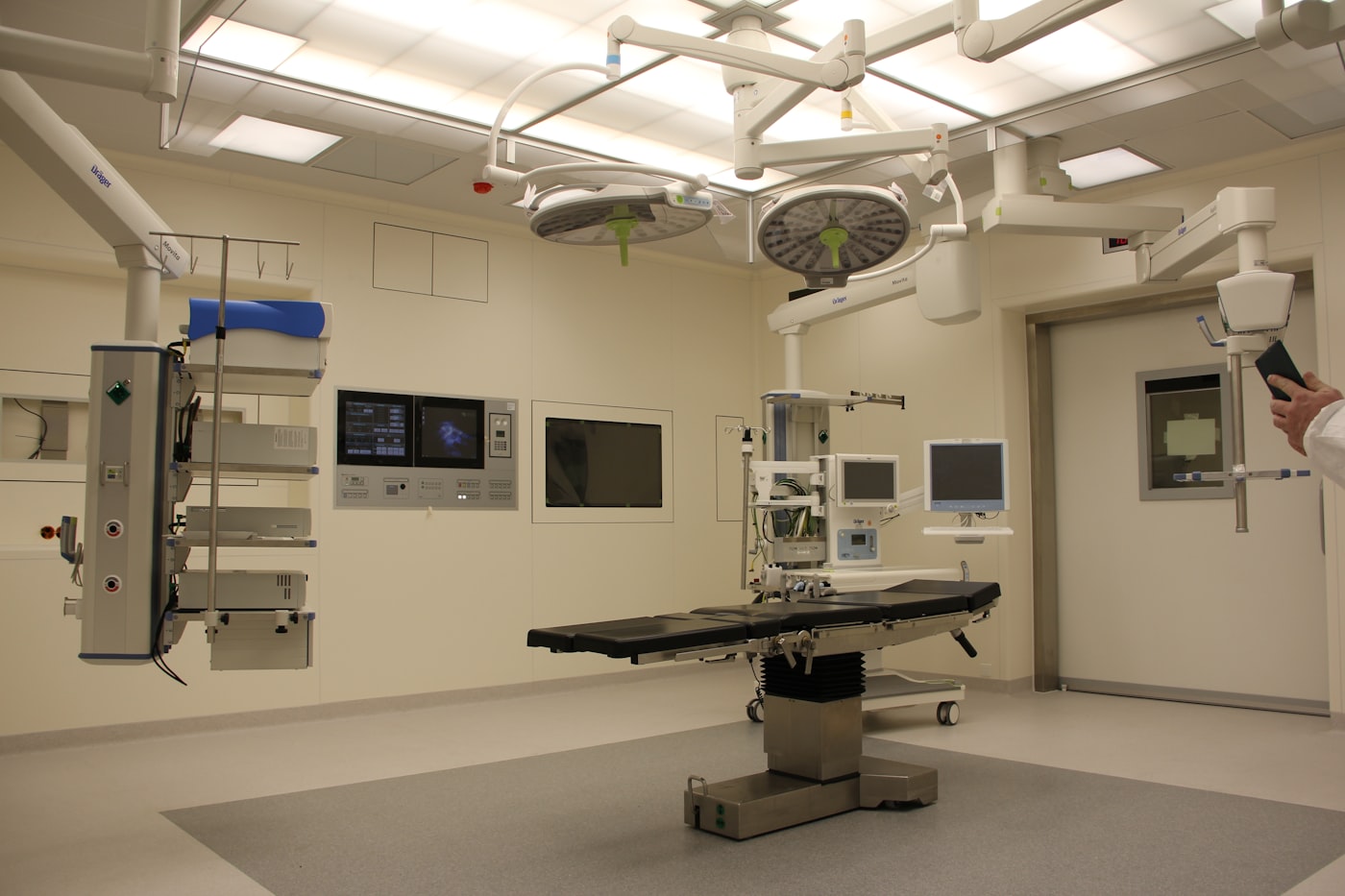
Two distinct models dominate medical equipment leasing for Vietnamese private hospitals.
Manufacturer captive leasing, offered directly by equipment makers or their financing affiliates, bundles medical equipment leasing with maintenance, software upgrades, and consumables supply, giving the lessor a natural remarketing channel if the hospital defaults.
Third-party lessors, typically licensed finance companies or bank-affiliated leasing arms, offer medical equipment leasing without the maintenance bundle, usually at a lower headline rate but with less flexibility if the hospital wants to upgrade mid-term.
Some hospital groups deliberately mix both models across a single facility’s equipment list, using vendor captive arrangements for high-turnover imaging platforms and third-party facilities for longer-life infrastructure such as sterilisation or laboratory automation systems.
Under the Law on Credit Institutions 2024, only a licensed finance company or bank-affiliated financial leasing company may conduct financial leasing as a regulated activity in Vietnam,
and manufacturer captive medical equipment leasing programs typically route the financing leg through a licensed local partner rather than lending directly from an unlicensed offshore entity.
Hospitals and equipment vendors structuring medical equipment leasing programs should confirm which entity holds the license and how remarketing rights are allocated between the manufacturer and the licensed lessor if a default occurs.
This allocation matters most for high-value imaging platforms, where the manufacturer is often the only realistic buyer of a repossessed unit given the specialised installation and calibration requirements involved.
3. Import Duty and Medical Device Registration Overlay
Every scanner, imaging system,
or major diagnostic device entering Vietnam under a medical equipment leasing arrangement must be registered for circulation with the health ministry’s medical device management authority before commercial use, in addition to standard customs clearance.
This registration process runs on its own timeline, separate from the leasing facility’s own conditions precedent,
and a medical equipment leasing agreement that ties the first payment date only to physical delivery risks a payment obligation arising before the hospital can lawfully operate the device.
Import duty treatment for these assets can also differ from standard industrial machinery, since certain categories of medical equipment benefit from preferential tariff treatment intended to support healthcare infrastructure, while others carry standard rates depending on classification.
Lessors and hospitals should confirm the correct tariff classification before pricing the facility, since a misclassification discovered after import can materially change the landed cost the lease payments are calculated against, and coordinate registration renewal timing with the Ministry of Health device management framework so registration validity does not lapse mid-lease.
A lapsed registration during the lease term can force a hospital to idle a device that is still generating lease payments, which is why well-drafted facility agreements include an affirmative covenant requiring the hospital to maintain registration and notify the lessor promptly of any renewal deadline or regulatory query.
4. Residual Value Risk in Fast-Obsolescing Diagnostic Technology

Residual value risk is the defining underwriting challenge in medical equipment leasing.
Unlike a delivery truck or a manufacturing press, an MRI or CT platform can become clinically and commercially obsolete well before it is physically worn out, as manufacturers release higher field-strength magnets, faster reconstruction software, or lower-dose imaging protocols.
A facility priced against an assumed residual value that ignores this technology curve risks leaving the lessor exposed at lease-end, particularly for high-end imaging equipment where Vietnam’s domestic secondary market remains thin.
Cross-border remarketing to other Southeast Asian markets is sometimes available for higher-end platforms, but transporting and reinstalling a scanner internationally adds cost and delay that should be reflected conservatively in any residual value assumption.
Lessors active in this segment increasingly price shorter initial terms with early upgrade options rather than long-tenor leases assuming a stable residual value,
effectively transferring technology risk back to the hospital through a structured upgrade fee rather than absorbing it as a terminal loss.
Hospitals negotiating these terms should weigh the higher periodic cost of an upgrade-inclusive structure against the risk of being locked into aging diagnostic technology for a full seven-to-ten-year finance lease term.
Some facility agreements now include a mid-term technology refresh clause that lets the hospital swap into a newer model against an adjusted payment schedule, which shifts obsolescence risk onto the lessor for a defined fee rather than leaving it unaddressed until lease-end.
5. Structuring Options and Security Over Leased Medical Equipment
Security over equipment financed through medical equipment leasing in Vietnam is generally taken as retained title under a finance lease, or as a movable asset security interest registered with the National Registration Agency for Secured Transactions where the structure uses a loan-and-mortgage format instead of a lease.
Either approach requires the lessor to confirm that hospital operating licenses and facility permits do not restrict removal or relocation of leased equipment,
since medical equipment leasing collateral that cannot practically be removed from a functioning hospital carries limited enforcement value.
Cross-border equipment vendors structuring medical equipment leasing for Vietnamese hospitals should also confirm the foreign loan registration and withholding tax treatment applicable to lease payments where the lessor is offshore,
and align insurance requirements under the lease with the higher replacement cost typical of diagnostic imaging equipment, since standard commercial property insurance often underinsures specialised medical devices relative to their true replacement and reinstallation cost.
A well-structured facility addresses licensing, registration timing, residual value, and security together rather than treating each as a separate workstream.
Frequently Asked Questions
Why do hospitals lease diagnostic equipment instead of buying it outright in Vietnam?
Leasing avoids tying up growth capital in machines that can become technologically obsolete within a few years, which matters especially for MRI, CT, and other advanced diagnostic equipment where newer generations arrive quickly.
Does a medical equipment lessor in Vietnam need a special license?
Finance lease providers sit behind a licensing gate that does not apply to standard industrial equipment leasing, and medical devices also carry an import and registration regime layered on top of ordinary customs clearance.
Who bears the residual value risk on fast-obsolescing diagnostic technology?
This is one of the central structuring questions in a medical equipment lease, since rapid technology turnover means residual value risk needs to be allocated explicitly between lessor and hospital operator rather than left to default lease terms.
What maintenance and uptime obligations are typical in these leases?
Because diagnostic equipment generates revenue only when operational, leases commonly include defined calibration, maintenance, and uptime obligations, often coordinated with the manufacturer’s own service arrangements.
IVLF advises hospital groups, equipment manufacturers, and finance companies structuring medical equipment leasing transactions in Vietnam’s private healthcare sector, from licensing and registration diagnostics through to closing documentation, including facility agreements, security documents, and vendor supply arrangements coordinated across the manufacturer, the licensed lessor, and the hospital operator. As a structured finance law firm Vietnam hospital groups and lessors return to for repeat transactions, we focus on getting residual value allocation and maintenance obligations right at signing, so they do not become disputes when the equipment nears the end of its useful life.
6. Maintenance, Calibration, and Uptime Obligations in the Lease
Medical equipment leasing agreements need maintenance and calibration provisions that go well beyond a standard equipment lease’s boilerplate service language, since diagnostic and life-support equipment operating outside calibration tolerances creates direct patient safety risk, not just a performance shortfall the lessee can simply tolerate. The lease should specify who bears responsibility for scheduled preventive maintenance and periodic calibration, whether the lessor, an authorized manufacturer service provider, or the hospital’s own biomedical engineering team, and should require documented calibration records to be maintained and available for inspection.
Uptime guarantees are increasingly common in Vietnamese medical equipment leases, particularly for imaging equipment where downtime directly translates into lost patient throughput and revenue for the hospital, and these guarantees should specify a defined response time for service calls together with a credit or rent abatement mechanism if the equipment is unavailable beyond an agreed threshold. Lessors offering uptime guarantees should confirm their service network actually has technicians certified on the specific equipment model within a reasonable response radius of the hospital.
Where the equipment requires manufacturer-authorized service to maintain warranty coverage, the lease should clarify what happens if the manufacturer withdraws its authorized service presence from the Vietnamese market during the lease term, since this risk has materialized for certain equipment categories and can leave both lessor and lessee without a clear maintenance path for equipment that is otherwise still clinically useful.
If your organisation is evaluating a medical equipment leasing facility for a Vietnamese hospital or clinic network, our structured finance team can walk through the licensing and security options relevant to your transaction.
This article is provided for general information only and does not constitute legal advice for any specific case. Regulations may change – please consult a qualified professional before acting. Should further analysis be required, please contact one of our lawyers below.