Summary: this guide focuses on wreck removal and the points to check first. If you are assessing wreck removal, the sections below set out the key issues in the order they usually arise. Each section on wreck removal is kept short so it can be scanned quickly. The closing section restates the main checks for wreck removal.
When a vessel loses power off a Vietnamese coast, several decisions arrive within hours: which salvor, on what contract, who pays, and who is liable for what the casualty has already damaged. The first signature on a salvage agreement can fix the salvor’s remuneration, the security the owner must provide and the pressure on cargo for months afterwards. This article explains how marine salvage Vietnam decisions are made in practice: the choice between a fixed-price contract and a no cure, no pay agreement, how Lloyd’s Open Form and the SCOPIC clause work, how special compensation protects environmental effort, and how wreck removal and collision liability change the picture. It is written for owners, charterers, cargo interests, insurers and lenders who want a plan before the call comes.

Table of Contents
- Salvage principles: reward, danger and success
- The legal framework for a Vietnam casualty
- Choosing the salvage contract
- Lloyd’s Open Form and SCOPIC
- Special compensation and the environment
- Wreck removal and obligations after the casualty
- Collision liability and allocation
- Hypothetical scenario and risk table
- Casualty response checklist
- FAQ
- Conclusion and next step
Salvage principles: reward, danger and success
Salvage is a voluntary service rendered to a ship or other property in danger at sea, for which international principle rewards the salvor if the service has a useful result. The reward is paid by the salved interests, commonly ship, cargo and freight, in proportion to their salved values, and it is capped by the value of the property saved.
No cure, no pay
The traditional rule is that the salvor is paid only if it saves something. A salvor that fails to save the property receives nothing, however great its effort and expenditure. That risk is why salvage awards can look large against the hours worked: the reward must also pay for the unsuccessful operations.
Factors that set the reward
Under the 1989 Salvage Convention and English-law market practice, tribunals consider factors such as the value of the property saved, the skill and effort of the salvors, the danger to the salved vessel, the salvor’s own risk and expense, and the time used. The environmental effort of the salvor is also a recognised factor. Because the reward depends on success and on contested factors, early evidence of conditions and effort is commercially valuable for both sides.
The legal framework for a marine salvage Vietnam casualty
The Vietnam Maritime Code 2015 (Law No. 95/2015/QH13, effective 1 July 2017, consolidated as 101/VBHN-VPQH on 26 August 2025) contains rules on maritime salvage in its relevant chapter. Which provisions bind the parties, how they interact with an agreed salvage contract, and any mandatory limits should be confirmed against the current text .
International conventions in principle
The 1989 Salvage Convention is the principal international instrument. It recognises the reward, the special compensation mechanism for environmental threats, and duties of the owner and master to cooperate with the salvor. Whether and how Vietnam has acceded to it, and how it applies in a Vietnamese forum, should be checked . For wreck removal, the Nairobi Convention 2007 and for pollution the CLC 1992 and Bunkers Convention 2001 may also be relevant; check Vietnam’s accession status for each .
Regulators and the practical interface
A Vietnamese casualty usually engages the Vietnam Maritime and Waterway Administration and port authorities, and the Ministry of Construction at policy level. Reporting duties, safety zones and directions to the master are matters of public law that can override commercial preferences. For official information, see the Vietnam Maritime and Waterway Administration.
Contract and law operate together. A salvage contract on Lloyd’s terms is typically governed by English law with London arbitration, while the regulator’s directions follow Vietnamese public law. A marine salvage Vietnam response plan must work under both at once.
Choosing the salvage contract in marine salvage Vietnam cases
The master or owner often has to choose within hours. The main options differ in who bears the risk of failure and how the price is set.
| Contract type | Price basis | Who bears failure risk | Suited to |
|---|---|---|---|
| Lloyd’s Open Form (no cure, no pay) | Reward assessed afterwards by arbitration | Salvor | Urgent, uncertain casualties |
| Fixed-price or daily-rate contract | Agreed in advance | Owner | Clear, controllable operations |
| Local towage or assistance agreement | Usually agreed rate | Owner | Minor assistance, no real danger |
Why owners often choose open form
In a marine salvage Vietnam emergency, when the extent of damage is unknown, a fixed price is hard to negotiate and the salvor will price in risk. An open-form contract moves the failure risk to the salvor and postpones the price. The price of that certainty is an uncertain reward and a security demand against the salved values.
Why a fixed price can be better
For a simple tow or refloating in benign conditions, a fixed or daily-rate contract gives budget control and avoids arbitration. The risk is the owner pays regardless of outcome. A vessel that sinks after an expensive failed tow is a double loss.
Reviewing a salvage agreement or a security demand? IVLF can arrange a confidential preliminary review, protected by an NDA, of the contract terms, security wording and insurance position before you sign.
Lloyd’s Open Form and SCOPIC
Lloyd’s Open Form, known as LOF, is a standard-form salvage agreement published by the Lloyd’s market. It is English-law market practice, not Vietnamese law, and it is widely used for international casualties. Its core is the no cure, no pay principle, arbitration in London and an undertaking by the owner to provide security.
What the form typically does
- Commits the salvor to use best endeavours to save the vessel and property.
- Requires the owner and master to cooperate, including providing security for the claim.
- Refers the reward to arbitration, with a provisional security and interim payments possible.
- Requires the owner to bind cargo and other salved interests to provide security.
SCOPIC in plain terms
SCOPIC, the Special Compensation P&I Clause, is an optional clause that can be incorporated into Lloyd’s Open Form. It provides a tariff-based remuneration alternative to special compensation under the Salvage Convention when the salvor has worked to prevent pollution. When SCOPIC is invoked, the owner generally pays a fixed security and the salvor is paid on a tariff basis for the period. The clause is a market tool, so its mechanics, invocation notice and tariff must be read in the current published version.
The strategic point is control: SCOPIC gives the owner a predictable cost scale for the pollution-prevention effort, while the salvor keeps the right to a normal reward if it saves the property. Notice, invocation and security timing should be confirmed on the current clause.
Security: the hidden pressure point
Salvors typically demand security for their claim before releasing the vessel or cargo. The owner must provide it for ship, and cargo interests for cargo. This means cargo owners and insurers will receive security requests at the same time as any general average circular. Our article on political risk insurance (MIGA and PRI) explains how the two requests interact.
Special compensation and the environment
Under the 1989 Convention principle, a salvor who has worked to prevent or minimise damage to the environment in relation to a vessel that threatens it may be entitled to special compensation even if the salvage was unsuccessful in saving property. The aim is to give salvors an incentive to attend tankers and other vessels carrying pollutants that would otherwise offer little reward.
How special compensation works in principle
Special compensation covers the salvor’s expenses and may include an uplift for environmental success. It is paid by the shipowner, not by cargo, and is normally covered by the owner’s protection and indemnity insurance. How a tribunal calculates the amount, and how SCOPIC displaces the standard route, depends on the contract and the governing law.
Why it matters for Vietnam
For marine salvage Vietnam planning, the long Vietnamese coastline, busy ports and river-sea traffic mean that bunker spills and cargo releases are credible risks. Domestic pollution response duties, the owner’s civil liability for oil pollution and the availability of insurance certificates should be reviewed under current Vietnamese rules .
Wreck removal and obligations after the casualty
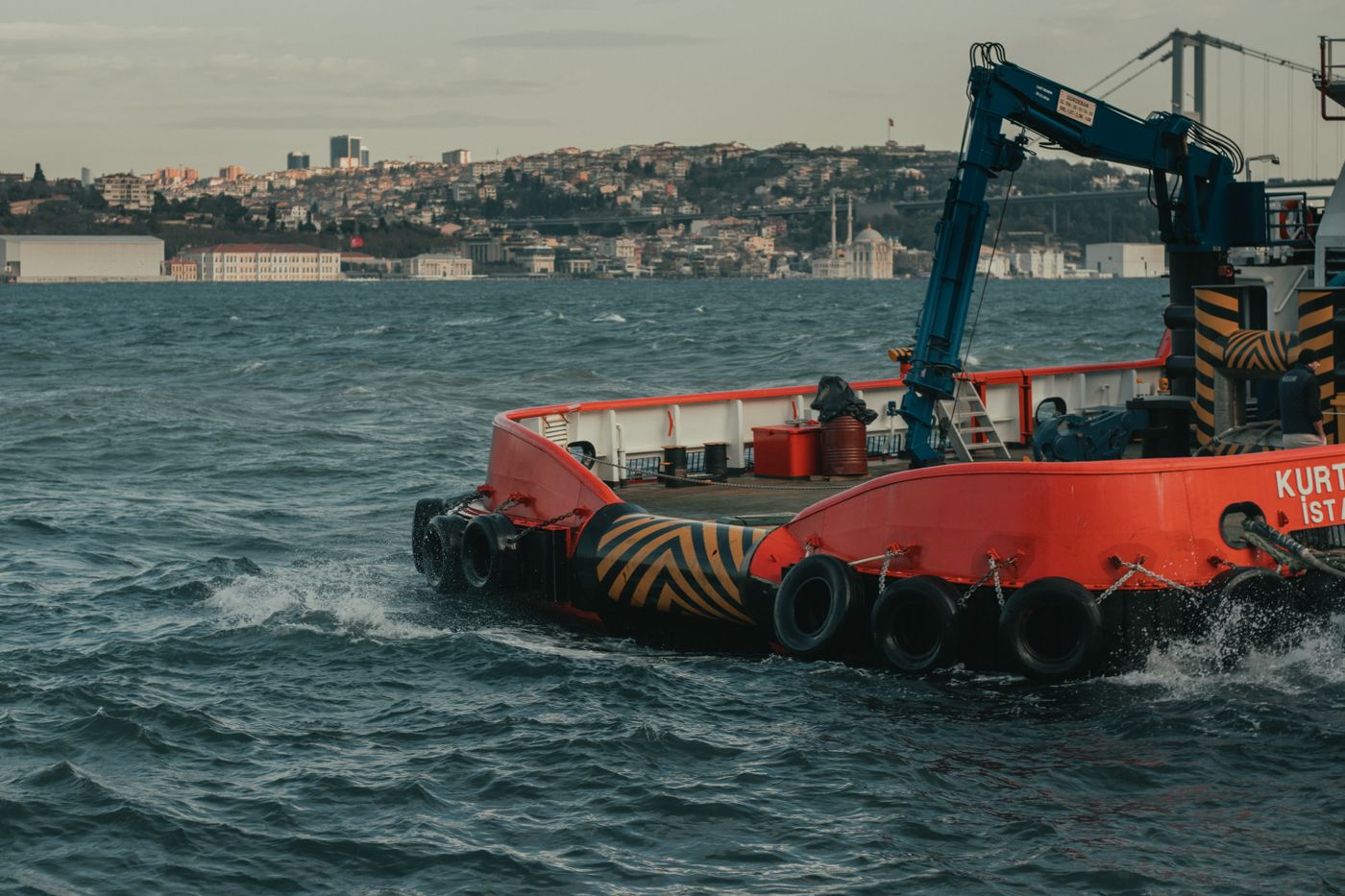
If a vessel sinks or is abandoned, the problem shifts from rescue to removal. Wreck removal is often the largest single cost in a casualty and the one most likely to fall outside ordinary hull cover.
Who must remove the wreck
As a matter of international principle, the registered owner is generally responsible for removal where the wreck is a hazard to navigation, ports or the environment. The coastal state may order removal, remove the wreck itself and recover the cost. In Vietnam, the authority, the timeframe and the cost-recovery route should be confirmed with the competent authority .
Insurance and security
- Hull and machinery often excludes or limits wreck removal costs unless endorsed.
- Protection and indemnity cover generally responds to compulsory removal under statutory orders, subject to club rules.
- Limitation of liability under LLMC-type regimes may not protect the owner against removal costs, depending on the reservations made. Check the applicable regime.
- Financiers should require the owner to maintain wreck removal cover and to notify of any casualty promptly.
Practical steps once removal is ordered
In a marine salvage Vietnam file, obtain the order in writing, confirm the deadline, notify the P&I club, and obtain competent surveys of the wreck position and condition. Do not abandon the wreck informally. Abandonment to underwriters, where permitted, is a formal step with consequences for title and liability.
Collision liability and allocation
Collisions often arise during a casualty, for example when a disabled vessel drifts into traffic or a salvage tug is struck. Collision liability then runs on a separate track from salvage, with its own rules on fault, apportionment and limitation.
Allocating fault between ships
The international principle, found in the 1910 Collision Convention and in English law, is that where both vessels are at fault, liability is apportioned in proportion to each vessel’s degree of fault. Whether Vietnam is a party to the 1910 Convention and how the Maritime Code treats apportionment should be confirmed .
Evidence in the first hours
- Preserve voyage data recorder data, radar images, AIS records and bridge logs.
- Take written statements from watchkeepers, pilot and master before crew rotate.
- Photograph damage and record positions, weather and visibility.
- Send notice to the other ship’s owner and club, reserving all rights.
- Consider an arrest or security application in the forum where the other ship is calling.
These steps decide both the salvage narrative and the collision allocation. A statement taken late is usually less persuasive than one taken within hours.
Hypothetical scenario and risk table
Hypothetical scenario
Assumptions: a laden product tanker suffers steering failure in heavy weather near a Vietnamese anchorage and drifts toward a fishing fleet. A tug is available. The master has no time to negotiate a fixed price, the owner’s P&I club is notified, and the owner agrees to Lloyd’s Open Form with SCOPIC incorporated. The tanker later touches another vessel, causing limited damage. No amounts are assumed; the example illustrates process only.
The owner signs LOF, instructs the salvor and informs the Vietnamese port authority. The club appoints a casualty manager. Cargo interests receive a request for salvage security. The collision claim proceeds on a separate track: evidence is preserved, the other owner is notified, and the club gives security if required to prevent an arrest. After the tow, a tribunal fixes the reward; SCOPIC remuneration is credited as the clause provides.
Risk table for a marine salvage Vietnam response
| Issue | Legal position | Commercial impact | Risk | Mitigation |
|---|---|---|---|---|
| Signing a salvage contract without review | Contract terms bind owner and may bind cargo | Security and reward exposure | High | Pre-approved template; counsel call line |
| No SCOPIC or notice missed | Tariff remuneration only if clause invoked on time | Unpredictable cost | Medium | Check clause, calendar notice |
| Wreck removal uninsured | Owner liable under public law | Unfunded cost, possible vessel arrest | Fatal | Confirm P&I and wreck cover; covenant in finance |
| Delay in security to salvor | Salvor may hold salved property | Vessel or cargo detained | High | Club security; cargo insurers briefed |
| Collision evidence lost | Fault allocated on available evidence | Larger share of liability | High | Preserve VDR; statements within hours |
| Regulator direction ignored | Public-law duty | Penalty, criminal exposure possible | High | Single point of contact for authorities |
Casualty response checklist
A marine salvage Vietnam protocol should be written down. Circulate it to the master, the DPA, the club correspondent and the technical manager, and test it.
Within the first six hours
- Report to the authorities and the club; log the time of every call.
- Decide the salvage contract type; no signature before the master has the club’s advice where possible.
- Preserve voyage data and secure the bridge and engine-room records.
- Notify the hull underwriters and the charterer under the notice clauses.
Within the first week
- Arrange security for salvage, and brief cargo interests and their insurers.
- Instruct local counsel on regulator filings, arrest risk and wreck issues.
- Review financing covenants and notify the lender if required.
- Check time bars for claims in collision and cargo, and calendar them .
For the cargo-side consequences, including contribution and guarantees, see our overview of arbitration clause choices: SIAC, ICC and HKIAC.
Frequently Asked Questions
What does no cure, no pay mean?
The salvor is rewarded only if it achieves a useful result in saving property. If the vessel and cargo are lost despite its efforts, it ordinarily receives no reward, though special compensation may apply.
Is Lloyd’s Open Form governed by Vietnamese law?
No. It is an English-law market form, usually with London arbitration. Vietnamese public law and regulator directions still apply to a casualty in Vietnamese waters, so both must be managed together.
What is SCOPIC for?
SCOPIC is an optional clause giving tariff-based remuneration to a salvor working to prevent pollution. It offers the owner more cost predictability than assessing special compensation after the event.
Who pays for wreck removal?
Generally the registered owner, often through P&I cover where compulsory. Hull cover may exclude it. Check the policy, club rules and Vietnamese authority orders.
How is collision fault shared?
Where both ships are at fault, liability is generally apportioned by degree of fault. Evidence preserved in the first hours is decisive.
Conclusion and next step
Salvage, wreck removal and collision claims arrive together and are decided by early choices on contract, security and evidence. Readiness beats improvisation: a pre-approved contract position, a clear insurance map and a trained response team. For industry guidance and conventions, see the International Maritime Organization.
Next action: this week, ask your P&I club and hull underwriter to confirm in writing the cover for salvage, special compensation, SCOPIC and wreck removal, and update your casualty protocol with the answers.
This article provides general information as of 14 October 2026 and is not legal advice for a specific matter. Laws, conventions and regulator practice may change; verify current texts before acting.
Or contact us directly:
Contact IVLF LawyerCompany Formation Services – IVLF Advisors
This article is provided for general information only and does not constitute legal advice for any specific case. Regulations may change – please consult a qualified professional before acting. Should further analysis be required, please contact one of our lawyers below.