For a Vietnamese exporter financing its receivables offshore, international factoring true sale risk is not an academic label — it determines whether a buyer of receivables actually owns them, or merely holds a secured loan dressed up as a sale. That distinction decides who gets paid first in an insolvency, whether a factor’s purchase survives a clawback claim, and whether the transaction needs to be registered as secured credit at all.
For CFOs, general counsel, and cross-border deal teams structuring receivables finance under the FCI two-factor model, getting the characterization wrong can unwind years of expected off-balance-sheet treatment and expose counterparties to true sale litigation precisely when liquidity is most needed.
Table of Contents
- What Is International Factoring and Why It Matters for Vietnamese Exporters
- The FCI Two-Factor Model Explained
- International Factoring True Sale Risk: The Core Legal Question
- Assignment of Claims Under the Civil Code 2015
- Law on Credit Institutions and Licensing Overlap
- Recourse vs. Non-Recourse Factoring: A Comparison
- Insolvency Clawback and Recharacterization Risk
- Forfaiting and Its Distinction from Factoring
- Structuring Mitigants for Vietnamese Exporters
- Frequently Asked Questions
What Is International Factoring and Why It Matters for Vietnamese Exporters
International factoring allows a Vietnamese exporter to sell its export receivables — invoices owed by an overseas buyer — to a factor in exchange for immediate cash, typically 70-90% of invoice value upfront with the balance (less fees) paid on collection.
For exporters selling on open account terms into markets such as the EU, Japan, Korea, or the United States, factoring converts a 30-120 day receivable into working capital without drawing down a traditional credit line. Cross-border receivables factoring has grown steadily across Asia as buyers push sellers away from letters of credit toward open-account trade, shifting collection and credit risk onto the exporter unless it is transferred through a properly structured sale.
The commercial attraction is straightforward: faster cash conversion cycles, reduced DSO, and in non-recourse structures, credit protection against the foreign buyer’s insolvency. The legal complexity is less straightforward, and it centers on one question that recurs in every jurisdiction with a civil-law assignment regime, Vietnam included: did the exporter actually sell the receivable, or did it simply borrow against it?
The FCI Two-Factor Model Explained
FCI (Factors Chain International), the leading global network for cross-border factoring, operates a two-factor model that is the industry-standard structure for international factoring transactions. Rather than a single factor dealing directly with a foreign buyer it cannot easily assess or collect from, the model splits responsibilities between two specialized factors in the exporter’s and importer’s respective jurisdictions.
Roles of the Export Factor and Import Factor
The export factor, located in Vietnam or regionally positioned to serve Vietnamese exporters, purchases the receivables from the exporter, advances funds, and manages the exporter-facing relationship. The import factor, based in the buyer’s jurisdiction, assesses the buyer’s creditworthiness, approves credit lines on individual buyers, and handles local collection — leveraging its on-the-ground knowledge of local insolvency practice, enforcement timelines, and buyer behavior that an offshore export factor could not efficiently replicate.
The Inter-Factor Agreement and GRIF Rules
The two factors are bound by an inter-factor agreement governed by FCI’s General Rules for International Factoring (GRIF), which standardizes risk allocation, commission splits, and dispute resolution between factors across different legal systems. For a Vietnamese exporter, the GRIF framework matters less for its boilerplate than for what it does not resolve: GRIF governs the factor-to-factor relationship, not the characterization of the underlying sale under Vietnamese domestic law.
That characterization question is left entirely to the governing law chosen for the export factor’s purchase agreement with the exporter, and, in practice, to how a Vietnamese court or insolvency administrator would view the arrangement if the exporter later became insolvent.
The non-recourse factoring Vietnam exporters negotiate is only as protective as the true sale analysis behind it: if a court treats the deal as a loan, the factor’s true sale position fails and the receivables fall back into the exporter’s estate. Under the assignment of claims Civil Code 2015 framework, a clean true sale needs a valid assignment, proper notice to the debtor and no hidden recourse.
Forfaiting Vietnamese exporters use for medium-term export bills raises the same true sale question, because a without-recourse purchase is respected only if the true sale features are documented. A true sale opinion from local counsel, a true sale checklist at signing and pricing that does not guarantee collection together reduce the true sale risk. These points should be verified against current law and the specific contract.
Structuring a cross-border factoring or forfaiting facility, or assessing true sale risk in an existing receivables program? IVLF Advisors advises exporters, factors, and banks on Vietnamese-law characterization risk, notice-of-assignment mechanics, and insolvency exposure. Contact IVLF Advisors for a confidential preliminary consultation.
International Factoring True Sale Risk: The Core Legal Question
At its heart, international factoring true sale risk asks whether a transfer of receivables will be respected, in a bankruptcy or enforcement scenario, as an outright sale that removes the receivables from the exporter’s estate — or whether a court or administrator will recharacterize it as a secured loan, pulling the receivables back into the exporter’s insolvency pool subject to the factor’s security interest (if any was perfected) rather than outright ownership.
This is not a Vietnam-specific problem; US, English, and most civil-law systems wrestle with the same true-sale-versus-secured-loan line, generally by looking past the label the parties used in the contract to the economic substance of the arrangement.

True Sale Indicators Courts and Regulators Look For
Factors widely recognized in true-sale analysis include: whether the transfer is with recourse or without recourse to the seller for the buyer’s credit risk; whether the seller retains a right to repurchase or substitute receivables; whether the purchase price floats with collection performance in a way that resembles interest; whether the factor bears collection risk and cost; and whether the seller continues to service and collect on receivables it has “sold” without the factor exercising real control (a point of particular relevance in notice-of-assignment questions, discussed below).
Common Triggers for Recharacterization
In practice, true sale risk rises sharply where recourse is unlimited or near-unlimited, where there is a repurchase obligation on default or dispute, where the exporter retains most of the economic risk and reward of the receivables, or where the documentation itself uses loan-like language — “interest,” “collateral,” “borrower” — inconsistent with a sale framework. A transaction labeled a “factoring agreement” that functions, in substance, as asset-based lending secured by receivables is the paradigm case regulators and insolvency administrators will scrutinize.
Assignment of Claims Under the Civil Code 2015
Vietnamese law treats the transfer of a receivable as an assignment of claim (chuyển giao quyền yêu cầu / chuyển nhượng khoản phải thu) under Articles 365-369 of the Civil Code 2015. A valid assignment transfers the assignor’s rights against the debtor to the assignee, subject to the assignor’s obligation to notify the debtor and, absent agreement otherwise, without needing the debtor’s consent for the assignment itself to be effective between assignor and assignee.
The Civil Code framework is assignment-neutral — it does not, on its face, distinguish between an assignment that is a true sale and one that is a security assignment. That gap is precisely where true sale characterization risk lives in the Vietnamese context: the Civil Code validates the mechanics of transfer, but Vietnamese courts and insolvency practice will still look to the underlying commercial substance — recourse terms, risk allocation, pricing — to decide how the transfer should be treated when the exporter becomes insolvent.
Notice-of-Assignment Requirements
Article 369 of the Civil Code 2015 requires the assignor (or, by agreement, the assignee) to notify the debtor of the assignment in writing for the assignment to bind the debtor; until notified, the debtor may continue to validly pay the original creditor.
For cross-border receivables factoring, this creates an operational choice with real legal consequences: a disclosed factoring arrangement, where the foreign buyer is notified and redirected to pay the factor or import factor directly, strengthens the true-sale case by demonstrating the factor’s real control over collection.
An undisclosed arrangement, where the exporter continues collecting in its own name and remits to the factor, is commercially common (buyers often resist being told who to pay) but weakens the sale narrative and raises the stakes if the exporter becomes insolvent before remitting collected funds — those funds can become commingled with the exporter’s general estate.
Law on Credit Institutions and Licensing Overlap
A separate but related question is whether providing factoring services inside Vietnam, or to a Vietnamese counterparty, triggers licensing requirements under the Law on Credit Institutions. Factoring has historically been treated in Vietnam as a form of credit extension when conducted domestically by banks and licensed non-bank credit institutions, subject to the State Bank of Vietnam’s (SBV) prudential and licensing framework.
For an offshore export factor purchasing receivables from a Vietnamese exporter in a cross-border structure, the analysis turns on where the relevant factoring activity is deemed to occur, whether the offshore factor is viewed as extending credit “into” Vietnam, and whether the structure relies on a licensed onshore intermediary.
This is a genuinely fact-specific and evolving area of regulatory practice; exporters and factors should treat the licensing question as requiring current, matter-specific advice rather than general assumption either way.
Recourse vs. Non-Recourse Factoring: A Comparison
The recourse terms of a factoring arrangement are one of the most heavily weighted factors in both commercial pricing and true-sale characterization. The table below summarizes the principal differences.
| Feature | Recourse Factoring | Non-Recourse Factoring |
|---|---|---|
| Credit risk on buyer default | Retained by exporter (seller) | Borne by the factor (subject to approved credit limits and disputes/dilution) |
| Pricing | Lower discount/fee (less risk to factor) | Higher discount/fee (reflects credit risk transfer) |
| True-sale characterization | Weaker; resembles secured borrowing | Stronger; genuine risk transfer supports sale treatment |
| Balance sheet treatment | Often remains on exporter’s balance sheet as debt | More likely to qualify for off-balance-sheet / derecognition treatment, subject to accounting standard review |
| Typical use case | Exporters prioritizing cost over credit protection | Exporters prioritizing buyer-default protection and balance sheet relief |
| Insolvency clawback exposure | Higher — recourse feature cited as loan-like indicator | Lower, but not eliminated — other factors still assessed |
How Recourse Factoring Is Structured
In recourse factoring, if the foreign buyer fails to pay, the factor can require the exporter to repurchase the receivable or otherwise make the factor whole. This retained credit risk is economically similar to a secured loan where the receivable serves as collateral, which is exactly why recourse factoring faces a steeper climb toward true-sale characterization in any true sale dispute.
How Non-Recourse Factoring Is Structured
In non-recourse factoring, the factor absorbs the buyer’s credit risk (though typically not disputes over goods quality, short shipment, or commercial disputes, which usually remain the exporter’s risk even in a non-recourse structure). Because the factor genuinely bears the economic risk of non-payment, non-recourse factoring presents a materially stronger case for true-sale treatment — though price, repurchase rights, and servicing arrangements must still be reviewed for consistency.
Insolvency Clawback and Recharacterization Risk
If a Vietnamese exporter later enters bankruptcy proceedings under the Law on Bankruptcy, the insolvency administrator or creditors may seek to claw back or recharacterize prior receivables transfers in two distinct ways. First, as a preferential or undervalued transaction, if the transfer occurred within a suspect period before insolvency and on terms disadvantageous to the estate.
Second, and more fundamentally, by arguing the “sale” was never a true sale at all, but a secured loan that was never properly perfected as security — meaning the factor’s claim to the receivables may be reduced to an unsecured claim against the general estate, ranking behind secured and preferred creditors.
This second scenario is the one that makes international factoring true sale risk a central structuring concern rather than a drafting afterthought: a factor that priced and funded a transaction believing it owned the receivables outright can find itself, post-recharacterization, as an unsecured creditor competing for cents on the dong alongside trade creditors.
Forfaiting and Its Distinction from Factoring
Forfaiting is a related but distinct technique, typically used for medium-to-longer-term, single-transaction receivables (often evidenced by bills of exchange, promissory notes, or letter-of-credit-backed deferred payment obligations) rather than the revolving pool of short-term invoices typical of factoring.
Forfaiting is almost always structured without recourse to the exporter and without ongoing servicing by the exporter, which generally gives it a cleaner true-sale profile than factoring — but Vietnamese exporters using forfaiting for capital goods or project exports should still confirm that notice-of-assignment and documentary conditions precedent are properly satisfied, since a defectively assigned instrument can undermine the forfaiter’s position regardless of the underlying economics.
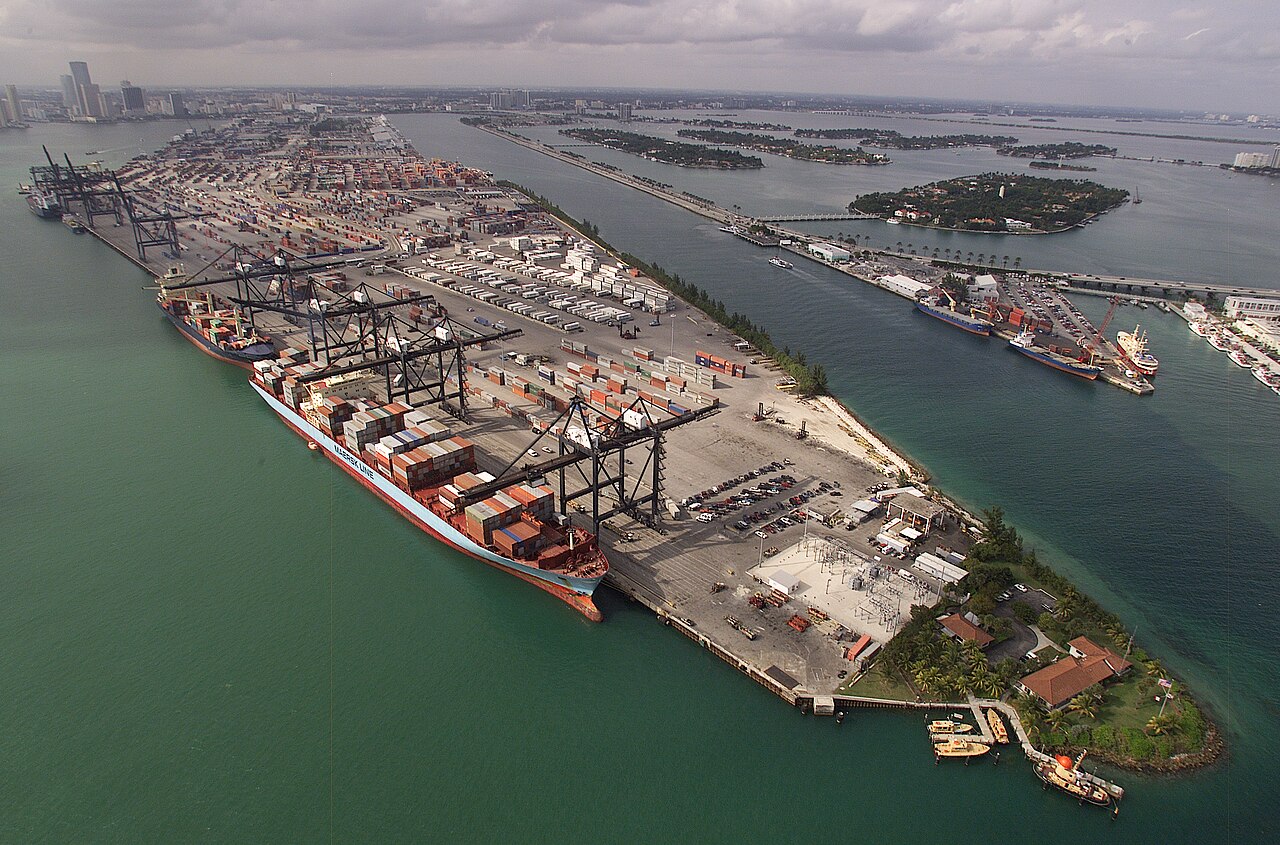
Photo: Wikimedia Commons (public domain / CC0)
Structuring Mitigants for Vietnamese Exporters
Exporters, factors, and banks can take concrete steps to reduce international factoring true sale risk before a dispute or insolvency ever arises.
Documentation-Level Mitigants
Draft the purchase agreement using sale terminology consistently (purchase price, not loan amount; assignment, not pledge), minimize or eliminate general recourse beyond standard representations and warranties about the receivable’s validity, avoid repurchase obligations tied to buyer non-payment, and ensure pricing reflects a true discount for credit risk transferred rather than an interest-rate-like return on an outstanding balance.
Operational and Registration Mitigants
Where commercially feasible, disclose the assignment to the foreign buyer and redirect payment instructions, satisfy Civil Code Article 369 notice requirements in writing and keep evidence of service, avoid commingling collected funds with the exporter’s general accounts when servicing is retained, and obtain current advice on whether the structure should be registered or structured to align with Vietnamese secured transactions and credit institution licensing practice.
These measures will not eliminate true sale risk entirely, but they materially strengthen the factual record a court or administrator would examine.
Frequently Asked Questions
What is “true sale risk” in international factoring?
It is the risk that a court or insolvency administrator recharacterizes a receivables purchase as a secured loan rather than an outright sale, pulling the receivables back into the seller’s insolvency estate and subordinating the factor’s claim.
Does the FCI two-factor model reduce true sale risk?
Not directly. GRIF governs the relationship between the export and import factors, but the true-sale characterization depends on the governing law and terms of the purchase agreement with the exporter, not on FCI’s inter-factor rules.
Is notice of assignment mandatory under Vietnamese law?
Under Civil Code 2015 Article 369, notice is required for the assignment to bind the debtor; without it, the debtor may still validly pay the original creditor, which raises practical collection and commingling risks.
Is non-recourse factoring always safe from true sale recharacterization?
No. Non-recourse terms strengthen the case significantly but other factors — repurchase rights, pricing structure, and servicing control — are still examined together.
Does factoring require an SBV license in Vietnam?
It can, particularly for domestic credit institutions; the position for offshore factors purchasing from Vietnamese exporters is fact-specific and should be confirmed with current regulatory advice rather than assumed.
Vietnamese exporters and banks structuring or reviewing a cross-border factoring or forfaiting program should have Vietnamese-law counsel review the purchase agreement’s recourse, pricing, and notice provisions against current Civil Code and credit institution practice before the facility closes, not after a dispute arises. For a structural review of an existing or proposed facility, see IVLF Advisors’ Banking & Finance practice or the firm’s wider cross-border transactions advisory.
For FCI’s governing rulebook, see the FCI two-factor system overview; for the international legal framework on receivables assignment, see the UNCITRAL Convention on the Assignment of Receivables in International Trade.
This article is general information about Vietnamese and international legal and market practice as of the date of publication. It is not legal, tax, or financial advice and should not be relied upon as such. Vietnamese exporters, factors, and banks should seek professional consultation on the specific facts of any transaction before acting.
This article is provided for general information only and does not constitute legal advice for any specific case. Regulations may change – please consult a qualified professional before acting. Should further analysis be required, please contact one of our lawyers below.