
A dispute board is meant to be the cheapest, fastest way to keep a project moving when the parties disagree. Yet on many Vietnamese projects the board exists only on paper: it is appointed late, its decisions are ignored, or nobody knows whether it can be enforced.
This article explains how a dispute adjudication board DAB Vietnam mechanism works under the FIDIC 1999 edition, how Decree 210/2026/NĐ-CP now recognises dispute boards, and what to change in your contract so that a decision on day 90 does not become an argument on day 91. The need is sharpest on large packages such as an airport terminal or an offshore wind farm, where a stalled works front is costly every day.

Dispute adjudication board DAB Vietnam: what the law now allows
Since 1 July 2026, the Law on Construction No. 135/2025/QH15 (the “Law on Construction”) lists, among the permitted ways of resolving a construction dispute, a “dispute-handling model following international practice”. Article 86(5) is the source. Decree 210/2026/NĐ-CP (“Decree 210”), which replaces Decree 50/2021/NĐ-CP, gives this model practical content in Article 17(3), where it refers to a dispute-handling board (“ban xử lý tranh chấp”).
That is a significant change for foreign-invested and lender-backed projects. A board is no longer an imported idea that Vietnamese counterparties may question; it is an option the legislation names and invites the parties to design.
What Article 17(3) leaves for the parties to settle
Decree 210 does not prescribe a rulebook. It lists the matters the contract should address:
- when the board is established: immediately after signature, as a standing body, or only after a dispute arises;
- the number of members, their standards and their experience;
- whether the board’s decision or recommendation is binding;
- the selection procedure for members;
- what happens when a party disagrees with the outcome;
- objectivity, independence and absence of conflict for each member; and
- costs, shared equally unless agreed otherwise.
In other words, the decree supplies the checklist and leaves the engine to the contract. The FIDIC forms provide a ready-made engine, which is why they are commonly adapted for this purpose.
Public investment and PPP projects: an extra layer
For public investment and PPP projects, Article 86(5)(b) of the Law on Construction adds conditions. If the parties use an international-practice dispute model, it must be required by an international treaty, or permitted by the investment decision-maker and agreed in the contract. On such projects, the employer’s dispute-resolution costs are included in the total investment. Check these approvals early, since a board agreed in a side letter without the proper permission may be challenged later.
For privately funded projects, the parties have more freedom, and the contract is the main control. For the wider ladder in which a board sits, see our overview of construction dispute resolution in Vietnam.
How FIDIC clause 20 works (1999 edition)
FIDIC clause 20 is the usual model for contracts with foreign sponsors. The points below are taken from the text of the FIDIC 1999 edition (Silver Book), reviewed for this article. The 2017 second edition exists and differs; this article does not describe its clauses.
| Sub-Clause | What it provides (1999 edition, Silver Book text) |
|---|---|
| 20.2 Appointment | Disputes are adjudicated by a board. The parties jointly appoint it by 28 days after a party gives notice of intention to refer a dispute. One or three members, as stated in the Particular Conditions; three if not stated. Each party nominates one member for the other’s approval and the parties agree the chairman. Remuneration is shared half and half. |
| 20.3 Failure to agree | If appointment fails, the appointing entity named in the Particular Conditions appoints, after consulting both parties. The appointment is final and conclusive. |
| 20.4 Decision | Either party may refer a dispute in writing. The board gives a reasoned decision within 84 days of the reference (or the advance payment, if later). The decision binds both parties and must be given effect promptly unless and until revised. The board is deemed not to act as arbitrator. |
| 20.4 Notice of dissatisfaction | A party has 28 days after receiving the decision to give notice of dissatisfaction. If none is given, the decision becomes final and binding. |
| 20.5 Amicable settlement | The parties attempt settlement, but arbitration may begin from the fifty-sixth day after notice of dissatisfaction unless both agree otherwise. |
| 20.6 Arbitration | Unless otherwise agreed, ICC Rules and three arbitrators. The tribunal may open up, review and revise any board decision. The decision is admissible in evidence. |
| 20.7 Non-compliance | If a decision has become final and binding and a party does not comply, the other party may refer the failure itself to arbitration, without repeating the board and settlement steps. |
| 20.8 No board in place | Where the appointment has expired or no board exists, the dispute can go directly to arbitration. |
The numbers are FIDIC defaults. A negotiated contract can and often does change them in the Particular Conditions, and the Vietnamese statute does not fix them.
Adopting FIDIC clause 20 in a Vietnamese contract, or unsure whether your board mechanism will hold up? IVLF can carry out a confidential preliminary review of your dispute-board and arbitration provisions under an NDA. We advise on the risks and options; we do not guarantee any outcome.
Standing versus ad hoc boards
The Silver Book text above creates an ad hoc dispute board: it is appointed only after a party announces a dispute. As a matter of market practice, the FIDIC 1999 Red and Yellow Books are generally understood to contemplate a standing dispute board appointed near the start of the project, so that members follow progress and can resolve issues quickly. You should check the exact form and Particular Conditions before relying on either description.
| Feature | Standing board | Ad hoc board | Review board (recommendations only) |
|---|---|---|---|
| Timing | Appointed at the outset | Appointed after a dispute is notified | Either |
| Knowledge of project | High, through site visits | Low at the start | Varies |
| Cost | Higher fixed cost over the project | Lower unless many disputes arise | Similar to standing |
| Status of output | Binding in the interim (FIDIC 1999) | Binding in the interim (FIDIC 1999) | Non-binding unless accepted |
| Best for | Large, long projects | Short or lower-value projects | Parties wanting a softer tool |
Choose a standing board where the programme is long and the contract value is high; an ad hoc board is more economical where disputes are expected to be few.
One further document matters. Under Sub-Clause 20.2, each member signs a tripartite agreement with the employer and the contractor, which incorporates by reference the General Conditions of Dispute Adjudication Agreement in the Appendix, with any agreed amendments. That agreement governs member independence, confidentiality, fees and the member’s duty to act fairly. Parties often forget to prepare it in advance, and negotiating it in the middle of a dispute wastes the 28-day appointment window.
Enforcing a DAB decision in Vietnam
The hardest question for foreign parties is what happens when the losing party simply refuses to comply. The answer turns on the legal nature of the decision.
Under the FIDIC mechanism, a board decision is a contractual determination, not an arbitral award. The board is expressly deemed not to act as arbitrator, and Sub-Clause 20.7 therefore routes non-compliance to arbitration, where the failure to comply can itself be the dispute. In short, DAB decision enforcement is a matter of contract and arbitration rather than a direct court remedy. In general, a decision that has not been converted into an award should not be assumed to enjoy the cross-border recognition regime that applies to arbitral awards under the New York Convention.
Three practical consequences follow for a dispute adjudication board DAB Vietnam clause:
- Make the binding effect explicit. Decree 210 expressly leaves binding force to the contract, so state that the decision binds immediately and that parties must comply pending any later arbitral outcome.
- Provide a fast route to the tribunal. A clause allowing a non-compliance claim to be taken directly to arbitration, as in Sub-Clause 20.7, avoids a second round of escalation.
- Secure payment. Where a board orders payment, consider whether payment security, such as a guarantee, can be drawn if a party defaults.
How a dispute adjudication board DAB Vietnam clause should be drafted
Many of the problems seen in practice arise from clauses copied from a foreign template without adapting them to Vietnam. These adjustments are worth considering.
- Appointing entity. Name a real institution or official in the Particular Conditions, so that Sub-Clause 20.3 works if the parties cannot agree.
- Qualifications. Require members to be fluent in the contract language and experienced in the relevant construction field, in line with Decree 210’s reference to standards and experience.
- Language and governing law. State the language of proceedings and the governing law, so that the board and any later tribunal apply the same rules.
- Notice of dissatisfaction. Keep a written form requirement and a clear deadline, since the 28-day window under Sub-Clause 20.4 is what turns a decision final and binding.
- Interaction with claims. Tie the board to the contractor’s claim procedure; under Sub-Clause 20.1 of the 1999 edition, a notice of claim is due within 28 days of awareness, and late claims may be barred.
- Costs. Follow the equal-sharing default of Decree 210 and FIDIC, unless the commercial deal requires otherwise.
A hypothetical timeline under the FIDIC defaults
The following is a hypothetical illustration (ví dụ minh họa) using the FIDIC 1999 default periods, not a prediction for any real project. Suppose a contractor notifies an intention to refer a dispute on day 0 under an ad hoc board.
- By day 28, the parties should have appointed the board under Sub-Clause 20.2.
- The contractor then refers the dispute in writing; the board has 84 days to give a reasoned decision (about day 112).
- Either party then has 28 days to give notice of dissatisfaction (about day 140).
- Arbitration may start from the fifty-sixth day after that notice (about day 196), unless the parties settle sooner.
Roughly six to seven months from first notice to the start of arbitration is therefore the contractual baseline, before any delay in appointment or in the board’s own timetable. Throughout, the contractor must continue the works under Sub-Clause 20.4, and Decree 210 Article 17(2) takes the same approach for unaffected work. That is a realistic yardstick when a lender asks how quickly a dispute can be resolved.
Common failure points and how to avoid them
Practice on construction projects, in Vietnam and elsewhere, shows recurring failure points. Most are drafting or diary failures, not legal ones.
- Late appointment. A board that is never formed is useless, and a dispute adjudication board DAB Vietnam clause with no fallback appointer invites exactly that outcome. Diarise the appointment deadline in the project calendar and name a fallback appointing entity.
- Missed notice of dissatisfaction. A party that misses the 28-day window may find an unfavourable decision has become final and binding. Assign this deadline to a named person.
- Overreach. Referring complex multi-claim disputes to a board with an 84-day timetable can produce a rushed result. Break the dispute into manageable issues.
- Treating the board as a formality. If senior management ignores board visits and recommendations, the process loses credibility.
- Mismatch with the arbitration clause. If the arbitration clause names a different institution or seat from the one the board process expects, the sequence can break down. For help choosing between institutions, see our guide to international arbitration for construction contracts in Vietnam.
The FIDIC organisation publishes the standard forms and guidance on their use through FIDIC, and the standard-form text, not a summary, should be the basis for any drafting decision.
Lender perspective
For lenders financing a dispute adjudication board DAB Vietnam structure, the board’s value lies in predictability.
Lenders view a well-built board as an early warning system and as a way to keep cash flowing while the parties contest quantum or time. They will usually ask for three things: that a board can act quickly, that its decisions are honoured pending arbitration, and that board costs are budgeted within the project plan. If the project is a public investment or PPP project, they will also want to see the permission required by Article 86(5)(b) of the Law on Construction documented in the file.
Arbitral institutions publish their own guidance on how a tribunal treats earlier board decisions; the ICC dispute resolution pages are a starting point for the default forum under Sub-Clause 20.6.
Lenders should also ask who bears board fees if the employer is slow to pay, and whether unpaid invoices can suspend the board’s duty to decide. Under Sub-Clause 20.4 the board need not give its decision while neither party has paid the members’ invoices in full, so a payment default can quietly stall the process.
How a Dispute Adjudication Board DAB Vietnam Clause Applies Across Project Types: Infrastructure, Industry, Energy and Real Estate
A board is a tool for speed, so its value depends on how much a stoppage costs on the specific asset.
Infrastructure and transport
Expressways, ports, metro lines, high-speed rail stations and airport terminals are often State-owned or PPP, so public investment rules often apply; the classification depends on the funding source of each project. Examples in the news include the North–South high-speed railway (about 1,541 km, Hanoi to Ho Chi Minh City) and the Long Thành International Airport phase 1 terminal, where commercial operation is expected from 24 December 2026 according to press reports. On projects of that scale, a standing board that visits the site is more useful than an ad hoc panel assembled after a dispute starts.
Heavy industry and factories
For a steel plant, petrochemical unit or FDI factory in an industrial park, the parties’ agreement governs. Disputes cluster around start-up delays and test failures, so board members with process engineering experience are worth naming in the contract.
Renewable energy and power
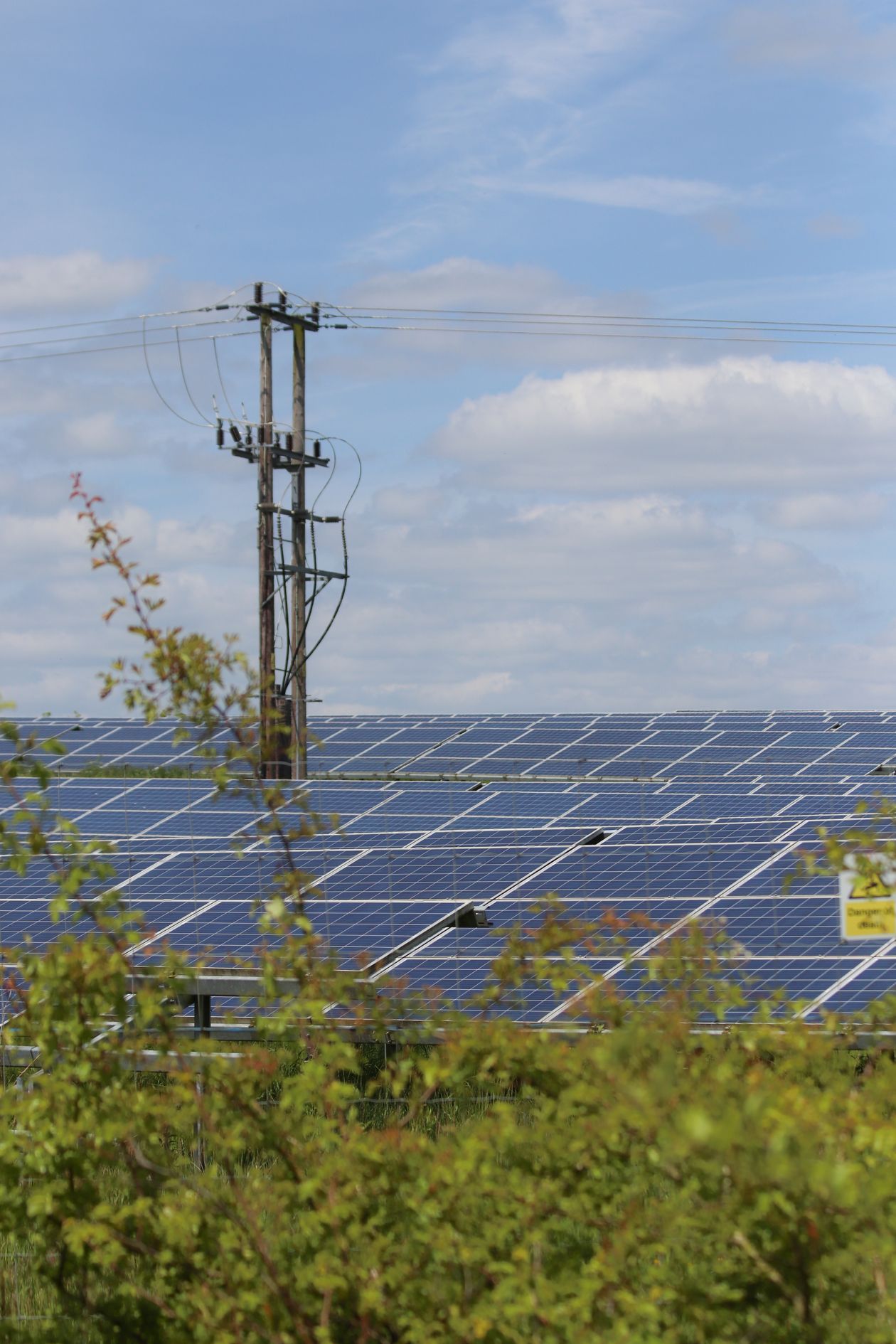
Solar farms, wind projects and gas-to-power plants depend on ownership and power purchase arrangements, so board decisions need to be consistent with offtake deadlines and lender reporting. Where a dispute adjudication board DAB Vietnam clause sits inside an EPC contract, lenders will ask how a decision affects the completion date.
Real estate and mixed-use
Hotels, resorts and mixed-use complexes follow the parties’ agreement. A board is rarely needed for a small fit-out, but for a phased urban area or resort complex a lighter ad hoc arrangement can preserve opening dates.
| Sector | Typical contract or risk feature | What to check |
|---|---|---|
| Expressway, rail station, airport terminal | Public or PPP elements likely; long duration | Standing board; approval and domestic arbitration preference |
| Steel, petrochemical, cement, factory | Private; start-up and test disputes | Technical expertise; time limits for the decision |
| Solar, wind, grid, gas-to-power | Fact-specific; tied to offtake dates | Link to completion date and lender reporting |
| Hotel, resort, urban area | Private; phased handover | Ad hoc board or expert; cost proportionality |
These categories are illustrative; no real project is described. In each case the decisive question is the same: will the decision be respected by the parties and by their financiers?
Conclusion
A dispute board is only as strong as the clause that creates it. Decree 210 and the Law on Construction now recognise the model, the FIDIC 1999 edition offers a tested sequence, and the real work lies in adapting names, deadlines, binding effect and enforcement to the project.
Your practical next step is to check whether your current contract fixes an appointment date, names an appointing entity, states the status of a decision and sets a route to arbitration for non-compliance. Gaps in any of these four should be closed by amendment before the next dispute arises.
Frequently Asked Questions
Is a dispute board legally recognised in Vietnam?
Yes. Article 86(5) of the Law on Construction and Article 17(3) of Decree 210 recognise a dispute-handling model following international practice, leaving design to the contract.
Is a DAB decision binding?
Under the FIDIC 1999 edition, yes, until revised by settlement or an arbitral award. Under Decree 210, binding force depends on what the contract says.
What if a party ignores the decision?
Under Sub-Clause 20.7 of the FIDIC 1999 edition, the other party may refer the failure to comply directly to arbitration.
How long does a party have to object?
FIDIC 1999 gives 28 days after receiving the decision to issue a notice of dissatisfaction. Missing it makes the decision final and binding.
Do PPP projects need approval for a board?
An international-practice model needs a treaty basis or the investment decision-maker’s permission, and agreement in the contract, under Article 86(5)(b).
Disclaimer: this article provides general information, not legal advice for a specific matter. It reflects the law as of 22 October 2026. Please obtain advice on your own facts before acting.
Or contact us directly:
Contact IVLF LawyerCompany Formation Services – IVLF Advisors
This article is provided for general information only and does not constitute legal advice for any specific case. Regulations may change – please consult a qualified professional before acting. Should further analysis be required, please contact one of our lawyers below.