Vietnam’s agricultural sector still runs on machinery bought with cash savings and informal credit from equipment dealers, a financing gap that is now the single biggest constraint on mechanisation as the country’s AgTech sector tries to modernise smallholder and mid-scale farming simultaneously. Agricultural equipment finance Vietnam structures sit at an unusual intersection: AgTech platforms extending equipment finance at the point of sale face the same licensing-line questions as other embedded lending models; see IVLF’s guide to embedded finance and leasing licenses in Vietnam.
part commercial equipment leasing, part government-subsidised agricultural credit policy, and part fintech-driven alternative underwriting for borrowers who have never held a formal bank relationship. Getting the structuring wrong means either excluding the smallholders the government wants mechanised, or extending credit that state-subsidised interest programmes were never designed to support.
The commercial opportunity is real.
Vietnam’s agribusiness consolidation, larger commercial farms, contract farming arrangements, and export-oriented AgTech ventures, is creating a borrower class with genuine equipment financing capacity, but the sector’s risk profile splits sharply between that emerging commercial tier and the far larger population of smallholder farmers whose income volatility and lack of formal collateral make conventional leasing underwriting a poor fit.
1. Two Borrower Profiles, Two Different Financing Logics
Recognising which profile a borrower fits is the starting point for any agricultural equipment finance Vietnam facility, since a one-size approach to agricultural equipment finance Vietnam underwriting misprices both segments.
Agricultural equipment finance Vietnam lenders need to underwrite two structurally different borrowers under the same product category. Commercial agribusiness borrowers, processing companies, export-oriented farms, and contract farming operators with offtake agreements, look much like conventional SME equipment lessees:
verifiable revenue, bankable collateral beyond the equipment itself, and credit histories a leasing company can assess using standard tools. Smallholder farmers financing a single tractor or irrigation system are a different risk category entirely, with income tied to a single harvest cycle, seasonal cash flow that does not match a standard monthly lease payment schedule, and often no prior formal borrowing history at all.
Lenders that apply commercial agribusiness underwriting standards to smallholder borrowers exclude the population mechanisation policy is trying to reach, while lenders that apply smallholder-appropriate flexible terms to commercial agribusiness borrowers leave margin and risk-adjusted return on the table unnecessarily.
The most effective agricultural equipment finance Vietnam programmes segment these borrower classes explicitly rather than running a single underwriting model across both.
2. Government-Subsidised Agricultural Credit and Its Interaction With Commercial Leasing
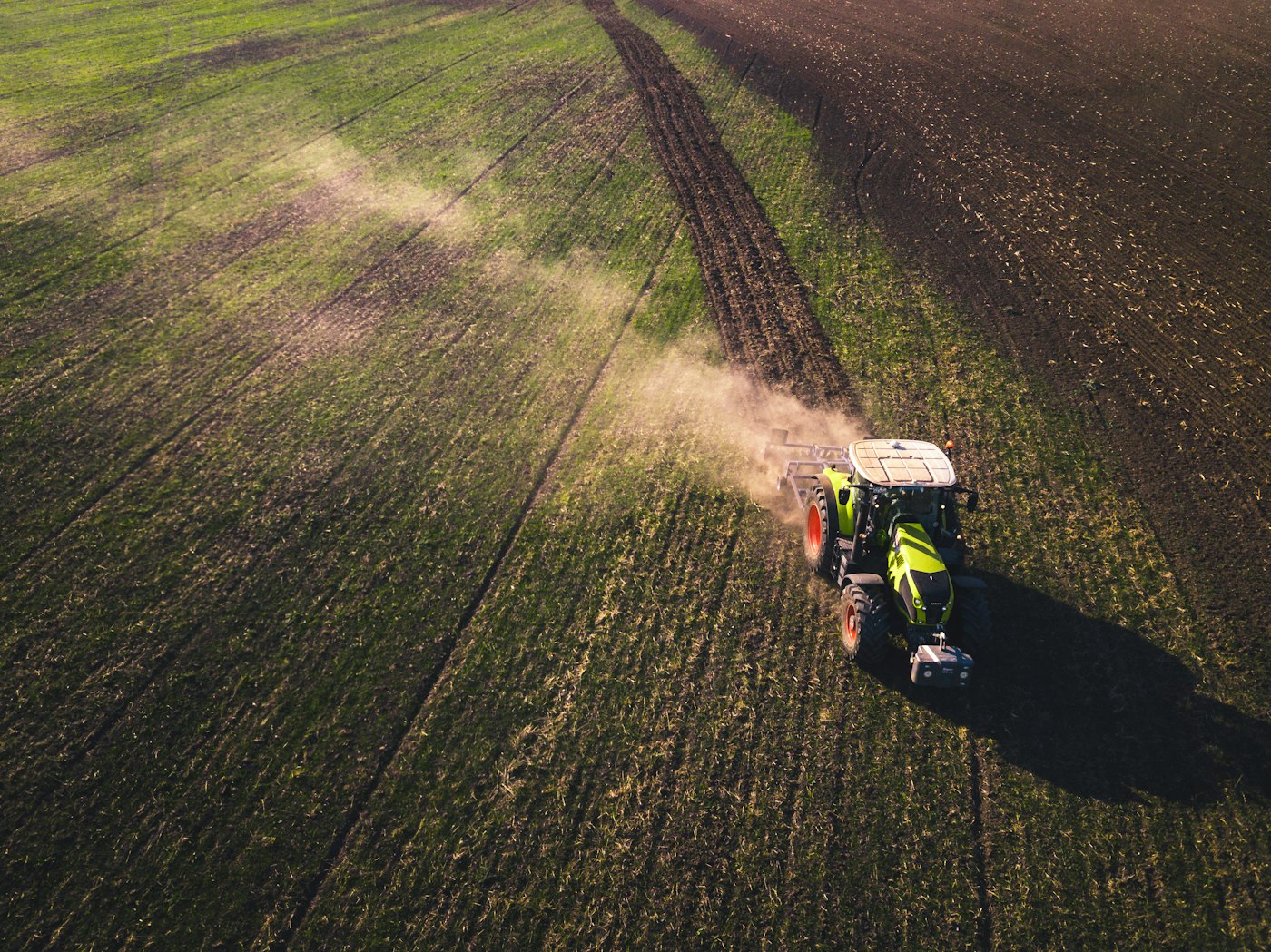
Layering subsidised credit under a commercial lease is common in agricultural equipment finance Vietnam deals, and lenders structuring agricultural equipment finance Vietnam facilities need to confirm the two sources do not conflict.
Vietnam has run various interest-subsidised or preferential agricultural credit programmes aimed at rural mechanisation and agricultural restructuring, typically channelled through state-owned or policy banks rather than commercial finance leasing companies. For a commercial lessor, this creates both competition and opportunity:
competition, because a subsidised loan will almost always underprice a commercial finance lease on headline interest rate; opportunity, because subsidised programmes are frequently capital-constrained, slow to disburse, and limited in the equipment categories or borrower types they cover, leaving commercial lessors to serve the demand policy banks cannot reach quickly enough.
Structuring Around, Not Against, Subsidised Credit
The more sophisticated agricultural equipment finance Vietnam lessors do not try to compete head-on with subsidised rates.
Instead, they position commercial leasing as the fast, flexible complement to slower policy credit, financing equipment categories or borrower segments the subsidised programmes structurally underserve, higher-value AgTech equipment like precision irrigation or drone-based crop monitoring systems that fall outside traditional mechanisation subsidy categories, for instance, or borrowers who need equipment financed before the next subsidised credit cycle opens.
Fintech platforms entering agricultural equipment finance Vietnam distribution face the same licensing question that applies to embedded equipment leasing more broadly: origination and data scoring do not, by themselves, authorise a platform to hold agricultural leases on its own balance sheet, and a platform funding smallholder equipment leases through an unlicensed affiliate risks the same enforceability challenge that affects any unlicensed lending structure under the Law on Credit Institutions 2024.
3. Data-Driven Underwriting for Borrowers Without Credit History
Alternative data is closing the underwriting gap for thin-file borrowers, and this is now a core input into most agricultural equipment finance Vietnam credit models built for smallholders.
Smallholder farmers rarely have the documentation conventional lease underwriting requires: audited financials, formal land titles usable as collateral, or a multi-year banking relationship.
Agricultural equipment finance Vietnam lenders serving this segment increasingly rely on alternative data, satellite crop yield estimates, cooperative membership and harvest records, input supplier purchase history, and, where available, mobile payment transaction data, to build a creditworthiness picture that substitutes for the documentation a conventional underwriting model demands.
This alternative-data approach works, but it shifts risk in ways lenders need to price explicitly: satellite yield data is a proxy for repayment capacity, not a direct measure of it, and a single bad season, a flood, a pest outbreak, a price collapse in the underlying crop, can move an entire regional cohort of borrowers into default simultaneously in a way that diversified commercial SME lending rarely experiences.
Portfolio concentration risk by crop and by geography deserves more weight in agricultural equipment finance Vietnam risk models than it typically receives in generic SME leasing underwriting frameworks.
Insurance is a second underused risk mitigant in agricultural equipment finance Vietnam structures.
Crop insurance products remain thin in Vietnam relative to more developed agricultural finance markets, but equipment-specific insurance, covering the machinery itself against damage, theft, or weather-related loss, is more readily available and materially reduces a lessor’s exposure to the harvest-failure correlation risk described above, since even a borrower who cannot service the lease after a bad season leaves the lessor with an insured, rather than uninsured, asset to recover value from.
4. Asset-Specific Risk: Equipment Utility, Seasonality, and Resale Markets

Seasonality and resale liquidity drive loss severity in agricultural equipment finance Vietnam portfolios more than default rates do, which is why pricing a agricultural equipment finance Vietnam facility purely on credit risk understates exposure.
The financed equipment itself carries risk characteristics different from urban commercial equipment.
A tractor or harvester’s utilisation is inherently seasonal, sitting largely idle outside planting and harvest windows, which affects both the borrower’s cash flow capacity to service a level monthly payment and the practical value of repossessing the asset on default, since a repossessed tractor in the wrong season, or the wrong region relative to Vietnam’s fragmented agricultural equipment resale markets, can sit unsold for months.
Structuring lease payment schedules around harvest-linked cash flow rather than calendar-standard monthly instalments, common practice in more mature agricultural finance markets but still underused in Vietnam, materially reduces default risk without requiring any change to the underlying credit assessment, simply by aligning payment timing with when the borrower actually has cash.
Cooperative-linked financing structures, where a farming cooperative aggregates equipment demand and stands behind individual member borrowers with a degree of peer guarantee, have shown particular promise in agricultural equipment finance Vietnam pilots, because they substitute community-level accountability for the individual credit history smallholder borrowers typically lack, while giving the lessor a single organised counterparty for servicing and communication rather than hundreds of dispersed individual relationships.
Export-oriented AgTech ventures adopting precision agriculture equipment, sensors, drones, automated irrigation controllers, sit closer to the commercial agribusiness risk profile than to smallholder mechanisation, and agricultural equipment finance Vietnam lenders serving this tier should expect faster technology cycles than traditional farm machinery, which argues for shorter lease tenors and technology-refresh provisions similar to those used in warehouse automation financing elsewhere in the equipment leasing market.
5. Registration, Security, and the Practical Limits of Rural Enforcement
Enforcement in rural areas remains the weak link in most agricultural equipment finance Vietnam security packages, so lenders extending an agricultural equipment finance Vietnam facility should price this friction into recovery assumptions.
Perfecting security over agricultural equipment follows the same Civil Code 2015 and National Registration Agency for Secured Transactions (NRAST) framework as any other movable asset finance transaction in Vietnam, but the practical reality of enforcing that security against a smallholder borrower in a rural province differs meaningfully from repossessing equipment from an urban SME.
Distance from provincial enforcement authorities, the social and reputational cost of enforcing against a smallholder within a farming community, and the genuine difficulty of physically locating and removing equipment from dispersed rural sites all raise the effective cost of enforcement well above what the loan documentation alone suggests.
Sophisticated agricultural equipment finance Vietnam lenders build this reality into pricing and structuring rather than treating registered security as a reliable proxy for recovery value, often favouring shorter tenors, higher initial equity contributions from the borrower, or cooperative-level guarantees that create peer accountability, over relying purely on formal collateral enforcement that may never practically occur.
As previously discussed in our review of Vietnam’s leasing company licensing framework, the same NRAST registration discipline that protects urban equipment lessors applies here, even where enforcement in practice looks very different.
Lenders and AgTech platforms structuring rural equipment finance should also monitor current mechanisation and rural credit policy published by the Ministry of Agriculture and Rural Development, since subsidised programme eligibility and coverage change with each policy cycle and directly affect where commercial financing can compete.
Cross-border equipment suppliers financing imported machinery into Vietnam’s agricultural sector should also review our analysis of cross-border equipment leasing rules for the manufacturer-financing structures increasingly used to bring AgTech hardware into the country.
Frequently Asked Questions
Why is agricultural equipment financing structured differently for smallholders versus commercial farms?
These represent two distinct borrower profiles with different financing logics, since smallholder borrowers often lack formal credit history and collateral that commercial farm operators can provide, requiring different underwriting and security approaches for each segment.
Does government-subsidised agricultural credit conflict with commercial leasing options?
Not necessarily, but lessors need to structure around subsidised credit programs rather than against them, understanding how a borrower’s eligibility for subsidised credit interacts with a commercial leasing offer.
How can lenders underwrite borrowers without formal credit history?
Data-driven underwriting approaches are increasingly used for borrowers without traditional credit history, drawing on alternative data sources to assess creditworthiness where a conventional credit file does not exist.
Is security registration enforceable for equipment financed in rural areas?
The same NRAST registration discipline that protects urban equipment lessors applies in rural areas, even though practical enforcement can be more limited, so proper registration remains important despite these practical constraints.
IVLF advises AgTech platforms, agricultural equipment lessors, and their investors on structuring commercial and smallholder-facing equipment finance in Vietnam, from borrower segmentation and NRAST security through to subsidised-credit interaction. As a structured finance law firm Vietnam AgTech platforms bring in to scale rural lending responsibly, we focus on underwriting and security structures that hold up in practice, not just on paper, given the practical limits of rural enforcement. Contact IVLF to structure your agricultural equipment finance program.
This article is provided for general information only and does not constitute legal advice for any specific case. Regulations may change – please consult a qualified professional before acting. Should further analysis be required, please contact one of our lawyers below.