The international financial centre in Vietnam is now a legal reality rather than a policy ambition. Resolution 222/2025/QH15, passed on 27 June 2025 and effective 1 September 2025, created it; Decree 323/2025/ND-CP of 18 December 2025 established it in 7 chapters and 23 articles; and Decision 2755/QD-TTg the same day appointed the Executive Council chaired by the Permanent Deputy Prime Minister. For international capital, this is the most consequential Vietnamese reform in a generation.
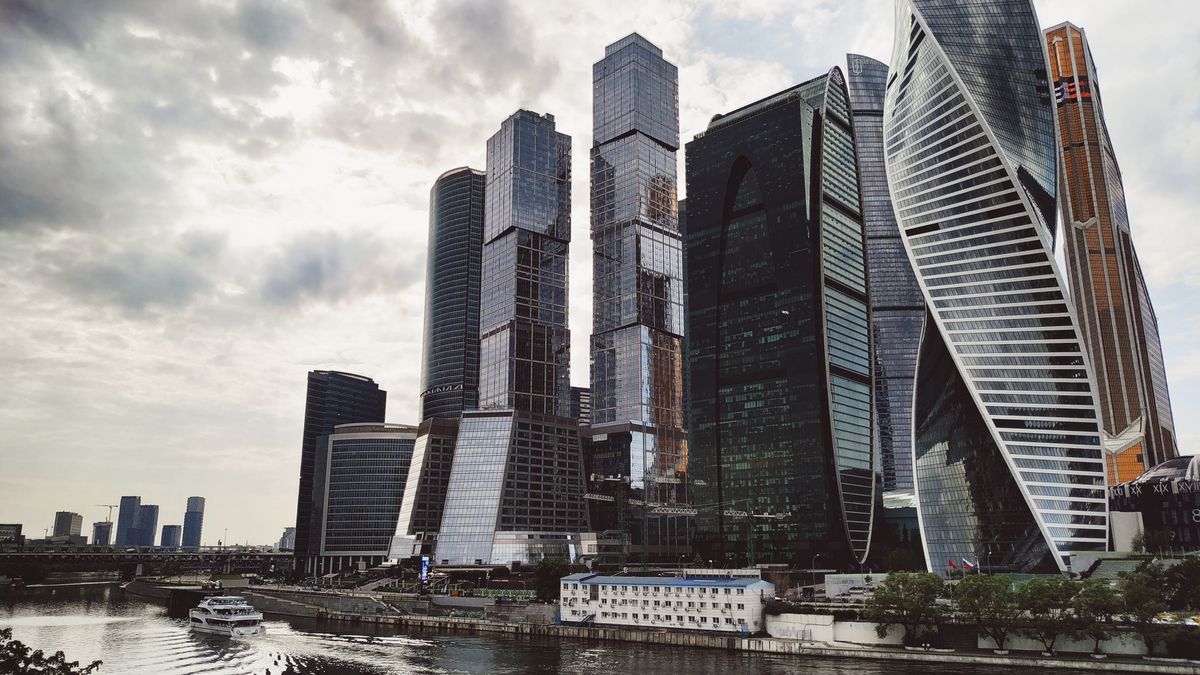
The international financial centre: one entity, two locations
The defining feature is structural: the international financial centre is a single unified legal entity operating at two locations – Ho Chi Minh City and Da Nang. Its operating regulations are approved by the Executive Council and take uniform effect at both sites. Every standard, rule, process, business form and licensing criterion is issued once and applied simultaneously in both cities. A member licensed in Da Nang is licensed under the same rulebook as one in Ho Chi Minh City.
This international financial centre design avoids the failure mode of split jurisdictions competing against each other. It also means investors choose location on the basis of ecosystem fit rather than regulatory arbitrage.
The two international financial centre mandates
Ho Chi Minh City: the comprehensive hub
Roughly 898 hectares spanning Sai Gon ward, Ben Thanh ward and the Thu Thiem New Urban Area in An Khanh ward, bounded by Vo Van Kiet, Nam Ky Khoi Nghia, Le Duan, Ton Duc Thang and the Saigon River. Its mandate is a comprehensive and diverse financial ecosystem: capital raising, investment, payments, issuance and trading of financial products, asset management, fintech and green finance. Detail in our guide to the Ho Chi Minh City financial centre.
Da Nang: the innovation and sandbox hub
Roughly 300 hectares – lots in An Hai ward, a 20-storey IT building at Software Park No.2, land near the Thuan Phuoc bridge approach, the Nhu Nguyet – Xuan Dieu corridor, and about 282 hectares of planned sea reclamation opposite Nguyen Tat Thanh. Its mandate is a modern centre bound to innovation, digital technology and sustainable finance: a controlled testing ground for new financial models, digital assets, digital payments, specialised exchanges, supply chain finance and non-deposit-taking lenders. See the Da Nang financial centre guide.

What the international financial centre offers members
Resolution 222 set out a suite of special mechanisms: preferential tax treatment, a distinct foreign exchange regime, employment and work permit facilitation, land and infrastructure support, and – unusually – the ability to pilot business models for which Vietnamese law has no provision yet, with liability exemption for good-faith implementation. Our guides cover tax incentives, the foreign exchange regime and membership and licensing.
International financial centre priority sectors
Decree 323/2025 lists the priority industries: international financial centre infrastructure; green and ESG-linked finance; commodities, commodity derivatives and international trade finance; fintech and innovation; investment funds and asset management; and professional support services. These are the activities the centre will license fastest and support hardest.
Governance and dispute resolution
Three organs sit inside the structure: an executive body managing day-to-day operations, a supervisory body handling oversight, inspection and examination, and a dedicated dispute resolution body. A specialised court is being established alongside arbitration facilities – the functional zones expressly include an arbitration and court centre. For international investors accustomed to Singapore or Dubai, this is the reassurance that matters most, and our dispute resolution guide explains it.
International financial centre timeline
The 2025-2026 phase covers formation and commencement of operations, resourcing the centre’s institutions, completing priority infrastructure, and building the ecosystem of exchanges, fintech platforms and international-standard advisory services. From 2026, the centre’s bodies propose further special mechanisms on a phased basis. Within five years the Executive Council must review operations and report to the Government, with the option of proposing a streamlined single-site structure.
International financial centre FAQs
Who can join?
Members are financial institutions, funds, fintech firms, professional service providers and other organisations meeting the licensing criteria set uniformly for both locations. Registration runs through the centre’s one-stop electronic administrative system.
Is it worth entering early?
Early members shape the rulebook. The Executive Council is expressly mandated to propose new mechanisms from 2026 based on member needs, and an advisory council of domestic and international finance and legal experts feeds that process. Founding participants influence a framework that later entrants inherit. Official texts are published via the Ministry of Finance.
What early members should be doing now
Three moves separate institutions that capture the opportunity from those that read about it later. First, decide activity scope precisely: the priority list is where licensing appetite and incentive value concentrate, and a business that straddles the boundary will be structured twice. Second, build the substance case early – premises inside the perimeter, local decision-makers, a documented governance framework – because every mature incentive regime in Asia now tests substance rather than form. Third, engage with the rule-making process while it is open; the advisory council of domestic and international experts exists to channel exactly that input, and the mechanisms proposed from 2026 will reflect the members present when they are drafted.
The competitive context is worth stating plainly. Vietnam is not going to out-depth Singapore or out-history Hong Kong in this decade. What the international financial centre can offer is a low-cost, high-growth base with a genuine regulatory safe harbour for experimentation, sitting beside the fastest-industrialising economy in the region. For funds, fintechs and service providers whose thesis is Vietnamese and regional growth rather than global custody scale, that proposition is strong on its own terms – and it is available now, at founding-member pricing, in a way it will not be in five years.
International financial centre guides from our team
- Ho Chi Minh City financial centre: 898 hectares
- Da Nang financial centre: sandbox and digital assets
- IFC membership: 5 steps to join
- IFC tax incentives: planning questions
- IFC foreign exchange: flow categories
- IFC land policy: before signing a lease
- IFC banking and capital raising
- IFC work permits and employment
- IFC dispute resolution and the specialised court
- Fintech sandbox: liability exemption for pilots
- Digital asset exchange in Vietnam
- Green finance structures
- Commodity exchange and trade finance
- Asset management business lines
- Family office inside the centre
- Vietnam vs Singapore: 5 criteria
- IFC roadmap: 3 phases and entry timing
This article is provided for general information only and does not constitute legal advice for any specific case. Regulations may change – please consult a qualified professional before acting. Should further analysis be required, please contact one of our lawyers below.