
Manufacturing M&A in Vietnam is decided at the factory gate, not in the data room. A share purchase agreement can be flawless while the plant it buys sits on land the seller cannot lawfully transfer, operates under an environmental licence that no longer matches its real output, or employs several hundred workers whose social insurance has been under-declared for years. Every manufacturing M&A review therefore has to run two tracks in parallel: the corporate chain of title to the shares, and the site-level chain of permits that lets the factory legally produce.
The practical consequence is sequencing. Land tenure, construction acceptance, fire-safety approval and the environmental licence take weeks to verify and cannot be fixed by a warranty, so they belong at the front of a manufacturing M&A timetable. Commercial issues such as customer contracts and inventory valuation can follow. Buyers who invert that order routinely discover, late in the process, that the asset they priced as a going concern is a building they cannot lawfully expand.

Site inspection is the part of manufacturing M&A that document review cannot replace. Photo: Pexels.
Manufacturing acquisitions in Vietnam combine corporate M&A risk with site-specific operational exposure. The value of a factory may depend on secure land tenure, lawful construction, environmental capacity, a stable workforce and licences that continue after closing. A buyer that focuses only on financial statements may inherit a plant that cannot expand, renew permits or operate at the expected output.
This guide highlights four areas that require coordinated legal, technical and commercial diligence: land, environment, labour and licensing.
Manufacturing M&A: map the manufacturing footprint
Identify every factory, warehouse, utility connection, leased workshop, logistics site and ancillary facility used by the target. Confirm which entity owns or leases each location and which licences apply. Shared sites and related-party arrangements deserve particular attention because informal access can end when ownership changes.
Compare the physical footprint with enterprise and investment registrations, land records, construction approvals and environmental documents. Production lines, capacity and products should match the authorised project.
Land tenure and industrial-zone arrangements
Review land-use right certificates, sublease agreements, infrastructure contracts, permitted use, remaining term, rent-payment method and restrictions on transfer or mortgage. In an industrial zone, the infrastructure developer’s consent may be needed for changes in control, sublease or expansion.
Check whether land rent and infrastructure fees are fully paid and whether security has been registered. Boundary encroachments, unauthorised buildings and use outside the approved purpose can delay financing or permit renewal.
Our land and real estate manufacturing M&A due diligence guide provides a broader title-review framework.
The single most common manufacturing M&A surprise is a mismatch between the land use right certificate and the plant on the ground. Where land is leased from the State with annual rent payments, the tenant’s ability to transfer or mortgage the land use right is materially narrower than where rent was paid in one lump sum, and buildings erected without an amended construction permit may not appear on the certificate at all. In an industrial zone the sublease from the infrastructure developer adds a second layer of consent. Confirm early whether the developer’s consent, and notification to the zone management board, are conditions to closing.
Construction and fire-safety compliance
Reconcile approved designs with the factory as built. Review construction permits, completion acceptance, fire-prevention approvals, commissioning records and changes made to production areas or warehouses. Unauthorised alterations may require remediation and can affect insurance coverage.
Assess whether planned expansion is feasible under current density, height, fire-safety and infrastructure limits. A site that supports existing production may not support the manufacturing M&A buyer’s growth plan.
Environmental permits and operating capacity
Review environmental impact assessment or registration documents, the environmental permit, wastewater and emissions approvals, hazardous-waste contracts, monitoring reports and inspection history. Verify that authorised capacity, technology, fuels and waste streams match actual operations.
Technical advisers should inspect treatment systems and compare monitoring data with production volumes. Repeated exceedances, bypasses, missing records or dependence on an overloaded industrial-zone system can create shutdown and capital-expenditure risk.
Land tenure in an industrial zone determines whether the plant can be expanded or financed. Photo: Pexels.
Historic contamination and remediation
A share buyer inherits environmental liabilities of the target, including contamination that predates closing. High-risk operations may require soil and groundwater assessment. Review chemical storage, underground tanks, spill records and legacy waste areas.
Known issues should be quantified and addressed through remediation conditions, specific indemnities, escrow or price adjustment. General compliance warranties may be inadequate where cleanup costs are uncertain or claims emerge years later.
Contamination is the risk that survives every manufacturing M&A structure. Buying shares leaves the polluting entity, and its statutory clean-up exposure, exactly where it was; buying assets does not always break the chain either, because remediation obligations attach to the site operator. A Phase I assessment, with intrusive sampling where the process history justifies it, converts an unquantified liability into either a price adjustment or a specific indemnity supported by a holdback.
Employment and social insurance
Manufacturing targets often employ large workforces with overtime, shift, allowance and productivity arrangements that differ from written policies. Audit labour contracts, payroll, working time, leave, severance, trade-union matters, foreign employees and occupational safety.
Reconcile payroll with social-insurance contributions and tax filings. Unpaid contributions, misclassified allowances or excessive overtime can create material liabilities. See our employment and social insurance due diligence guide.
Workforce continuity and change management
A share acquisition generally preserves employment with the same company, but uncertainty can trigger resignations or industrial relations issues. Identify key engineers, plant managers, quality personnel and licence holders whose departure would disrupt operations.
If the manufacturing M&A transaction involves an asset or project transfer, analyse whether a labour usage plan, consultation, termination or employee transfer process is required. Retention and communication plans should be ready before announcement.
Operating licences and product approvals
Build a licence matrix for each product and process. Depending on the business, relevant approvals may cover investment, manufacturing, chemicals, food, pharmaceuticals, medical devices, alcohol, energy, boilers, pressure equipment, metrology, import-export, customs and specialised technical standards.
Confirm the issuing authority, holder, site, scope, capacity, expiry and change-of-control consequences. A licence held by an affiliate or individual may not benefit the target after closing.

Licensed capacity, emissions and waste routes must match what the factory actually does. Photo: Pexels.
Supply chain and customs risk
Review key supplier contracts, imported machinery, raw-material restrictions, rules of origin, customs classifications, duty exemptions and bonded or export-processing arrangements. Incentives may depend on project or export conditions that must continue after closing.
Assess single-source dependencies, long lead times and supplier change-of-control rights. Sanctions, export controls and customer compliance requirements may also affect the manufacturing M&A buyer’s integration plan.
Energy, utilities and infrastructure
Confirm electricity capacity, water allocation, wastewater connections, backup power, access roads and telecommunications. Review service agreements, deposits, tariffs and expansion commitments. A buyer should not assume that additional power or discharge capacity will be available when production increases.
Translate diligence into the manufacturing M&A deal
Critical permits, land consents, lender releases and remediation should be conditions precedent where possible. Representations should cover land, construction, environment, labour, licences, customs, safety and inspections. Identified liabilities may require specific indemnities, escrow or holdback.
Purchase-price models should include necessary capital expenditure, contribution arrears, remediation costs and production downtime. Conduct-of-business covenants should prevent unusual production changes, disposal of equipment, licence amendments or workforce reductions before closing.
Closing and post-closing priorities
The handover should include original permits, land records, technical files, monitoring data, employee records, customs books, passwords and regulator correspondence. Immediately after closing, update responsible persons, bank mandates, emergency contacts and required notifications.
Create a remediation plan with accountable owners and deadlines. High-priority issues include expired permits, unsafe equipment, environmental exceedances, uninsured buildings and unpaid social insurance.

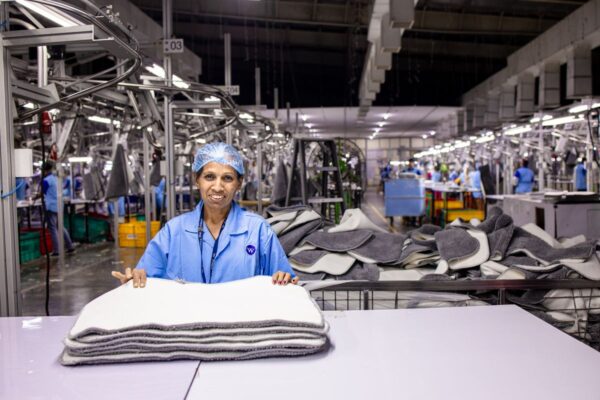
Workforce continuity is a legal obligation, not only a commercial preference. Photo: Pexels.
Manufacturing acquisition checklist
- Verify land tenure, industrial-zone consents and expansion feasibility.
- Reconcile buildings and production lines with construction approvals.
- Test environmental capacity and contamination risk.
- Audit employment, overtime, safety and social insurance.
- Map operating, product and equipment licences.
- Review customs, incentives and supply-chain dependencies.
- Confirm energy, water and wastewater capacity.
- Convert findings into remediation, price and contractual protection.
Key takeaway
A Vietnam manufacturing acquisition should be evaluated as an operating system, not merely a company. Secure land, compliant facilities, environmental capacity, workforce continuity and valid licences must all align with the manufacturing M&A buyer’s production plan. Integrated diligence allows the manufacturing M&A buyer to price the real cost of taking control and protect continuity after closing.
Frequently asked questions about manufacturing M&A
Does a manufacturing M&A deal transfer the factory environmental licence automatically?
In a share acquisition the licence stays with the company that holds it, so the environmental licence continues in force and no re-issuance is needed simply because the shareholders changed. What does trigger amendment is a change in the licensed parameters: production capacity, technology, waste streams or discharge points. In an asset acquisition the position is the opposite, because operating permits are issued to a specific operator at a specific site and the buyer must generally apply in its own name before it can lawfully produce.
Can a foreign buyer take over land use rights inside an industrial zone?
Usually yes, but the route matters. Most factories occupy land subleased from the zone infrastructure developer, and the sublease will contain consent and change-of-control provisions that must be checked before signing. Where the target leases directly from the State, the ability to transfer the land use right depends on whether rent was paid annually or as a one-off payment for the whole term. Because a share purchase leaves the tenant entity unchanged, foreign buyers frequently prefer it precisely to avoid re-consenting the land arrangement.
What labour obligations arise when a factory changes ownership?
Where a transaction involves a transfer of ownership or of the right to use the enterprise assets, the Labour Code 2019 requires the current and successor employers to prepare and implement a labour utilisation plan covering which employees continue, which are retrained or redeployed, and which are made redundant. Existing labour contracts continue on their terms; they are not rewritten by the manufacturing M&A deal. Buyers should also quantify unpaid or under-declared social insurance, overtime beyond statutory caps and unused annual leave, because those accrue to the company and follow it in a manufacturing M&A share deal.
How should historic contamination be allocated between buyer and seller?
Vietnamese environmental law works on a polluter-pays basis, and in a manufacturing M&A share deal the liability remains inside the company the buyer has just acquired. Contractual allocation is therefore the only protection. The workable package is a baseline site assessment agreed by both sides, a specific indemnity for pre-closing contamination that is not subject to the general warranty cap or time limit, and a holdback or escrow sized to the remediation estimate rather than to a notional percentage of price.
Does a manufacturing acquisition need merger control clearance in Vietnam?
It may. The Competition Law 2018 requires notification of an economic concentration to the National Competition Commission where the parties exceed thresholds set by reference to assets, turnover, transaction value in Vietnam, or combined market share in the relevant market. The test looks at the parties as a whole, not only at the factory being sold, so a modest plant acquired by a large group can still be notifiable. Where a threshold is met, clearance is a condition precedent and closing before it is obtained exposes both parties to sanction.
Next step
Before signing, price the site risk rather than assuming it away. Read the corporate rules that govern the share transfer itself in the Law on Enterprises, then build a manufacturing M&A condition precedent list that separates defects the seller must cure before closing from defects the buyer will accept against an indemnity.
IVLF Lawyer advises acquirers and sellers of Vietnamese industrial assets on land tenure, environmental licensing, labour transfer and merger control. If you need a Vietnam M&A lawyer to run a manufacturing M&A diligence exercise and turn its findings into contract protection, see our legal services or contact IVLF Lawyer.
Related reading: Environmental due diligence for manufacturing acquisitions, Land and real estate due diligence for corporate acquisitions, and Real estate M&A: acquiring the project or the project company.
Speak With IVLF About This Transaction
IVLF Advisors supports buyers, sellers and investors through the full lifecycle of a Vietnamese transaction as part of its M&A advisory Vietnam practice. Our Vietnam M&A lawyer team can help you apply the points in this guide to your specific deal, from structuring through closing.
For related reading, see our guides on Managing Conditions Precedent Before Closing, Checking Foreign Ownership Limits Before Signing a Term Sheet, Managing Foreign Exchange Risk in Cross-Border M&A, Real Estate M&A: Acquiring the Project or the Project Company?. Contact IVLF Advisors to discuss your transaction.
Speak With IVLF About This Transaction
IVLF Advisors supports buyers, sellers and investors through the full lifecycle of a Vietnamese transaction as part of its M&A advisory Vietnam practice. Our Vietnam M&A lawyer team can help you apply the points in this guide to your specific deal, from structuring through closing.
For related reading, see our guides on Managing Conditions Precedent Before Closing, Checking Foreign Ownership Limits Before Signing a Term Sheet, Managing Foreign Exchange Risk in Cross-Border M&A, Real Estate M&A: Acquiring the Project or the Project Company?. Contact IVLF Advisors to discuss your transaction.
This article is provided for general information only and does not constitute legal advice for any specific case. Regulations may change – please consult a qualified professional before acting. Should further analysis be required, please contact one of our lawyers below.