
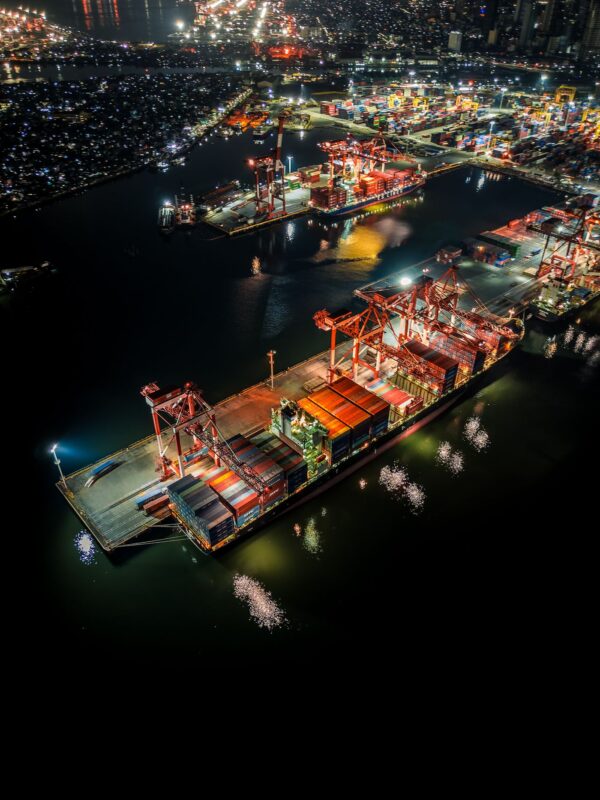
A vessel is the most valuable and most mobile asset in a shipping dispute, and it is only reachable while it is in port. That is why arrest of ships in Vietnam is so often the first move of a creditor with a maritime claim: a ship held at a Vietnamese berth stops earning, stops cargo operations, and puts the owner’s lenders, charterers and insurers under pressure within hours. For the owner, a successful arrest can mean lost hire, missed laycans, default notices from the bank and a settlement made under duress.
This article sets out when and how a claimant can arrest a vessel, what security the owner must usually provide to secure release, where wrongful arrest exposure arises, and how an owner should respond in the first 48 hours. International principles are described as such; Vietnamese procedural points that depend on current practice are flagged for verification.
Table of Contents
- Why arrest of ships in Vietnam changes the leverage in a dispute
- Maritime claims that can support an arrest
- How a claimant moves: evidence, application and the detention order
- Security for release and counter-security
- Wrongful arrest exposure and the owner defence playbook
- Hypothetical scenario
- FAQ
- Conclusion and next step
Why arrest of ships in Vietnam changes the leverage in a dispute
In legal terms, arrest of ships in Vietnam is a form of provisional security. It does not decide who is right on the underlying claim. It gives the claimant something to enforce against, and it gives the owner a strong reason to settle or to put up security so the vessel can sail.
The commercial logic is simple. A ship that cannot trade loses revenue every day, and a bank that sees an arrest may treat it as an event of default or a reason to withhold the next drawdown. The cost of delay usually exceeds the value of the disputed claim, which is why most arrests end in security and negotiation rather than in a judicial sale.
Who is exposed
- Shipowners and bareboat charterers, whose vessel is the target;
- Time and voyage charterers, whose cargo or schedule is caught on board;
- Financiers, whose collateral is frozen and whose mortgage priority may be tested;
- Cargo interests, who may need to arrest to secure a cargo claim or who may be victims of someone else’s arrest.
The legal framework for arrest of ships in Vietnam
The Vietnam Maritime Code 2015 (Law No. 95/2015/QH13, in force from 1 July 2017, consolidated text 101/VBHN-VPQH dated 26 August 2025) contains the maritime-specific rules on arrest of seagoing vessels, read together with civil procedure rules on provisional measures. Article numbers are not cited here; consult the relevant chapter of the Maritime Code and the current procedural rules before filing or responding. The Vietnam Maritime and Waterway Administration publishes maritime procedures at vimawa.gov.vn. A draft Maritime and Inland Waterway Code is under review but is not adopted; see our note on ship mortgage and maritime asset finance in Vietnam.
Maritime claims that can support an arrest
Under the international arrest conventions, a ship may be arrested only for a “maritime claim” from a recognised list, not for any debt. The 1952 and 1999 Arrest Conventions both follow this approach, and the 1999 text lists claims such as loss of life or injury, salvage, damage caused by the ship, bunkers and supplies, crew wages, port dues, and disputes over ownership, mortgage or the ship’s operation. Whether Vietnam is a party to either convention should be checked; the Maritime Code’s treatment of arrest draws on similar concepts, but the exact list should be confirmed against the current text.
The 1999 Arrest Convention as a benchmark
Many practitioners use the 1999 Arrest Convention as a benchmark even where it does not apply directly. It treats arrest as a means of securing a maritime claim, allows a single arrest for a single claim in most cases, and links liability for wrongful arrest to the claimant. International materials are available from the IMO at imo.org.
Claims that usually succeed and claims that struggle
In international practice, certain claims are treated as strong arrest grounds because they are narrowly defined and easily documented. Others are weaker, typically because the claim is purely contractual, unliquidated or disputed on liability.
- Strong: unpaid crew wages, salvage remuneration, collision damage, unpaid port dues, a shipbuilder’s or repairer’s claim that falls within the list;
- Arguable: charterparty claims such as hire, demurrage or damages, where the right to arrest depends on the characterisation of the claim and the owner of the vessel;
- Weak: general commercial debts with no maritime character, or claims against a party who does not own or demise-charter the ship.
An important point on the person liable: many legal systems let a claimant arrest only the ship connected with the debtor, or in some cases a sister ship owned by the same person. Who owns the vessel, who controls it, and who is the debtor are therefore the first questions on both sides.
How a claimant moves: evidence, application and the detention order
Arrest is time-sensitive. A claimant who waits for the ship to be berthed often finds the vessel has sailed before the court acts. Preparation is the difference between a successful arrest and a missed opportunity.
Before filing: build the file
A claimant should assemble documentary evidence of the maritime claim, the identity of the debtor, the ownership and registration of the vessel, the vessel’s position and schedule, and the amount claimed. Typical documents include the contract, invoices, correspondence, bills of lading, statements of account and any prior demand. Check the vessel’s registered owner, manager and flag through a reliable registry search, because the wrong respondent is a common cause of an arrest being lifted.
The application and the ship detention order
The claimant applies to the competent court for a ship detention order, usually as an urgent provisional measure. The court examines whether there is a maritime claim, whether the vessel is within the court’s reach, and whether the claimant should provide counter-security. The timing, the competent court and the documents required in current practice should be checked with local counsel before filing.
Practical points for claimants planning arrest of ships in Vietnam:
- prepare the application, evidence bundle and certified translations in advance, so that filing can occur within hours of the ship’s arrival;
- identify a local agent or process contact who can monitor the vessel and assist with service;
- decide the amount to claim, including interest and costs, bearing in mind that over-claiming increases wrongful arrest risk;
- have a plan for a security discussion with the owner’s club or counsel as soon as the order issues.
For related procedure and dispute options, see our overview of vessel finance legal safeguards.
The relationship between arrest and the merits
Arrest secures a claim but does not decide it. The merits may be heard in court or arbitration, depending on the contract. If the contract contains an arbitration clause, arrest is generally still available as an interim measure in many systems, but the claimant should confirm how a Vietnamese court treats arrest in support of foreign arbitration.
Facing an arrest, or planning one? IVLF can provide a confidential preliminary review of the claim, the vessel’s ownership position and the security options under NDA protection, so that your first decisions are based on the documents rather than on pressure.
Security for release and counter-security
For most owners, the practical goal is not to win the arrest argument but to get the vessel moving again at the lowest total cost. That is done by providing acceptable security for release.
Forms of security for release
Security for release is commonly a letter of undertaking issued by the owner’s Protection and Indemnity club, a bank guarantee, or a cash deposit paid into court or into a joint account. Clubs of the International Group often issue letters of undertaking for covered liabilities, which is why a claimant may accept a club letter in place of cash. The wording matters: governing law, jurisdiction, the claim covered, the amount, interest, costs and the conditions for payment must all be agreed.
| Form of security | Typical use | Commercial impact | Risk | Mitigation |
|---|---|---|---|---|
| Club letter of undertaking | Claims within P&I cover | Fast release; no cash outlay | Low | Confirm cover with the club early; agree wording before the vessel is arrested if possible |
| Bank guarantee | Claims outside club cover, contract disputes | Uses credit lines; fees and counter-indemnity | Medium | Check facility limits and lender consent; agree beneficiary and expiry terms |
| Cash deposit | Where no other security is accepted | Ties up liquidity; slow to recover | High | Negotiate a joint account and release conditions; limit amount to a realistic claim |
| Mortgagee consent or guarantee | Financed vessels | Lender may refuse or demand conditions | High | Review loan covenants; notify lender immediately |
| Excessive security demand | Claimant overreach | Prolongs detention and costs | High | Seek reduction from the court; document the correct claim value |
The amount of security
The amount should reflect the claim’s reasonably arguable best case, with interest and costs, not the claimant’s maximum position. An owner who offers inadequate security prolongs the detention; a claimant who demands excessive security invites a court order to reduce it and a claim for wrongful arrest. English-law and market practice is to treat the arguable best case as the usual measure, but a Vietnamese court’s approach should be confirmed.

Counter-security from the claimant
A court may require the claimant to provide counter-security to cover the owner’s losses if the arrest proves wrongful. The amount and form depend on the court and the facts. Claimants should budget for this at the planning stage, because a claimant that cannot provide counter-security may lose the opportunity to arrest.
Wrongful arrest exposure and the owner defence playbook
When arrest becomes wrongful
Under the principles reflected in the 1999 Arrest Convention, a claimant may be liable for loss caused by an arrest that was wrongful or unjustified, or for excessive security demanded. In practice, wrongful arrest claims depend on whether the claimant acted without reasonable grounds or with a degree of bad faith, though the standard varies between legal systems. For arrest of ships in Vietnam, owners and claimants should confirm the applicable standard and the court’s approach to damages.
Typical grounds that expose a claimant include arresting the wrong vessel, relying on a claim that is not a maritime claim, overstating the amount, or failing to disclose material facts to the court. A claimant who treats arrest as a negotiating tool without a sound legal basis carries real financial risk.
The first 48 hours: owner action list
- Notify the club, hull underwriters, charterers, manager and, where relevant, the lender, and record the time of each notice.
- Obtain the court order and application, and identify the claim, the claimant, the amount and the stated grounds.
- Assess whether the claim is a maritime claim, whether the correct party and vessel have been named, and whether the amount is supportable.
- Open a security channel in parallel with any challenge: a letter of undertaking or guarantee on agreed wording can be prepared while objections are considered.
- Preserve evidence: logbooks, cargo documents, correspondence, port records and crew statements.
- Manage the cargo and crew position, including welfare, wages and discharge or transhipment options, so that the arrest does not create new claims.
Challenging or reducing the arrest
An owner may apply to set aside the arrest, to reduce the security, or to ask for counter-security from the claimant. Choose the route according to the strength of the claimant’s case and the cost of delay. Where the claim is plainly valid, paying or securing it quickly usually costs less than a protracted challenge. Where the claim is weak, a prompt challenge supported by documents may succeed and shifts pressure back to the claimant.
Charterparty and finance consequences
An arrest may trigger off-hire rights if the charterparty so provides, event-of-default clauses under the loan, and notification duties under insurance policies. Owners should check each of these contracts on the first day. A claimant also needs to understand that arresting a chartered vessel may harm third parties, such as cargo owners and charterers, who can then bring their own claims against the claimant if the arrest is wrongful.
Hypothetical scenario
Assumptions: a foreign shipowner time-charters a vessel to a charterer. A bunker supplier claims unpaid fuel invoices against the charterer, not the owner. The vessel calls at a Vietnamese port, and the supplier applies for arrest, naming the vessel. All parties and figures are invented.
The owner’s first question is whether the debtor is the owner or the charterer, and whether the supplier’s claim is one that supports arrest against this vessel. Under many legal systems, a claim against a time charterer may not justify arrest of a vessel that the charterer does not own or demise-charter, though this depends on the applicable rules.
The owner collects the charterparty, bunker clauses and any no-lien provisions, and notifies the club and the charterer. If the claim is outside cover, the owner demands that the charterer provide security and considers its own indemnity claim against the charterer. In parallel, it prepares a challenge on the ground that the supplier has sued the wrong party, while keeping a security option available in case the court is not persuaded.
The lessons: identify the debtor early, check contractual no-lien and indemnity clauses, and act on two tracks at once.
Frequently Asked Questions
Can any creditor arrest a ship?
No. Under the international arrest conventions, arrest is limited to recognised maritime claims. A general commercial debt without a maritime character may not qualify. Check the current Vietnamese rules before filing.
How can an owner get the ship released?
Usually by providing acceptable security, such as a club letter of undertaking, bank guarantee or deposit, or by obtaining a court order setting aside the arrest. The best route depends on the claim and the cost of delay.
Is the claimant liable for a wrongful arrest?
Potentially. Under international principles the claimant may be liable for loss caused by an unjustified arrest or excessive security demand. The standard and the available remedies should be confirmed locally.
Does an arbitration clause prevent arrest?
Not necessarily. Arrest may still be available to secure a claim that will be arbitrated, but the court’s approach in Vietnam should be verified for the facts.
Does the 1999 Arrest Convention apply?
Check Vietnam’s accession status before relying on it directly. It remains a useful benchmark for claim lists, security and wrongful arrest principles.
Conclusion and next step
Arrest changes the economics of a maritime dispute overnight. Claimants win by preparing evidence, choosing the right debtor and budgeting for counter-security. Owners win by moving on two tracks at once: challenging a weak arrest while preparing security on agreed wording so the vessel is not held longer than necessary.
Practical next action: prepare a standing arrest protocol now, listing your club contact, lender notice requirements, charterparty and insurance notification deadlines, and a template letter of undertaking, so that the first 48 hours are executed from a checklist rather than improvised.
This article provides general information as of 14 October 2026 and is not legal advice for any specific matter. Laws and court practice may change; confirm the current position before acting.
Or contact us directly:
Contact IVLF LawyerCompany Formation Services – IVLF Advisors
This article is provided for general information only and does not constitute legal advice for any specific case. Regulations may change – please consult a qualified professional before acting. Should further analysis be required, please contact one of our lawyers below.