
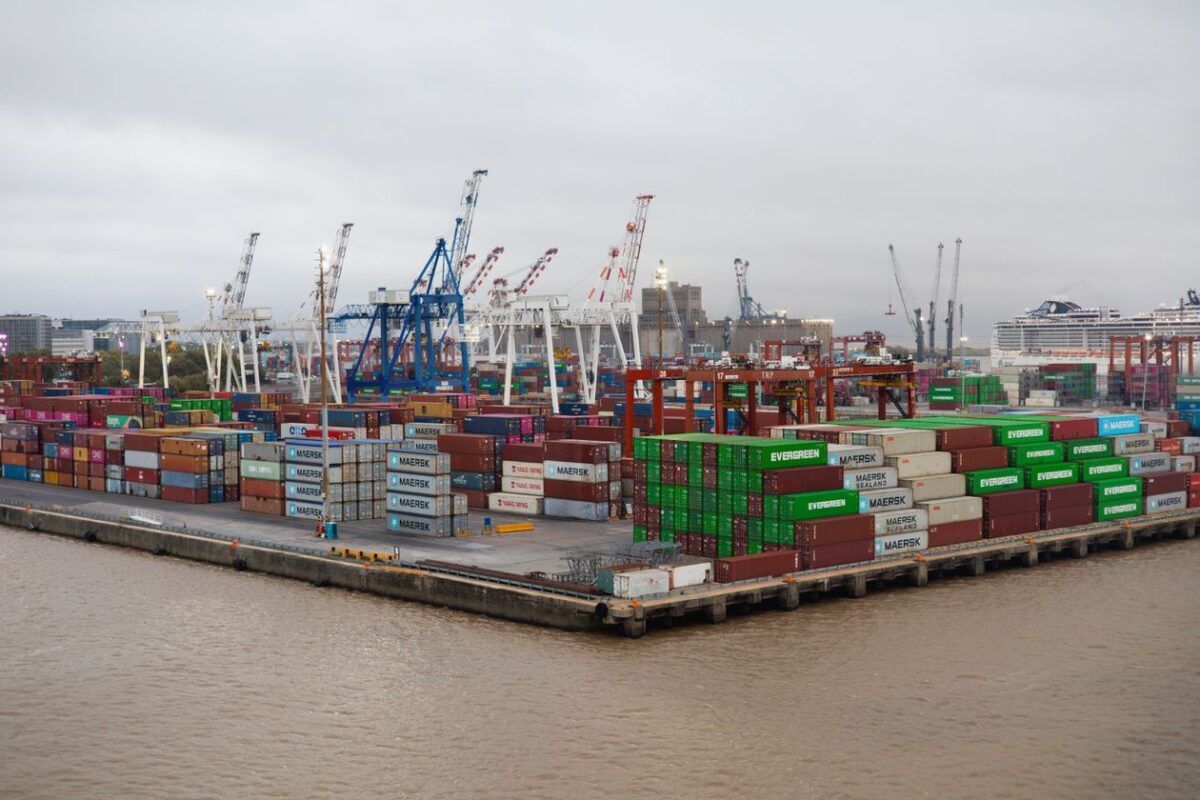
A foreign bidder can win a Vietnamese package, mobilise people and equipment, and still find that it has no lawful right to start work or to be paid, because the licence was never issued. The foreign contractor construction licence Vietnam requires is not a formality that follows the award; under the 2026 framework it is a precondition for performing, and for the employer to sign, the contract.
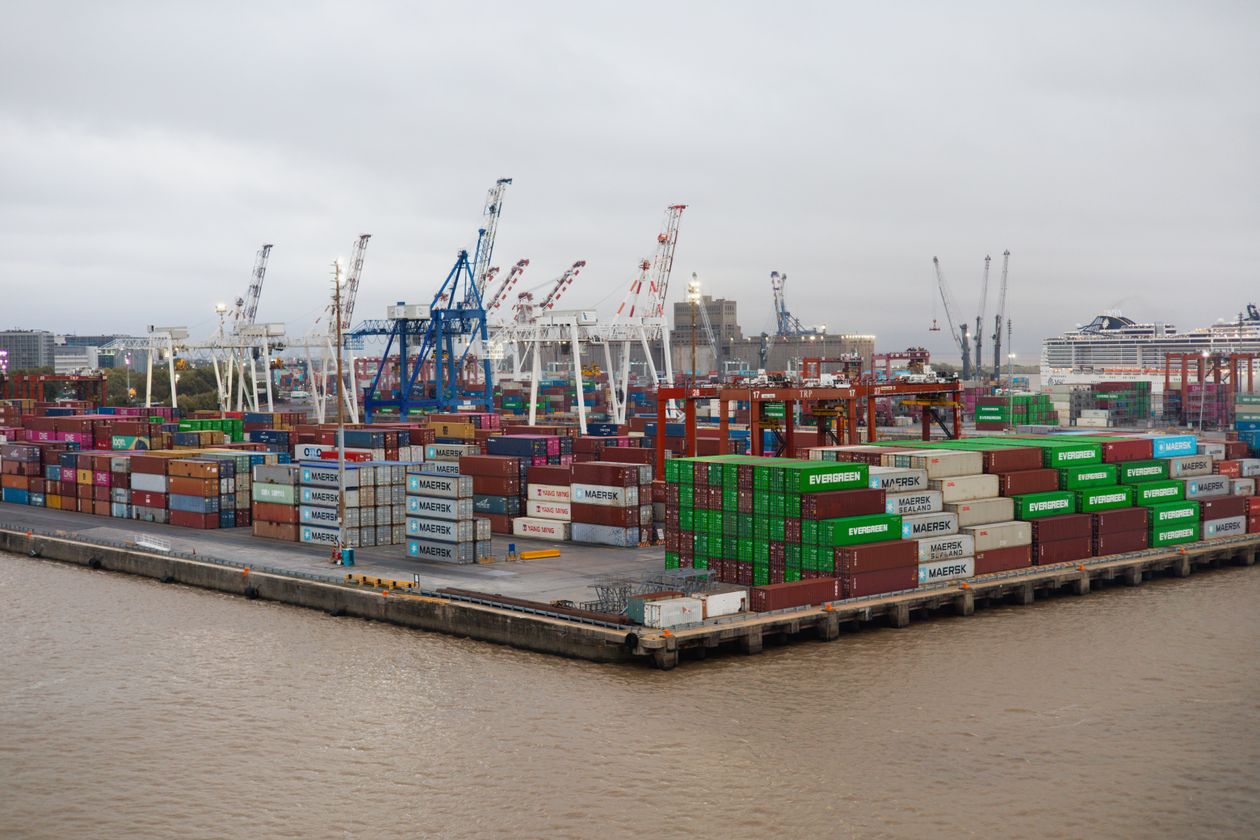
This article is for foreign contractors, EPC consortia, project sponsors and lenders. It sets out when the licence is required, the conditions for obtaining it, the dossier and timetable, the obligations that follow, and how the licensing route differs from setting up a Vietnamese company. Whether the package is an airport terminal, a steel plant, a solar farm or a resort, the same licence logic applies, but the commercial pressure differs sharply by sector.
When a foreign contractor construction licence Vietnam applies
Article 88(3) of the Law on Construction No. 135/2025/QH15 (in force from 1 July 2026) provides that foreign contractors must comply with Vietnamese law and be granted a construction activity licence by the state construction management authority. Decree 212/2026/NĐ-CP, which also took effect on 1 July 2026, implements this in Articles 42 to 49.
The principle in Article 42 of the decree is unambiguous: a foreign contractor may operate in Vietnam only after being issued the licence, and must comply with Vietnamese law and any applicable international treaty. It follows that a foreign contractor construction licence Vietnam regime covers the full range of activities the decree regulates: consultancy, procurement and construction, each with slightly different obligations after licensing.
The decree’s counterpart is the capacity regime for domestic organisations. Under Article 88 of the Law and Article 41 of the decree, a Vietnamese organisation does not apply for a capacity certificate as a condition of operating; it publishes its own capacity information on the national construction database, and individuals who hold key positions must hold the required professional certificates. The foreign contractor route is different: it is a project-specific permission, not a self-declaration.
Foreign contractor construction licence Vietnam versus a foreign-invested company
There are two ways for a foreign group to work in Vietnamese construction. It may operate as a foreign contractor for a specific package, with a licence, or it may establish a Vietnamese legal entity that operates under domestic rules. Based on the analysis of DEDICA Law, a foreign-invested company established in Vietnam is not itself a “foreign contractor” for the purposes of the decree.
Under the 2025 Law on Investment, a foreign investor may now set up the economic organisation before obtaining the investment registration certificate, subject to market access conditions. The sector conditions for construction services depend on the list of restricted sectors published by the Government and on Vietnam’s international commitments in force at the time of filing; we do not state any ownership cap here.
| Question | Licensed foreign contractor | Vietnamese company with foreign capital |
|---|---|---|
| Legal basis | Law on Construction Art. 88(3); Decree 212 Arts 42-49 | Law on Investment 2025; Law on Enterprises; Decree 212 capacity rules |
| Duration | Tied to a specific contract | Ongoing legal entity |
| Local presence | Project operating office for the contract term | Registered office and permanent operations |
| Local partner | Joint venture or Vietnamese subcontractor required, save for an exception | Not required by the licence regime |
| Best suited to | One-off or occasional package | Continuous Vietnamese pipeline |
Conditions for the licence: award and a Vietnamese partner
Article 43 sets two conditions. First, the foreign contractor must hold the decision awarding it the contract or selecting it as contractor, issued by the employer or, for a subcontractor, by the main contractor. The licence therefore comes after the award, not before.
Second, the foreign contractor must either form a joint venture with a Vietnamese contractor or use a Vietnamese subcontractor. The only exception is where no domestic contractor has the capability to perform any part of the package. In every case the application must define the scope, quantity and value of the work allocated to the Vietnamese party.
This second condition is where commercial negotiations are most often rushed. The partner chosen at bid stage becomes part of the licence, so a change of partner later needs an amendment. If you are choosing between a consortium and a subcontract, our articles on subcontracting in Vietnamese construction contracts and on joint ventures in bidding set out the trade-offs.
Foreign contractor licensing Vietnam: dossier, authority and timetable
The applicant submits one set of documents to the one-stop department, by post, or online through the national public service portal. The decree prescribes the application forms and an annex of templates, and the application must be in Vietnamese.
- Application form: using the prescribed template.
- Award evidence: a certified copy of the bidding result or the selection decision.
- Corporate documents: the foreign contractor’s establishment or business registration and any professional certificates it holds.
- Experience and finances: an experience report and audited financial statements for the last three years where the procurement was not under the bidding law, or for the shorter period if the company is younger.
- Vietnamese partner: the joint venture agreement, or the formal or framework contract with the Vietnamese subcontractor.
- Authorisation: a power of attorney for the person who files.
Foreign documents must be consularly legalised unless a treaty exempts them, and must be translated into Vietnamese with a notarised or certified translation. This is the step that most often delays an application, because corporate documents from several jurisdictions must be gathered, apostilled or legalised, and translated before filing. Start early, and agree with the Vietnamese partner who will obtain and certify each document, since the partner’s papers are also part of the file.
The licensing authority is the provincial People’s Committee, which may delegate or authorise the task. If the foreign contractor will work in two or more provinces, the committee of the province where the operating office is to be located handles it. The decree sets a period of six working days from receipt of a complete and valid dossier to grant or amend a licence; a refusal must be in writing and give reasons.
Preparing a Vietnamese bid or awaiting an award? IVLF Advisors offers a confidential preliminary review (under NDA) of your licensing route, Vietnamese partner structure and dossier readiness before filing.
Amendments, validity and revocation
The licence is not static. Under Article 45, it must be amended when the contractor changes its name or address, when the joint venture member or Vietnamese subcontractor changes, or when other recorded content changes. The same six-working-day period applies to amendments.
The licence expires when the contract has been completed and liquidated, or when the contract ceases to be effective because the contractor is suspended, dissolved or becomes insolvent, among other grounds. It is revoked for forged or altered documents, or for errors made by the issuing authority. For forgery or alteration, no new licence will be considered for 12 months after revocation, and the original must be returned within five working days of the revocation decision.
Two practical points follow. First, treat the licence as part of the contract’s critical path: a change of partner during performance can interrupt lawful work until the licence is amended. Second, a contract that terminates early under the termination rules in Article 27 of Decree 210 ends the basis for the licence, so liquidation and licence closure should be planned together.
What the foreign contractor construction licence Vietnam holders must do on site
Article 48 lists the rights and obligations of the licensed contractor in some detail. The principal ones are as follows.
- Operating office: set up an operating office where the project is located. Consultancy providers may use the employer’s premises or may not need an office; contractors working across several provinces set up at the licensing locality. The office exists only for the contract term.
- Seal, tax and accounts: register a seal, return it when the contract ends, register for and pay tax under Vietnamese law, keep accounts and open bank accounts in line with the guidance of the finance ministry and the central bank.
- Workforce: recruit Vietnamese and foreign workers under the labour law, and bring in foreign managers, experts and skilled workers only where Vietnam cannot meet the need.
- Imports and equipment: complete customs procedures, register imported materials and equipment, and re-export temporarily imported equipment on completion.
- Insurance: professional liability for consultancy, property and goods cover for procurement, and the relevant insurance for construction.
- Quality and safety: inspection of imported materials and equipment, safety registration of construction equipment and vehicles, and compliance with standards, labour safety and environmental rules.
- Close-out: completion documents, warranty, settlement of imported materials and equipment, liquidation, and a notice of completion in the prescribed form.
These obligations are operational, but they have contractual consequences, and lenders should expect to see them reflected in the project budget and programme. A foreign contractor that has not budgeted for the operating office, tax registration and the local workforce rules often finds the cost of compliance surfacing as a claim for extra time or money, which the employer is likely to resist.
Employer and main contractor duties toward foreign contractors
Article 49 places obligations on the other side of the table. The employer, project owner or main contractor may sign the contract with the foreign contractor only after the licence has been issued. This is more than a technicality: it affects signing mechanics and the conditions precedent in the contract.
The same article requires the employer or main contractor to supervise the commitments the foreign contractor made on the joint venture or the Vietnamese subcontractor, to consider whether domestic construction equipment is available before agreeing the list of temporarily imported items to be re-exported, and to consider whether Vietnamese technical labour is available before agreeing the list of foreign personnel. It must also confirm the settlement of imported materials and equipment.
For a lender, these duties support a practical request: ask the sponsor to show the licence, its scope and its partner annex as a condition precedent to the first drawdown. A hypothetical example: a bank funds a mechanical package where the foreign contractor’s licence names a Vietnamese partner that is later replaced. Without a licence amendment, the replacement may leave the work outside the permitted structure.
Contract drafting points for licensed foreign contractors
The licence interacts with the commercial terms in several ways, and each should be addressed expressly.
- Conditions precedent: make issue of the licence a condition to commencement and to payment, with a long-stop date and an agreed consequence if the authority refuses.
- Time and cost relief: allocate the risk of a delay in licensing. Where the employer’s own award decision or documents are late, the foreign contractor should have relief.
- Currency: contract payment under the Law on Construction is in Vietnamese dong, and foreign currency may be used only in compliance with foreign exchange law. See our guide on payment currency and foreign exchange in construction contracts before you settle the price schedule.
- Dispute resolution: choose a forum and seat; institutions such as VIAC are used in Vietnam, and for public investment and PPP projects the Law on Construction prefers domestic arbitration unless the investment decision-maker permits otherwise.
- Change of law: a change in state policy or legislation is a recognised basis for amending a construction contract, so the licence regime itself can be a trigger if conditions change.
In the FIDIC 1999 Silver Book, sub-clause 1.13(b) makes the contractor responsible, unless the Particular Conditions say otherwise, for giving notices, paying fees and obtaining the permits, licences and approvals that the Laws require, and for indemnifying the employer if it fails to do so. On a Vietnamese project that default allocation sits uneasily with a licence that can be issued only after the employer’s award decision and that depends on the employer’s own documents, so the Particular Conditions should be conformed to the actual licensing sequence. Further information about the standard forms is available from FIDIC.
Common mistakes to avoid
Cross-border projects tend to repeat the same avoidable errors, and most of them come from treating licensing as an administrative step handled by a local agent rather than as a legal precondition that shapes the deal. The following are the ones that matter most.
- Treating the licence as something to arrange after mobilisation, when the employer cannot lawfully sign before it is issued.
- Naming a Vietnamese partner in the bid without a binding joint venture or subcontract agreement ready to attach to the application.
- Leaving consular legalisation and translation until the last week.
- Overlooking the need to amend the licence when the partner or scope changes.
- Assuming that a licence granted for one package covers later extensions or additional scopes without review.
The transitional treatment of existing licences and pending applications under Decree 212 depends on its transitional article, so the date of each licence and application matters.
How a Foreign Contractor Construction Licence Vietnam Works Across Project Types: Infrastructure, Industry, Energy and Real Estate
The licence rules in Decree 212/2026 do not change with the asset class, but the timetable, the choice of Vietnamese partner and the employer’s own procurement route do. Three points are common to all sectors: the licence follows the award, the Vietnamese partner is named in the file, and the employer should not sign before the licence is issued.
Infrastructure and transport packages
Expressways, ports, metro lines, airport terminals and high-speed rail stations are often procured by the State or a State-owned enterprise, so the award decision that the licence depends on comes from a formal public procurement process. Press reports put the North-South high-speed railway at roughly 1,541 km between Hanoi and Ho Chi Minh City through 15 provinces and cities, designed for 350 km/h (VietNamNet, 9 October 2026).
A foreign specialist on a project of that scale would normally join a Vietnamese main contractor, and a route crossing many provinces raises the question of which provincial committee issues the licence. For the airport at Long Thanh, phase 1 commercial operation is expected from 24 December 2026 according to press reports; any foreign systems or terminal-equipment subcontractor must still hold its own licence before signing. Whether a given project is public investment or PPP depends on its funding source.
Heavy industry and FDI factories
For a steel mill, petrochemical unit, cement line or factory in an industrial park, the employer is frequently a private or foreign-invested company, and the contract follows the parties’ agreement within the Law on Construction. The licence is still needed for a foreign contractor, and the practical risk is speed: an owner who wants early equipment installation may press the contractor to mobilise before the licence is granted. Treat that as a licensing and customs problem, because imported plant must be registered and re-exported or settled at completion.
Renewable energy and power
Solar, onshore wind, grid and gas-to-power packages often combine foreign turbine, inverter or LNG-equipment suppliers with a Vietnamese civil contractor. Whether the work counts as foreign contractor activity under the decree depends on the scope and the ownership and power-purchase structure; this is fact-specific and should be confirmed. Offshore wind adds marine fabrication and installation, discussed in our offshore energy guide.
Real estate, resorts and mixed-use schemes
For hotels, resorts, urban areas and mixed-use complexes, a foreign fit-out or specialist façade contractor is typically engaged by a private developer. The developer’s land and real-estate regime (pháp luật về đất đai và kinh doanh bất động sản) governs the asset, while the licence governs the contractor. A hypothetical example: a foreign hotel-operator’s design-and-fit-out contractor wins a resort package and needs a Vietnamese joint venture partner with local labour capacity.
| Sector | Typical feature | What to check on licensing |
|---|---|---|
| Transport infrastructure | State-owned employer, formal award, multi-province works | Award decision, issuing province, partner annex |
| Heavy industry | Private or FDI employer, imported plant | Customs registration, re-export, mobilisation date |
| Energy and power | Foreign equipment, ownership and PPA structure | Scope classification, partner, insurance |
| Real estate | Private developer, local labour-heavy works | Partner capacity, workforce rules, fit-out scope |
Conclusion
A foreign contractor construction licence Vietnam is the gateway to lawful performance: it follows the award, depends on a Vietnamese partner and a complete legalised dossier, and must be kept current for the life of the contract. The practical next step is to map your timetable backwards from the intended start date, allowing for award, partner agreement, legalisation, translation and the six-working-day review period.
Frequently Asked Questions
Who issues a foreign contractor’s construction licence?
The provincial People’s Committee, which may delegate. Where the work spans two or more provinces, the committee of the province hosting the operating office is responsible.
How long does the licence take?
Decree 212 sets six working days from receipt of a complete, valid dossier for issuing or amending a licence. Preparing legalised and translated documents usually takes far longer.
Must a foreign contractor use a Vietnamese partner?
Generally yes: a joint venture with a Vietnamese contractor or a Vietnamese subcontractor, unless no domestic contractor can perform any part of the package. The scope and value must be specified.
Can the employer sign before the licence is issued?
No. Decree 212 provides that the employer, project owner or main contractor may sign with the foreign contractor only after the licence has been issued.
Is a Vietnamese subsidiary of a foreign group a foreign contractor?
According to DEDICA Law’s analysis, no: a company established in Vietnam falls under the domestic regime.
Disclaimer: this article provides general information and is not legal advice for a specific matter. The law is stated as at 22 October 2026. Please obtain advice on your own facts before acting.
Or contact us directly:
Contact IVLF LawyerCompany Formation Services – IVLF Advisors
This article is provided for general information only and does not constitute legal advice for any specific case. Regulations may change – please consult a qualified professional before acting. Should further analysis be required, please contact one of our lawyers below.