
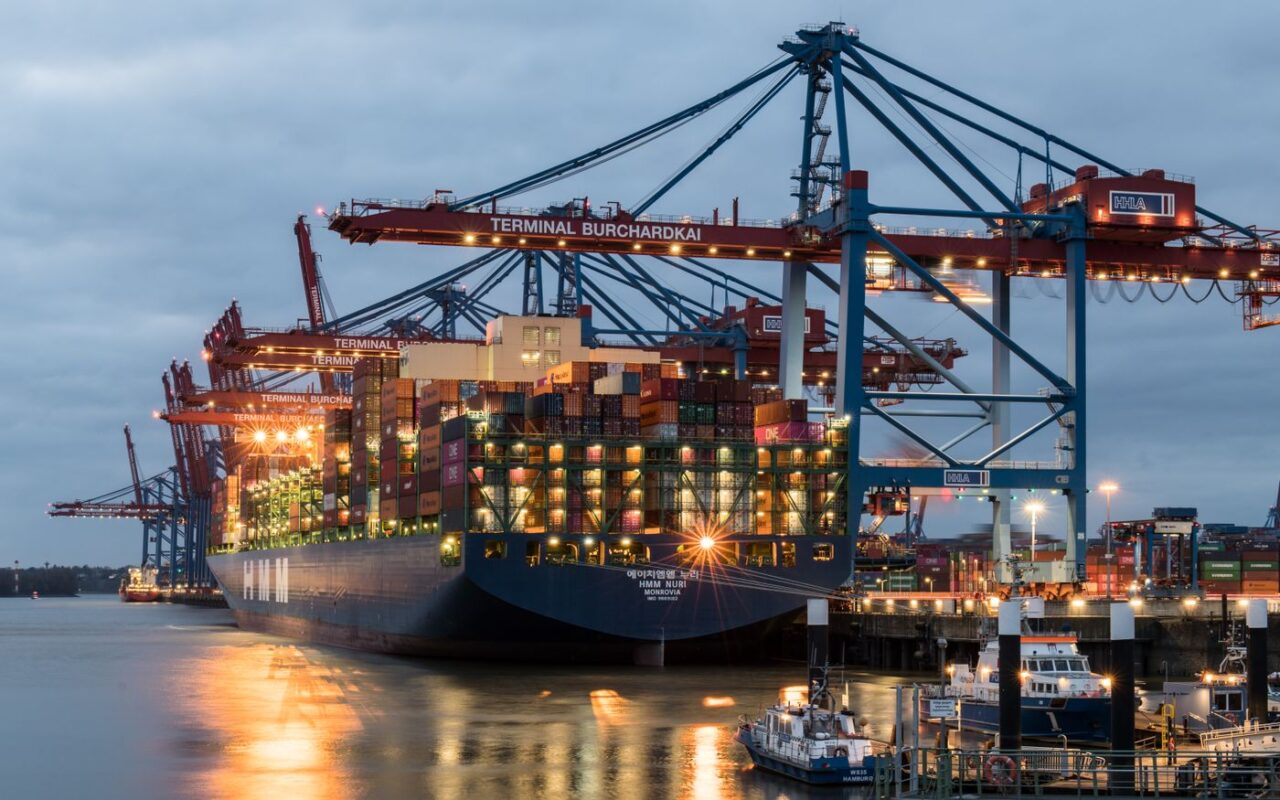
A delay of two days at a discharge port rarely makes the board agenda, yet under a voyage charter it can translate directly into a six-figure invoice, or into a lost claim because a notice went out in the wrong form. Voyage charter laytime and demurrage is where freight economics, port reality and drafting discipline meet. Owners treat the clock as revenue; charterers treat it as a cost line that can be argued down; cargo receivers, banks and insurers often discover the bill only after the vessel has sailed.
This guide explains how the mechanism works, where claims are won or lost, and what an executable claim file contains. Doctrine described as English law is market practice, not Vietnamese law; Vietnam-specific points are flagged for verification.
Table of Contents
- Voyage charter laytime and demurrage: why the clock is a commercial asset
- Notice of readiness: the document that starts everything
- Exceptions, interruptions and the laytime calculation
- Demurrage claims, despatch and time bars
- Risk matrix for the claim file
- Hypothetical scenario: a delayed bulk discharge
- Vietnam angle: governing law, forum and evidence
- FAQ
- Conclusion and next action
Voyage charter laytime and demurrage: why the clock is a commercial asset
Under a voyage charter the owner sells a transport service for a fixed freight. The charterer is given an agreed period, called laytime, to load and discharge. If the vessel stays beyond that period, the charterer pays demurrage at a daily rate agreed in the contract. If the charterer finishes early, the contract may grant despatch, usually a fraction of the demurrage rate.
Demurrage is not a penalty in the ordinary sense. Under English-law principles it is an agreed sum for detention of the vessel, which both sides priced when they signed. That is why the rate, the start of the clock and the list of exceptions deserve the same negotiating attention as the freight itself.
The three questions behind every voyage charter laytime and demurrage dispute
Almost every dispute can be reduced to three questions. When did laytime start? Which periods stop or suspend it? Is the claim presented in time and with the documents the contract requires? Each question has a documentary answer, and the party with the better file usually prevails.
- Start: a valid notice of readiness tendered at the right place and time.
- Stop: exceptions named in the contract, such as weather, holidays or strikes, applied exactly as written.
- Claim: a statement of facts, time sheet and supporting documents delivered within any contractual time bar.
Facing a laytime statement you cannot reconcile, or a demurrage invoice close to a time bar? IVLF can carry out a confidential preliminary review of the charterparty, notices and statement of facts under NDA protection, so you know your position before you respond.
Standard forms and riders
Many dry-cargo fixtures use the Gencon 94 form published by BIMCO, or its successors, with a rider of negotiated clauses. The printed form is only the starting point. Riders frequently change the notice period, add or delete exceptions, introduce a demurrage time bar, or switch from reversible to non-reversible laytime. Read the typed clauses first, because where typed and printed text conflict, the typed text normally prevails. Further reference material on standard forms and laytime definitions is available from BIMCO.
Notice of readiness: the document that starts everything
Laytime does not start because the ship has arrived. It starts when the contract says it does, and in most forms that requires a valid notice of readiness. A notice of readiness, or NOR, is the master’s written statement that the vessel is at the agreed place, ready in all respects to load or discharge.
Under English-law principles an invalid NOR is generally treated as a nullity. It does not become valid simply because the vessel later becomes ready, and it is not automatically cured because cargo operations begin.
What makes a notice valid
Validity is tested against four conditions in the typical analysis.
- Place: the vessel must be at the contractual destination, whether berth, dock or port limits, and the clause may require the ship to be an arrived ship.
- Readiness: holds clean, documents on board, free pratique and other port formalities in order, to the extent the contract makes them conditions of readiness.
- Timing: tendered within the hours and by the method the contract specifies, such as office hours, by email or through agents.
- Recipient: addressed to the party named in the charterparty, with proof of transmission and receipt.
Typical NOR traps
Notices sent outside permitted hours, to the wrong party, or before the vessel entered the agreed area invite rejection. Silence may later be argued as acceptance.
- Owners should tender on arrival, repeat the notice if in doubt, and record the time of each transmission.
- Charterers should reject promptly and in writing if the notice is defective, giving reasons, and reserve all rights.
Many forms, including Gencon 94, provide that laytime begins a set number of hours after a valid notice is given or at a fixed hour depending on when the notice is tendered. Check the exact wording in your fixture, because riders often change it.
Exceptions, interruptions and the laytime calculation
Once laytime has started, the next question is which time counts. A laytime calculation takes the agreed allowance, subtracts the time used, and adjusts for exceptions. The arithmetic is simple; the contractual wording is not.
Fixed versus reversible laytime
Laytime may be fixed separately for loading and discharging, or reversible, with a single pool of days across both ports, so keep the load port records for the whole voyage.
Common exceptions and their wording
Typical terms include weather working days, which exclude periods when weather prevents work, and formulas for Sundays and holidays. The abbreviations are familiar but must be read together with the clause.
- SHINC: Sundays and holidays included, so they count as laytime.
- SHEX: Sundays and holidays excepted, so they do not count unless used.
- Weather working days: days on which weather would not have prevented work, judged against the cargo operation, not against the vessel’s convenience.
An important English-law principle is that exceptions are construed strictly and that the party relying on an exception bears the burden of proving it applies. Another is that once a vessel is on demurrage, exceptions do not apply unless the contract expressly says so, summarised in the market phrase once on demurrage, always on demurrage. Check whether the clause carries that effect in your fixture.
Building a defensible laytime calculation
- Fix the commencement time from the valid notice and the contract formula.
- Apply exceptions line by line with documentary support.
- Reconcile the time sheet against the statement of facts, port logs and pumping or loading records.
- Calculate laytime used, time on demurrage or despatch, and apply the rate pro rata.
- Annex every document the contract names as supporting evidence.
Demurrage claims, despatch and time bars
In voyage charter laytime and demurrage practice, claims fail more often for process reasons than for merit. The claim must be presented in the form and within the period that the charterparty requires, and a number of widely used riders require supporting documents to be delivered together, not in instalments.
Demurrage claims and the contractual time bar
A typical rider provides that demurrage claims are extinguished unless the owner submits a claim with specified documents within a fixed number of days after completion of discharge. Courts applying English law tend to enforce such clauses according to their terms. Some versions require copies of the notice of readiness, the statement of facts, pumping logs and time sheets, and a missing document can mean the whole claim is time barred.
- Diarise the deadline from the date of completion of discharge, not from the date of the invoice.
- Send the complete set at once and keep proof of delivery.
- Where the contract requires documents signed by the master or agents, obtain them before the vessel sails.
Despatch and the incentive structure
Despatch rewards early completion. It is commonly set at half the demurrage rate and may be calculated on all time saved or only on laytime saved. The two bases produce different numbers, so agree the basis in writing.
Security, lien and enforcement
The charterparty often gives the owner a lien on cargo for freight, deadfreight and demurrage. A lien is only useful if it is exercised before cargo leaves the vessel, and its practical effect depends on whether the bill of lading incorporates the charterparty terms. Owners holding a claim against a charterer with limited assets should consider requesting security or a guarantee as a condition of releasing cargo, subject to the contract and the applicable law. Where a lien clause is absent or has been waived, the owner is left with an unsecured contractual claim.
Disputes, arbitration and evidence
Most voyage charters refer disputes to arbitration, often seated in London or Singapore, and arbitration in Vietnam is also possible. Check the clause because the seat and rules decide procedure, interim relief and enforcement. Awards are generally enforceable abroad under the New York Convention framework, and subject to the usual defences. Whether and how a particular award will be recognised in Vietnam should be checked against current practice.
Risk matrix for the claim file
| Issue | Legal position (English-law principle) | Commercial impact | Risk | Mitigation |
|---|---|---|---|---|
| Invalid notice of readiness | Generally a nullity; waiver depends on conduct | Laytime start moves or is lost | High | Tender on arrival, repeat if in doubt, reject defects in writing |
| Missed demurrage time bar | Enforced according to its terms | Whole claim extinguished | Fatal | Diary the deadline, send full document set at once |
| Exception wording ambiguous | Construed strictly; burden on party relying | Hours disputed line by line | Medium | Log cause of every stop, align time sheet and statement of facts |
| Reversible laytime not tracked across ports | Single pool of time across both ports | Unexpected demurrage at discharge | High | Preserve load port records, calculate running balance |
| Despatch basis unclear | Depends on wording | Dispute over amount owed | Low | Agree basis in writing before sailing |
| Lien not exercised in time | Lost once cargo is delivered | Unsecured claim against weak counterparty | High | Check lien clause, request guarantee before release |
Hypothetical scenario: a delayed bulk discharge
Hypothetical scenario. The assumptions below are invented for illustration and do not describe any real case.
- A bulk carrier is chartered on a Gencon 94 form with a typed rider for a cargo moving to a Vietnamese port.
- Laytime at discharge is stated in running days, Sundays and holidays included, with a daily demurrage rate and half-rate despatch.
- The rider provides that demurrage claims must be submitted with the notice of readiness, statement of facts and pumping logs within a fixed number of days after completion of discharge.
The vessel arrives early on a Saturday, and the master sends a notice by email to the agents at midnight. The charterer’s agents do not respond. Discharge starts three days later after the berth becomes free. Rain halts work for part of one day, and a short stoppage follows when a receiver’s conveyor fails.
How the analysis unfolds
First, the notice. If the charterparty requires the notice to be tendered during office hours or to the charterer, not to agents, the midnight email may be invalid, and the owner should send a fresh notice and record the time. Second, the exceptions. Rain would reduce time only if the clause lists weather as an exception on a basis that matches the loss, and the conveyor failure is for the charterer’s side, so it counts. Third, the time bar. If the owner sends only the invoice and sends the logs later, the charterer may argue the claim was not properly presented.
Practical outcome and lessons
The party that kept the cleaner record is better placed. An owner with a repeated, valid notice and a full document set sent promptly is strong; a charterer who failed to reject the first notice in writing is exposed to an argument of acceptance. Notices, reservations and deadlines should all be in writing and diarised.
Vietnam angle: governing law, forum and evidence
Voyage charters involving Vietnamese ports or parties are usually governed by English law and arbitration abroad, but the Vietnam Maritime Code 2015 (Law No. 95/2015/QH13, effective 1 July 2017, with a consolidated text published as 101/VBHN-VPQH dated 26 August 2025) contains provisions on charterparties and maritime claims. Which provisions apply, and whether they are mandatory against a foreign governing-law clause, should be verified for the specific contract. A draft revised Maritime and Inland Waterway Code is under consideration, but it is a draft only and not adopted as of 14 October 2026.
Port practice and evidence in Vietnam
Local port practice affects the facts on which laytime turns: berth allocation, customs and quarantine clearance, pilotage and port-closing events. The framework is in Decree 58/2017/NĐ-CP as amended, including by Decree 14/2026/NĐ-CP; confirm procedures with the port authority or agents. Official information is published by the Vietnam Maritime and Waterway Administration.
For evidence, owners and charterers dealing at Vietnamese ports should collect the following before the vessel sails.
- The notice of readiness with proof of transmission and each acknowledgement or rejection.
- The statement of facts signed or stamped by master, agents and, where possible, the receiver.
- Port authority and berth allocation records, pilot boarding times and tide or weather logs.
- Pumping, loading or discharge logs, draught survey reports and the cargo documents.
Read together with related planning on chartering and cargo risk, such as vessel leasing structures, tax and risk and arbitration clause choices: SIAC, ICC and HKIAC, a clean evidence file supports both negotiation and arbitration.
Frequently Asked Questions
What is laytime in a voyage charter?
Laytime is the period the charterer may use for loading and discharging without extra payment. It starts under the contract formula, usually after a valid notice of readiness, and ends when operations finish, subject to the stated exceptions.
Is a notice of readiness always required?
Most voyage charter forms require it, but not every contract does. Where the clause says laytime starts on arrival or notice, follow its wording exactly. Where in doubt, tender a valid notice anyway and record proof.
Can demurrage be reduced by weather?
Only if the charterparty lists weather as an exception that fits the situation. Under English-law principles, once the vessel is on demurrage, exceptions generally stop applying unless the contract provides otherwise.
What happens if the time bar is missed?
Courts applying English law usually enforce a clear time bar, which can extinguish the claim. Deliver the full document set within the stated period and keep proof of delivery.
Does the Gencon form cover despatch?
Gencon 94 provides for demurrage and may be varied by rider to include despatch. Check whether despatch is agreed, at what rate, and whether it is calculated on laytime saved or time saved.
Conclusion and next action
Voyage charter laytime and demurrage is protected or lost in documents. The economics of a voyage are protected or lost in documents: a valid notice, a clean statement of facts, a disciplined laytime calculation and a claim delivered inside the time bar. The same drafting details that look minor at signing decide who pays at the end of the voyage.
Next action: pull your most recent open fixture today, locate the notice, exception and time bar clauses, and diarise every deadline. If any clause is unclear, ask a lawyer to review the charterparty and supporting records before you respond to a counterparty.
This article provides general information as of 14 October 2026 and is not legal advice for a specific matter. Doctrine described as English law is market practice and not Vietnamese law. Please obtain advice on your particular facts and contract.
Or contact us directly:
Contact IVLF LawyerCompany Formation Services – IVLF Advisors
This article is provided for general information only and does not constitute legal advice for any specific case. Regulations may change – please consult a qualified professional before acting. Should further analysis be required, please contact one of our lawyers below.