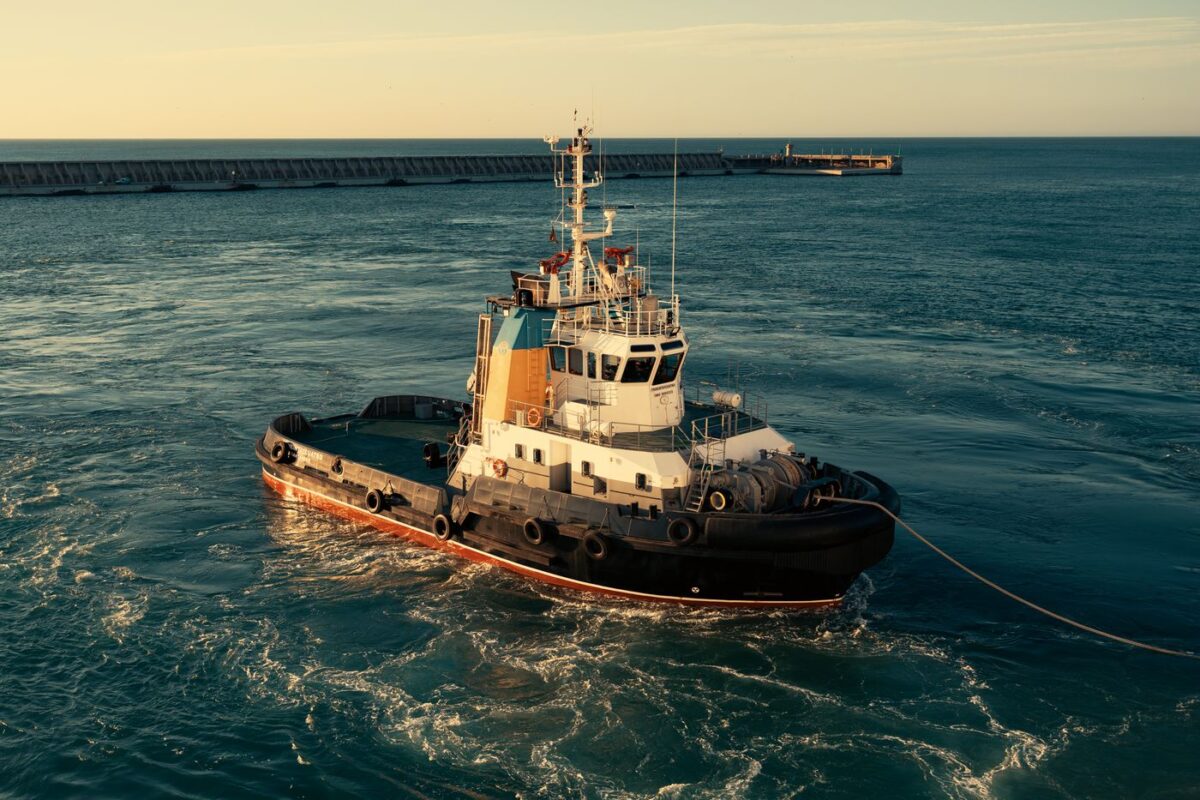
A towage contract offshore Vietnam looks like a short commercial document: a tug, a tow, a route and a price. In practice it decides who pays when a rig, barge or platform module is lost, when a tow line parts in a typhoon season, or when a hose leaks during a field operation. Because losses in offshore work are measured in the value of the tow and the downtime of a field, the allocation of liability in the contract matters more than the day rate.
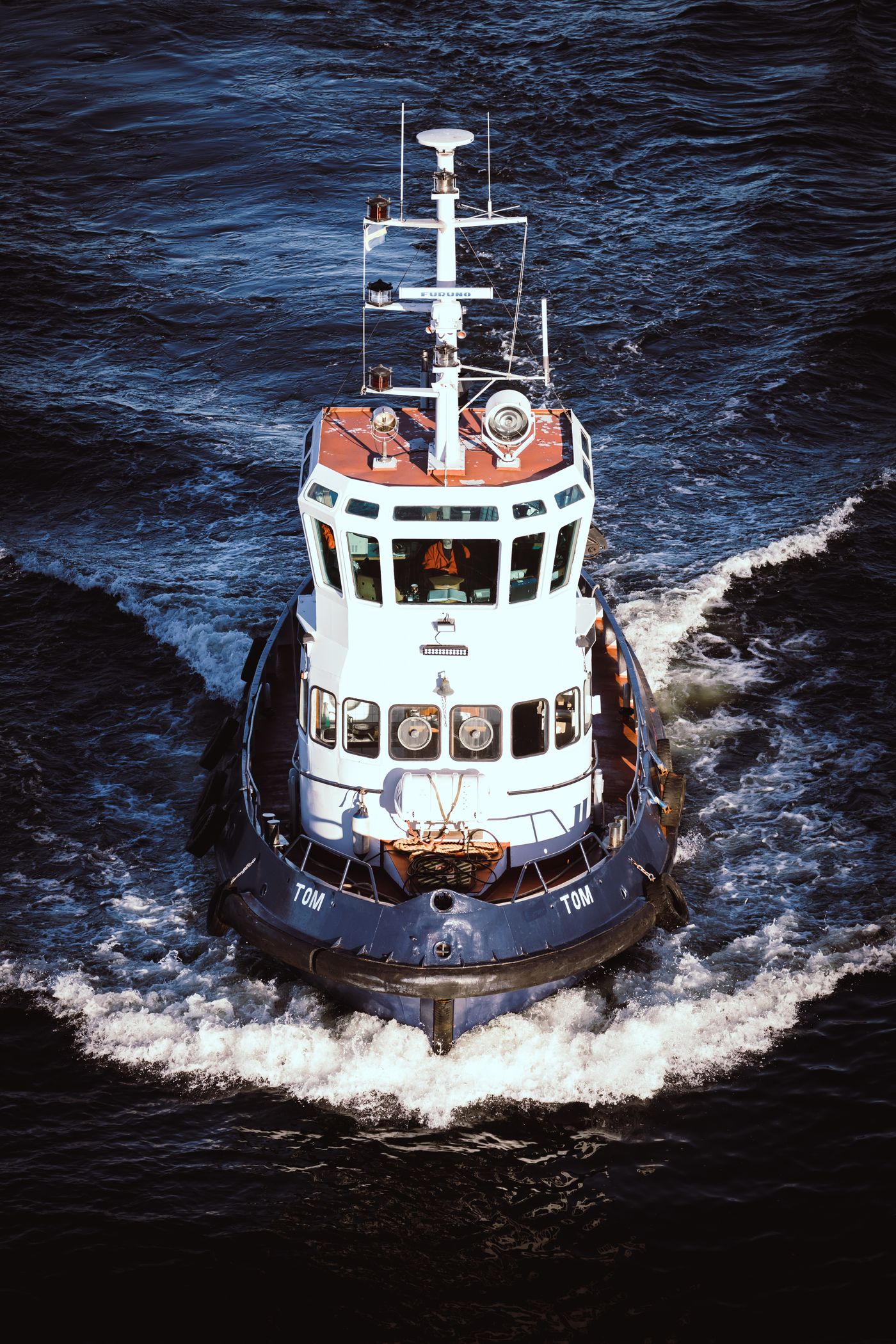
This article explains how decision-makers should read towage and offshore marine contracts: the choice between the main industry forms, how knock-for-knock risk allocation works and where it fails, what insurance must back it, and how the Vietnamese regulatory and market context shapes drafting. It is written for owners of tugs and offshore vessels, charterers, operators, lenders and in-house counsel.
Table of Contents
- Towage contract offshore Vietnam: what the contract must decide
- TOWCON and TOWHIRE: choosing the right form
- Knock-for-knock liability: how the risk is allocated
- Insurance behind offshore support vessels
- Oil and gas marine services: Vietnam market and regulatory context
- Hypothetical scenario: a platform module tow
- Conclusion and next action
- FAQ: quick answers
Towage contract offshore Vietnam: what the contract must decide
Every towage contract answers the same four questions: who controls the operation, who bears loss of or damage to each unit, who answers to third parties, and what happens when the voyage cannot be completed. A contract that leaves any of these to implication invites a dispute after the casualty.
The industry-standard forms are published by BIMCO and are English-law market practice. They are widely used in international towage, including for Vietnamese projects, but they are not Vietnamese statutory forms. Where a contract is governed by Vietnamese law or performed in Vietnamese waters, the mandatory rules of the Vietnamese legal system still apply to the extent relevant, and they must be confirmed .
Drafting a towage contract offshore Vietnam: core clauses
- Parties and units: exact identification of the tug, the tow and any accompanying vessels, with class, flag and fitness warranties.
- Scope and route: departure, destination, intermediate stops, weather and tow-master authority to deviate or seek refuge.
- Price and payment: lump sum or daily hire, mobilisation, standby, demobilisation and payment on interruption.
- Delivery and redelivery: the point at which the tug’s responsibility starts and ends, and the condition of the tow at each point.
- Liability regime: the allocation of loss between the parties and the treatment of third-party claims.
- Insurance and waivers: required cover, additional insured status and waiver of subrogation.
- Termination and force majeure: defined events, notice mechanics and what is payable on termination.
- Law and forum: governing law, and arbitration or court jurisdiction, with enforcement in mind.
Our analysis of the legislative direction in the sector, including the draft Maritime and Inland Waterway Code (a draft only, not adopted as of 14 October 2026), is in our note on vessel leasing structures, tax and risk. Draft content may change, so do not draft a current contract around it.
TOWCON and TOWHIRE: choosing the right form
For any towage contract offshore Vietnam parties negotiate, the two principal BIMCO towage forms follow different commercial logic. TOWCON is a lump-sum international ocean towage agreement: the tug owner agrees to tow for an agreed sum, and the price is fixed for the defined voyage. TOWHIRE is an international ocean towage agreement for daily hire: the tug is paid by the day while it is engaged, and the customer carries more of the time risk.
Choosing between TOWCON and TOWHIRE is an allocation of commercial risk, not a formality. The wrong choice can leave a party exposed to weather delay, port waiting or poor preparation of the tow.
| Issue | Lump sum (TOWCON-style) | Daily hire (TOWHIRE-style) | Who carries the risk |
|---|---|---|---|
| Delay by weather | Tug owner largely carries it, subject to contract exceptions | Customer pays hire during delay unless off-hire applies | Differs by form |
| Price certainty | High for the voyage | Lower; depends on duration | Customer prefers lump sum |
| Uncertain scope | Variation and extras need clear mechanism | Flexible for open-ended work | Medium |
| Standby and port time | Often priced into the sum or specified | Chargeable as hire | Medium |
| Tow preparation | Customer must deliver a seaworthy tow | Same duty, but delays are paid by hire | High if tow unfit |
As a rule, a defined voyage with a known tow suits a lump-sum form. Open-ended work, uncertain duration or offshore standby suits a daily-hire form. Either form should be tailored; adopting a standard form without conforming the rider clauses is a common source of conflict.
Checks before signing either form
- Check that the tow has been surveyed and prepared as the contract requires, and who bears the cost of warranty survey.
- Check the tug’s bollard pull, towing gear and certificates against the tow’s resistance and the route.
- Check the weather and sea-state conditions in which the tug may refuse or suspend towing.
- Check whether a lead tug, escort or additional assistance is needed in the Vietnamese port or approach area.
Reviewing a towage or offshore marine contract? IVLF can provide a confidential preliminary review of the liability, insurance and termination clauses under NDA before you sign or renew.
Knock-for-knock liability: how the risk is allocated
Knock-for-knock liability is the central device in offshore and towage contracts. Each party bears loss of or damage to its own people and property, whatever the cause and including its own contractors, and each party indemnifies the other for those losses. Fault is deliberately taken out of the first-line question, which avoids lengthy fault investigations and allows each party to insure its own exposure.
The model is English-law market practice. Its enforceability and limits in Vietnam, in particular where a Vietnamese court or arbitral tribunal applies mandatory rules on liability, should be tested for the specific contract .
How the standard allocation works
- The tug owner is responsible for the tug and its crew.
- The customer is responsible for the tow and for its own personnel and property.
- Each party bears its own consequential loss, such as loss of profit, loss of use and production loss, and gives a mutual waiver.
- Each party holds the other harmless for claims by its own people and contractors.
Where knock-for-knock breaks down
- Third parties. Knock-for-knock only binds the contracting parties and those they bring in by clause. A fisherman, a third-party vessel or a coastal owner can claim against anyone. The contract should define who handles and indemnifies such claims.
- Pollution and wreck. Standard allocations differ for pollution from the tug, from the tow and from the field. Wreck removal obligations may be imposed by authorities regardless of contract. Specify precisely who bears each.
- Gross negligence and wilful misconduct. Some forms and courts do not allow knock-for-knock protection to cover wilful misconduct. Check how the applicable law treats this.
- Unclear unit definition. If “tow” or “company group” is defined loosely, contractors and sub-contractors may fall outside the protection.
- Gaps with insurance. If the policy does not respond to the indemnity, the clause gives paper protection only.
Takeaway: a knock-for-knock clause is only as good as the definitions of the parties, the units and the insurance that supports it.
Insurance behind offshore support vessels
Offshore support vessels, including supply vessels, anchor-handlers and tugs, work in an exposure profile in which a single event may damage the vessel, the tow, an installation and the environment at once. The insurance programme therefore has to mirror the contract, not the other way round.
What to check in the programme
- Hull and machinery: value, deductibles, towage and trading limits, and navigational warranties.
- P&I: confirm whether the club covers contractual liabilities under the towage contract, including the knock-for-knock indemnity, and any special terms or approval needed from the club. Check this before signing.
- Cargo or tow cover: who insures the tow in transit, for what value and with what warranties on tow preparation and condition.
- Pollution and wreck cover: limits, exclusions and whether they extend to the contract indemnities.
- Waiver of subrogation and additional insured status: so that insurers cannot pursue the other party for losses that the contract allocates away.
- Notice and claims mechanics: casualty notification to insurers and the club, surveyor attendance, and preservation of evidence.
Vietnamese insurance regulation also matters. The Law on Insurance Business No. 08/2022/QH15, effective 1 January 2023 and amended by Law No. 139/2025/QH15 of 10 December 2025, with Decree 46/2023/NĐ-CP as amended by Decree 97/2026/NĐ-CP, forms the verified framework. Whether a given offshore risk must or may be placed with a foreign insurer, and how local placement requirements apply, must be confirmed . For a wider view of liability and cover, see our arbitration clause choices: SIAC, ICC and HKIAC.
Insurance and contract alignment table
| Issue | Legal position | Commercial impact | Risk | Mitigation |
|---|---|---|---|---|
| Indemnity not covered by P&I | Contractual liability may be excluded absent club approval | Uninsured exposure on a large tow | Fatal | Obtain club confirmation before signing |
| No waiver of subrogation | Insurer may pursue the other party | Knock-for-knock defeated in practice | High | Waiver and additional insured wording in each policy |
| Tow not insured | Customer retains risk of loss of tow | Total loss of the tow without recovery | High | Specify insurer, value and warranties |
| Pollution allocation unclear | Authorities may act regardless of contract | Clean-up cost falls on first target | High | Define by source and agree reimbursement |
| Late casualty notice | Policy conditions may be breached | Claim reduction or denial | Medium | Notice protocol and evidence checklist |
Oil and gas marine services: Vietnam market and regulatory context
A towage contract offshore Vietnam is usually one part of wider oil and gas marine services, which are performed in a setting that mixes international operators, state-linked enterprises, local contractors and foreign tonnage. Contract terms are generally modelled on international forms, but performance depends on local licensing, local content expectations, port and pilotage rules and the authority practice of the maritime administration.

Regulatory touchpoints
- Towage and shipping services conditions: Decree 160/2016/NĐ-CP on conditions for shipping business, ship agency and towage services, with a consolidated text published on 30 September 2026 and reflecting Decree 14/2026/NĐ-CP. Foreign participation and licensing conditions for towage must be confirmed .
- Maritime activity management: Decree 58/2017/NĐ-CP, as amended including by Decrees 34/2025/NĐ-CP and 14/2026/NĐ-CP, covering ports, pilotage and related operations. Port-closing rules were updated in January 2026.
- Vessel registration: the Vietnamese flag and registration status of the tug or support vessel under Decree 171/2016/NĐ-CP as amended by Decree 247/2025/NĐ-CP. A bareboat or foreign-flag vessel may raise cabotage and permit questions that must be checked .
- Maritime Code 2015: Law No. 95/2015/QH13, in force since 1 July 2017, consolidated by text 101/VBHN-VPQH of 26 August 2025, is the base law for maritime liability and maritime claims. Check the relevant chapter for towage and limitation of liability.
For the current official lists and notices, consult the Vietnam Maritime and Waterway Administration and the industry reference forms published by BIMCO.
Practical drafting points for the Vietnamese market
- Align the contract language and the evidence rules with the forum: if disputes go to arbitration, state the seat, rules and language, and consider enforcement under the New York Convention 1958.
- Name the local port agent, pilotage and escort arrangements and who pays.
- Set a clear process for permits, crew documentation and entry of foreign vessels.
- Allow for typhoon and monsoon seasons through weather clauses and refuge procedures.
- Define payment currency, tax responsibility and withholding in the price clause.
Hypothetical scenario: a platform module tow
Hypothetical scenario. The facts below are assumed for illustration. They do not describe a real case or client.
- A project contractor engages an ocean-going tug under a daily-hire form to tow a fabricated platform module from a yard to an offshore field in Vietnamese waters.
- The contract has knock-for-knock liability and a mutual consequential-loss waiver. The tug owner’s P&I club has not been asked whether it covers the towage indemnity.
- During the tow, a line parts in heavy weather, the module is damaged and a nearby fishing vessel is struck.
Under the allocation, the customer bears damage to the module and the tug owner bears damage to the tug. The fishing vessel is a third party and may claim against either side, so the contract’s third-party mechanism and each party’s insurance become the real battleground.
If the club declines to cover the contractual indemnity, the tug owner is left with uninsured exposure to the customer’s side of the allocation. If the customer did not insure the module, the loss lies where it fell. Both outcomes were avoidable by simple pre-signing steps.
Steps that would have changed the outcome
- Obtain written club and underwriter confirmation of the indemnity and waivers.
- Insure the module for its full value with the contractor named as insured.
- Agree a tow survey and weather window as a condition of departure.
- Agree an incident protocol: immediate notice, evidence preservation and a joint approach to third parties.
Conclusion and next action
A well-drafted towage contract offshore Vietnam balances the choice of form, a precise knock-for-knock allocation, matching insurance and a realistic view of local regulation. The failure points are almost always the gaps between those four.
Next action: before the next signature or renewal, build a one-page matrix that lists each risk (tug, tow, third parties, pollution, wreck, delay), who bears it under the contract, which policy responds, and what notice or consent is required. Close every gap before mobilisation.
Frequently Asked Questions
What is the difference between TOWCON and TOWHIRE in a towage contract offshore Vietnam?
TOWCON is a lump-sum ocean towage form, giving price certainty for a defined voyage. TOWHIRE is a daily-hire form, suited to open-ended or uncertain-duration work where the customer carries more time risk.
What does knock-for-knock mean in a towage contract?
Each party bears loss of its own people and property regardless of fault, and indemnifies the other. Consequential losses are normally waived mutually. Third-party and pollution risks need separate allocation.
Is knock-for-knock automatically enforceable in Vietnam?
Do not assume so. It is English-law market practice, and its limits under Vietnamese mandatory rules need checking for each contract .
Does P&I cover towage indemnities?
Not always. Contractual liabilities may need club approval or special terms. Obtain written confirmation before signing, and align waivers of subrogation across all policies.
Which Vietnamese rules apply to towage services?
Decree 160/2016/NĐ-CP on towage service conditions, Decree 58/2017/NĐ-CP on maritime activity, and the Maritime Code 2015, each as amended. Check the current consolidated texts.
This article provides general information as of 14 October 2026 and is not legal advice for a specific matter. Laws, regulations and authority practice may change; obtain advice on your facts before acting.
Or contact us directly:
Contact IVLF LawyerCompany Formation Services – IVLF Advisors
This article is provided for general information only and does not constitute legal advice for any specific case. Regulations may change – please consult a qualified professional before acting. Should further analysis be required, please contact one of our lawyers below.